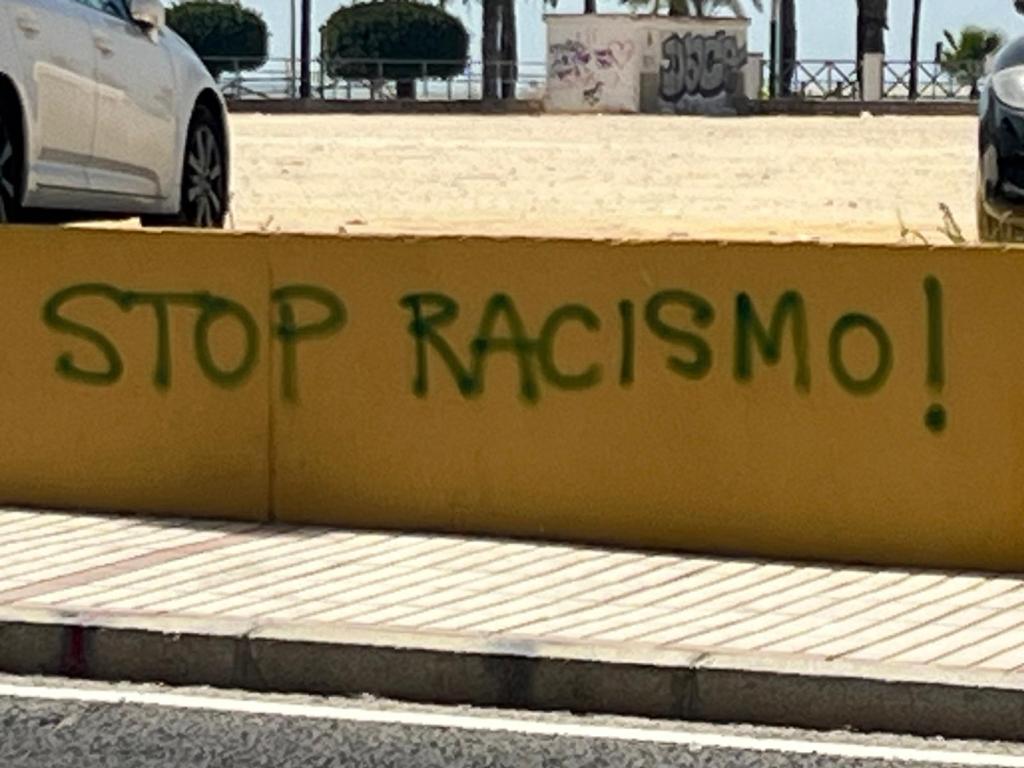
Categoría: Sin categoría

  • AUN ASÍ

    AUN ASÍ

    Anoche estaba en la cama cuando, de repente, sentí miedo. No el miedo pequeño, cotidiano. No el miedo a que me pueda pasar algo a mí personalmente. Un miedo mucho más grande. El miedo a que la gente vuelva a quedarse ciega. A que volvamos a salir a la calle para protestar contra otras personas. A que volvamos a separar a los seres humanos, a clasificarlos en grupos, a atribuir distinto valor a unas vidas y a otras – hasta que algunas personas parezcan, de alguna manera, menos humanas que las demás. Deshumanización sistemática.

    Tengo la sensación de estar reconociendo los viejos patrones. Los mismos mecanismos. Las mismas simplificaciones. Los mismos enemigos construidos. El mismo lenguaje que genera miedo y enfrenta a unas personas con otras. El miércoles, miles de personas salieron a las calles en distintos lugares de España para mostrar su apoyo a Ceuta y protestar contra las políticas migratorias del Gobierno. En Ceuta fueron decenas de miles.

    ¿Qué hacemos con nuestro miedo? ¿Y quién se beneficia cuando empezamos a dirigir ese miedo contra otras personas?

    Porque ahí es donde empieza el peligro: cuando llegamos a creer que el problema son las personas que llegan – y no las decisiones políticas, las estructuras, las relaciones de poder y los sistemas que producen y gestionan estas situaciones. La separación como estrategia. Divide a la gente. Genera miedo. Señala a un enemigo. Repite el mensaje. Y, al final, la imagen del enemigo empieza a sentirse como una realidad. Quien tiene miedo es más fácil de convencer. Y quien es diferente es más fácil de convertir en enemigo. El mejor servicio posible para cualquier sistema que quiera conservar su poder.

    Tengo miedo de este desplazamiento. De este cambio de energía. ¿Qué pasa si esto se nos va de las manos? ¿Qué pasa si volvemos a caminar en la dirección equivocada? Hacia la derecha. Me pregunto: ¿Qué está pasando aquí? ¿Hemos olvidado? La máquina sigue funcionando con el mismo peligro de siempre. Y no es algo que haya empezado a ver ayer. Lo veo todo el tiempo. Pero también tengo miedo de mi propio miedo. Porque a veces me pregunto si el miedo puede convertirse en parte de aquello que temo. Si, a través de mi propio miedo, entro en un campo colectivo de miedo. Si estoy alimentando precisamente la realidad que temo.

    Mis antepasados me dicen otra cosa: Sentir el miedo y conocerlo no es el problema. Ignorarlo sí lo es. Porque aquello que no somos capaces de mirar conscientemente no desaparece. Sigue actuando: en lo oculto, en el inconsciente, en el cuerpo, en nuestras decisiones, en nuestras relaciones, en nuestra política.

    Ayer un amigo me dijo: vivimos aquí, en “Andalucía baja”. Y no se refería solamente a un lugar. Quizás se refería también a un tiempo. La dictadura terminó aquí hace relativamente poco. Sus huellas no han desaparecido – a pesar del Pacto del Olvido. La separación está por todas partes. El miedo también. Y dentro de mí se están activando ahora miedos muy antiguos, muy primarios. Miedos que conozco desde hace años. Y aun así – o precisamente por eso – tengo que volver a mirarlos: el miedo a no pertenecer, el miedo a ser diferente. “Giri”. Extranjera. Stranger. Forastera. Una mujer que vive sola. Una mujer con sus propias opiniones y que además se atreve a expresarlas. Una mujer que practica una agricultura de raíz animista. Una mujer que no encaja fácilmente en las formas que se supone que debería ocupar.

    El aire se está haciendo más fino. Y el ambiente está cada vez más caliente. Ya no tengo casa. Mis animales ya no tienen tierra donde vivir. Mis valores se han convertido en un blanco. Mi existencia se ha convertido en una superficie sobre la que otros proyectan sus miedos, sus prejuicios y sus ideas. Y para muchas otras personas, la realidad es todavía mucho más dura. En Ceuta, las personas se están convirtiendo en peones de una crisis profundamente política y geopolítica. Personas – entre ellas muchos menores – están siendo convertidas en símbolos de algo que es mucho más grande que ellas mismas.

    Y ahí está uno de los mayores peligros: cuando dejamos de ver a las personas como personas y empezamos a verlas como “migración”, como “invasión”, como “amenaza”, como una cifra, una masa, un problema. Entonces podemos hablar de ellas sin hablar realmente de ellas. Sin conocer sus nombres. Sin escuchar sus historias. Sin ver su miedo. Sin reconocer su dignidad. Lo que está ocurriendo ahora mismo en Ceuta muestra esta tensión con una claridad aterradora. Las personas migrantes, y especialmente los menores no acompañados, viven en condiciones precarias mientras el debate público está cada vez más marcado por palabras como “invasión” y “expulsión”.

    Esto no es personal. Al menos, no solamente. Es colectivo. Global. Cultural. Espiritual. Institucional. Y, sobre todo: sistémico. La persona que lucha contra su vecino no está necesariamente enfrentándose al sistema. A veces está cumpliendo precisamente su lógica. Cuando nos enfrentamos unos a otros, dejamos de mirar hacia arriba. Cuando tenemos miedo unos de otros, dejamos de preguntarnos quién toma las decisiones. Cuando nos deshumanizamos mutuamente, ya no necesitamos cambiar las estructuras. Esto no es nuevo. La historia está llena de ello. El racismo y la deshumanización no aparecen de la nada. Se construyen y se normalizan a través del lenguaje, las instituciones, las decisiones políticas, los medios de comunicación, el poder y la repetición.

    Y precisamente por eso hay algo que me da especialmente miedo: que siga funcionando. Que todavía podamos ser convencidos de ver a otras personas como una amenaza. Que todavía podamos llegar a creer que nuestro vecino es nuestro enemigo. Que todavía podamos creer que nuestra seguridad necesita que otra persona tenga menos seguridad. Que todavía podamos creer que nuestra pertenencia tiene que construirse a costa de la pertenencia de los demás.

    Entonces, ¿qué nos queda por hacer? No lo sé. Solo sé que el racismo y la deshumanización no desaparecerán mientras no transformemos los sistemas, las estructuras y las formas de pensar que continúan reproduciéndolos. ¿Y mientras tanto? Me quedo con lo que sé. Con los valores sagrados que sostienen mi fe y mi amor por los seres humanos y por esta Tierra. Con la dignidad. Con la humildad. Con la igualdad. Con el derecho de todo ser vivo a la vida y a la seguridad. Con el derecho a pertenecer. Con la certeza de que ningún ser humano se vuelve menos humano porque haya nacido diferente, porque crea diferente, porque tenga otro aspecto, porque ame de otra manera, porque viva de otra forma o porque busque protección en otro lugar.

    Aun así.

    El domingo comienza en mi pueblo, aquí en “Andalucía baja”, la fiesta anual del pueblo. La Virgen de la Luz será llevada desde su ermita hasta el pueblo, acompañada por unos 300 caballos y cientos de personas, para ser celebrada allí. Ahora mismo no tengo muchas ganas de celebrar. Y, sin embargo, estaré allí. Esta tradición me exige un enorme ejercicio de contradicción: situarme entre una idea de superioridad masculina, nacionalista, ideológicamente controlada y marcada por una tradición aristocrática – y la humildad sagrada y la devoción de la Virgen de la Luz. La Virgen que trae luz y lluvia, que bendice y protege a la Madre Tierra, que acompaña las cosechas, que protege y bendice a los animales con salud, que acompaña a los agricultores y agricultoras de esta tierra y que me ha acompañado a mí durante seis años, cada día, en mi práctica espiritual. Gracias, Virgen de la Luz.

    Esta tradición también lleva consigo su propia historia. Las mujeres no fueron oficialmente admitidas en la celebración hasta el año 2001. No porque las estructuras cambiaran de repente por sí solas, sino porque las mujeres resistieron agresiones reales y participaron de todos modos. Las giris llegaron mucho después. Aquí se cuenta la historia de una mujer inglesa que, hace años, siguió la procesión a caballo – manteniendo suficiente distancia para poder acompañar a la Virgen sin formar oficialmente parte de la procesión. Eso también es historia. Eso también es separación. Eso también es resistencia.

    Quizás ahí esté nuestra tarea. No en no tener miedo. No en fingir que todo está bien. No en separarme de las personas que piensan diferente a mí. Sino en mantenerme despierta. En sentir el miedo sin permitir que sea él quien me guíe. En sentir la rabia sin convertirme yo misma en alguien que deshumaniza. En conocer la historia sin aceptarla como un destino inmutable. Y en preguntarnos, una y otra vez: ¿Quién está siendo convertido en enemigo? ¿Quién se beneficia de ello? ¿A quién se está haciendo invisible? ¿Qué miedo nos están vendiendo? ¿Y qué ocurre si nos negamos a comprarlo?

    Quizás eso es el “aun así”.

    Aun con miedo. Aun con rabia. Aun cargando con la historia. Aun frente al poder. Aun viviendo entre separaciones. Aun negándonos a aceptar que no pertenecemos los unos a los otros.

    Hagamos lo que podamos. Mantengamos los ojos abiertos. No permitamos que nos enfrenten. No permitamos que nos deshumanicen – ni que nosotros mismos deshumanicemos a otros. Miremos más de cerca antes de creer todo aquello que nos cuentan. Y aprendamos a distinguir entre aquello que nos da miedo – y aquello que es realmente peligroso.

    Porque quizás el mayor peligro no sea la persona que tenemos al lado. Quizás sea el momento en que olvidamos que esa persona es humana.

    Aun así.

    Yo elijo la conexión.

    Elijo la dignidad.

    Elijo la vida.

    Elijo la Tierra.

    Nos elijo a todos.

    Intentional Solidarity

    Continues Liberation

  • STILL

    STILL

    Last night I was lying in bed when, suddenly, I felt afraid. Not the small, everyday kind of fear. Not the fear of something that might happen to me personally. A much bigger fear. The fear that people are becoming blind again. That people are taking to the streets again to demonstrate against other people. That we are once again beginning to separate human beings from one another, to divide them into groups, to assign different values to their lives – until some people somehow become less human than others. Systematic dehumanisation.

    I feel like I recognise the old patterns. The same mechanisms. The same simplifications. The same enemy images. The same language that creates fear and turns people against one another. On Wednesday, thousands of people took to the streets across Spain to show their support for Ceuta and to protest against the government’s migration policies. In Ceuta itself, tens of thousands took part.

    What do we do with our fear? And who benefits when we are taught to direct that fear towards other human beings?

    Because that is where things become dangerous: when people start believing that the people arriving are the problem – rather than the political decisions, structures, power relations and systems that create and manage these situations. Separation as strategy. Divide people. Create fear. Name an enemy. Repeat the message. And eventually, the image of the enemy begins to feel like a fact. People who are afraid are easier to convince. And people who are different are easier to turn into enemies. The perfect service to any system that wants to preserve its power.

    I am afraid of this shift. Of this change in the energy. What if this gets out of control? What if we are moving in the wrong direction again? To the right. I keep asking myself: What is happening here? Have we forgotten? The machine is still working exactly as dangerously as it always has. And I have not only seen this since yesterday. I see it all the time.

    But I am also afraid of my own fear. Because sometimes I wonder whether fear itself can become part of what I am afraid of. Whether, through my fear, I enter a collective field of fear. Whether I might be feeding the very reality I am afraid of.

    My ancestors tell me something else: Feeling fear, knowing fear, is not the problem. Ignoring it is. Because what we do not consciously acknowledge does not disappear. It continues to act – in the hidden places, in the unconscious, in the body, in our decisions, in our relationships, in our politics.

    Yesterday, a friend said to me: We live here in “Andalucía baja” – in deep Andalusia. And he does not mean only a place. Maybe he means a time. The dictatorship ended here not so long ago. Its traces have not disappeared – despite the Pacto del Olvido, the Pact of Forgetting. Separation is everywhere. So is fear. And inside me, very old, very primal fears are being triggered. Fears I have known for years. And still – or perhaps precisely because of that – I have to look at them again: the fear of not belonging, the fear of being different. “Giri” – a colloquial Spanish word for foreigners, particularly those perceived as coming from elsewhere in Europe. Extranjero. Stranger. Outsider. A woman who lives alone. A woman with her own opinions, and the courage to speak them. A woman who practises agriculture in an animist way. A woman who does not fit easily into the forms that have been prescribed for her.

    The air is getting thinner. And the atmosphere is getting hotter. I no longer have a house. My animals no longer have land on which to live. My values have become a target. My existence has become a projection screen for other people’s fears and assumptions. And for others among us, it looks very different indeed. In Ceuta, people are becoming pawns in a deeply political and geopolitical crisis. People – including many minors – are being turned into symbols of something much bigger than themselves.

    And that is where one of the greatest dangers lies: when human beings are no longer seen as human beings, but as “migration”, as “invasion”, as “threat”, as a number, a mass, a problem. Then it becomes possible to talk about people without actually talking about them. Without knowing their names. Without hearing their stories. Without seeing their fear. Without recognising their dignity. The current events in Ceuta reveal this tension with frightening clarity. Migrants, and particularly unaccompanied minors, are living in precarious conditions while public debate is increasingly shaped by words such as “invasion” and “expulsion”.

    This is not personal. At least, not only. It is collective. Global. Cultural. Spiritual. Institutional. And above all: systemic. The person who fights against their neighbour is not necessarily resisting the system. Sometimes they are fulfilling its logic. When we fight each other, we stop looking upwards. When we fear each other, we stop asking who is making the decisions. When we dehumanise each other, we no longer have to change the structures. None of this is new. History is full of it. Racism and dehumanisation do not simply appear out of nowhere. They are produced and normalised through language, institutions, political decisions, media, power and repetition.

    And that is exactly why one thing frightens me most: that it still works. That we can still be persuaded to see other human beings as threats. That we can still be made to believe that our neighbour is our enemy. That we can still be made to believe that our safety requires someone else to have less of it. That we can still be made to believe that belonging has to come at the expense of someone else’s belonging.

    So what is left to do? I don’t know. I only know that racism and dehumanisation will not disappear as long as we refuse to transform the systems, structures and ways of thinking that keep reproducing them. And until then? I will stay with what I know. With the sacred values held by my faith and by my love for human beings and for this Earth. With dignity. With humility. With equality. With the right of every living being to life and safety. With belonging. With the understanding that no human being becomes less human because they were born differently, believe differently, look different, love differently, live differently, or seek safety somewhere else.

    Still.

    On Sunday, the annual village festival begins in my village here in “Andalucía baja”. The Virgen de la Luz will be carried from her chapel into the village, accompanied by around 300 horses and hundreds of people, and celebrated there. I don’t really feel like celebrating right now. And yet I will be there. This tradition asks an enormous contradiction of me: to stand between a male-dominated, nationalist, ideologically controlled and aristocratically shaped idea of superiority – and the sacred humility and devotion of the Virgen de la Luz. The Virgen who brings light and rain, who blesses and protects Mother Earth, who accompanies the harvest, who blesses the animals with health, who accompanies the farmers of this region, and who has supported me every day for the past six years in my spiritual practice. Gracias, Virgen de la Luz.

    This tradition carries its own history. Women were only officially allowed to participate in the event from 2001 onwards. Not because the structures suddenly changed by themselves, but because women resisted actual attacks and participated anyway. Giris came much later. There is a story told here- actually a bridge named «the bridge of the English lady», about a woman from England who, years ago, followed the procession on horseback – keeping enough distance to accompany the Virgen without officially becoming part of the procession itself. That too is history. That too is separation. That too is resistance.

    Perhaps this is where our task lies. Not in having no fear. Not in pretending that everything is fine. Not in separating myself from people who think differently from me. But in remaining awake. In feeling fear without allowing it to lead. In feeling anger without becoming dehumanising myself. In knowing history without accepting it as an unchangeable destiny. And in asking, again and again: Who is being turned into the enemy? Who benefits from it? Whose humanity is being made invisible? What fear is being sold to us? And what happens if we refuse to buy it?

    Maybe that is what “still” means.

    Still afraid. Still angry. Still carrying history. Still facing power. Still living with separation. Still refusing to believe that we do not belong together.

    Let us do what we can. Let us keep our eyes open. Let us refuse to be turned against one another. Let us refuse to be dehumanised – and to dehumanise others. Let us look more closely before we believe what we are being told. And let us learn to distinguish between what frightens us – and what is actually dangerous.

    Because perhaps the greatest danger is not the person standing next to us. Perhaps it is the moment when we forget that they are human.

    Still.

    I choose connection.

    I choose dignity.

    I choose life.

    I choose the Earth.

    I choose all of us.

    Intentional Solidarity

    Continues Liberation

  • Trotzdem – wenn Entmenschlichung wieder funktioniert

    TROTZDEM – über Angst, Entmenschlichung und die Entscheidung, Mensch zu bleiben

    Gestern Abend lag ich im Bett und hatte plötzlich Angst. Nicht die kleine, alltägliche Angst. Nicht die Angst vor etwas, das mir persönlich passieren könnte. Eine viel größere Angst. Die Angst, dass Menschen wieder blind werden. Dass Menschen wieder auf die Straße gehen, um gegen andere Menschen zu demonstrieren. Dass wir wieder dabei sind, Menschen voneinander zu trennen, sie in Gruppen einzuteilen, ihnen unterschiedliche Werte zuzuschreiben – bis die einen plötzlich weniger Mensch sind als die anderen. Systematische Entmenschlichung.

    Ich habe das Gefühl, die alten Muster wiederzuerkennen. Die gleichen Mechanismen. Die gleichen Vereinfachungen. Die gleichen Feindbilder. Die gleiche Sprache, die Angst erzeugt und Menschen gegeneinander stellt. Am Mittwoch gingen in Spanien Tausende Menschen auf die Straße, um ihre Unterstützung für Ceuta zu zeigen und gegen die Migrationspolitik der Regierung zu protestieren. In Ceuta selbst waren es Zehntausende.

    Was machen wir mit unserer Angst? Und wer profitiert davon, wenn wir anfangen, unsere Angst auf andere Menschen zu richten?

    Denn genau dort wird es gefährlich. Wenn Menschen glauben, dass die Menschen, die ankommen, das Problem sind – und nicht die politischen Entscheidungen, die Strukturen, die Machtverhältnisse und die Systeme, die solche Situationen hervorbringen und verwalten. Separation als Strategie. Teile die Menschen. Erzeuge Angst. Benenne einen Feind. Wiederhole die Botschaft. Und irgendwann fühlt sich das Feindbild wie eine Tatsache an.

    Wer Angst hat, glaubt leichter, was ihm erzählt wird. Und wer anders ist, kann leichter zum Feind erklärt werden. Der beste Service für jedes System, das seine Macht behalten möchte.

    Ich habe Angst vor dieser Verschiebung. Vor dieser Veränderung der Energie. Was, wenn das aus dem Ruder läuft? Was, wenn wir wieder in die falsche Richtung laufen? Nach rechts.

    Ich frage mich: Was passiert hier? Haben wir vergessen? Die Maschine funktioniert noch genauso gefährlich wie immer. Und ich weiß das nicht erst seit heute. Ich sehe es die ganze Zeit. Aber ich habe auch Angst vor meiner eigenen Angst. Denn manchmal frage ich mich, ob die Angst selbst zu einem Teil dessen wird, was ich fürchte. Ob ich durch meine Angst in ein kollektives Feld der Angst einsteige. Ob ich damit genau die Realität nähre, vor der ich mich fürchte.

    Meine Ahnen sagen mir etwas anderes: Die Angst zu spüren und zu kennen, ist nicht das Problem. Sie zu ignorieren, ist es. Denn was wir nicht bewusst wahrnehmen, verschwindet nicht. Es wirkt weiter. Im Verborgenen. Im Unbewussten. Im Körper. In unseren Entscheidungen. In unseren Beziehungen. In unserer Politik.

    Ein Freund hat gestern zu mir gesagt: Wir leben hier in „Andalucía baja“ – im tiefsten Andalusien. Und damit meint er nicht nur einen Ort. Vielleicht meint er eine Zeit. Die Diktatur ist hier noch nicht lange vorbei. Ihre Spuren sind nicht verschwunden – trotz des „Pacto del Olvido“, des Paktes des Vergessens. Separation ist allgegenwärtig. Angst auch.

    Und in mir persönlich werden gerade sehr alte, ursprüngliche Ängste getriggert. Ängste, die ich seit Jahren kenne. Und trotzdem – oder gerade deshalb – muss ich sie wieder anschauen: die Angst, nicht dazuzugehören. Die Angst, anders zu sein. „Giri“ – ein umgangssprachlicher spanischer Begriff für Ausländer*innen, insbesondere für Menschen aus anderen, meist nordeuropäischen Ländern. Extranjero. Stranger. Fremder.

    Eine Frau, die alleine lebt. Eine Frau mit einer eigenen Meinung, die sie ausspricht. Eine Frau, die Landwirtschaft auf eine animistische Weise betreibt. Eine Frau, die sich nicht problemlos in die vorgesehenen Formen einfügt.

    Die Luft wird dünner. Und es wird hitziger. Ich habe kein Haus mehr. Meine Tiere haben kein Land mehr, auf dem sie leben können. Meine Werte sind zur Zielscheibe geworden. Meine Existenz ist zur Projektionsfläche geworden.

    Und für andere von uns sieht das noch einmal ganz anders aus. In Ceuta werden Menschen zum Spielball einer ausgesprochen politischen und geopolitischen Krise. Menschen, darunter viele Minderjährige, werden zum Symbol für etwas gemacht, das viel größer ist als sie selbst.

    Und genau darin liegt eine der größten Gefahren: Wenn Menschen nicht mehr als Menschen gesehen werden, sondern als „Migration“, als „Invasion“, als „Bedrohung“, als Zahl, als Masse, als Problem. Dann wird es möglich, über sie zu sprechen, ohne über sie zu sprechen. Ohne ihre Namen zu kennen. Ohne ihre Geschichten zu hören. Ohne ihre Angst zu sehen. Ohne ihre Würde anzuerkennen.

    Die aktuellen Ereignisse in Ceuta zeigen diese Spannung mit erschreckender Deutlichkeit. Migrant*innen und insbesondere unbegleitete Minderjährige leben unter prekären Bedingungen, während die öffentliche Debatte zunehmend von Begriffen wie „Invasion“ und „Expulsion“ geprägt wird.

    Das hier ist nicht persönlich. Zumindest nicht nur. Es ist kollektiv. Global. Kulturell. Spirituell. Institutionell. Und vor allem: systemisch.

    Der Mensch, der gegen seinen Nächsten kämpft, widersetzt sich nicht dem System. Manchmal erfüllt er gerade dessen Logik. Wenn wir uns gegenseitig bekämpfen, schauen wir nicht mehr nach oben. Wenn wir uns gegenseitig fürchten, fragen wir nicht mehr, wer Entscheidungen trifft. Wenn wir uns gegenseitig entmenschlichen, müssen wir die Strukturen nicht mehr verändern.

    Das ist keine neue Erkenntnis. Die Geschichte ist voll davon. Rassismus und Entmenschlichung sind keine spontanen Naturereignisse. Sie werden durch Sprache, Institutionen, politische Entscheidungen, Medien, Macht und gesellschaftliche Wiederholung hergestellt und normalisiert.

    Und genau deshalb macht mir eines besonders Angst:

    Dass es trotzdem funktioniert.

    Dass wir Menschen immer noch dazu bringen können, andere Menschen als Bedrohung zu sehen. Dass wir immer noch glauben können, unser Nachbar sei unser Feind. Dass wir immer noch glauben können, Sicherheit bedeute, dass jemand anderes weniger Sicherheit bekommt. Dass wir immer noch glauben können, Zugehörigkeit müsse auf Kosten der Zugehörigkeit anderer entstehen.

    Was bleibt also zu tun?

    Ich weiß es nicht.

    Ich weiß nur, dass Rassismus und Entmenschlichung nicht verschwinden werden, solange wir die Systeme, Strukturen und Denkweisen, die sie immer wieder hervorbringen, nicht verändern.

    Und bis dahin?

    Bleibe ich bei dem, was ich weiß. Bei den heiligen Werten, die mein Glaube und meine Liebe zu den Menschen und zu dieser Erde vertreten. Bei Würde. Bei Demut. Bei Gleichwertigkeit. Bei dem Recht jedes Lebewesens auf Leben und Sicherheit. Bei Zugehörigkeit. Bei der Erkenntnis, dass kein Mensch weniger Mensch wird, weil er anders geboren wurde, anders glaubt, anders aussieht, anders liebt, anders lebt oder an einem anderen Ort Schutz sucht.

    Trotzdem.

    Am Sonntag beginnt in meinem Dorf in „Andalucía baja“ das jährliche Dorffest. Die Virgen de la Luz wird dabei mit ungefähr 300 Pferden und Reiter*innen und Hunderten von Menschen zu Fuss von ihrer Kapelle ins Dorf getragen und gefeiert.

    Mir ist gerade nicht sehr nach Feiern zumute. Und doch werde ich dort sein.

    Diese Tradition verlangt mir einen enormen Spagat ab: zwischen einer männlich dominierten, nationalistisch orientierten, ideologisch kontrollierten und aristokratisch geprägten Vorstellung von Überlegenheit – und der heiligen Demut und Hingabe der Virgen de la Luz.

    Der Virgen, die Licht und Regen bringt, die Mutter Erde segnet und beschützt, die Ernte begleitet, die Tiere mit Gesundheit segnet, die Landwirt*innen dieser Region begleitet und die mich seit sechs Jahren jeden Tag in meiner spirituellen Praxis unterstützt.

    Gracias, Virgen de la Luz.

    Auch diese Tradition trägt ihre Geschichte in sich. Frauen wurden bei der Veranstaltung erst seit dem Jahr 2001 offiziell zugelassen. Nicht, weil sich die Strukturen plötzlich von selbst verändert hätten, sondern weil Frauen sich gegen tatsächliche Angriffe gewehrt und trotzdem teilgenommen haben. Giris kamen noch viel später dazu.

    Man erzählt sich hier die Geschichte einer Frau aus England, die vor Jahren mit ihrem Pferd dem Umzug folgte – mit genügend Abstand, um die Virgen begleiten zu können, ohne direkt Teil des Zuges zu sein.

    Auch das ist Geschichte. Auch das ist Separation. Auch das ist Widerstand.

    Vielleicht liegt genau darin unsere Aufgabe.

    Nicht darin, keine Angst zu haben. Nicht darin, so zu tun, als wäre alles gut. Nicht darin, mich von Menschen zu trennen, die anders denken als ich. Sondern darin, wach zu bleiben.

    Die Angst zu fühlen, ohne ihr die Führung zu überlassen. Die Wut zu spüren, ohne selbst zu entmenschlichen. Die Geschichte zu kennen, ohne sie als unveränderbares Schicksal zu akzeptieren.

    Und immer wieder zu fragen:

    Wer wird gerade zum Feind gemacht? Wer profitiert davon? Welche Menschen werden unsichtbar? Welche Angst wird gerade verkauft? Und was passiert, wenn wir uns weigern, sie zu kaufen?

    Vielleicht ist das das „Trotzdem“.

    Trotz Angst. Trotz Wut. Trotz Geschichte. Trotz Macht. Trotz Separation. Trotz alledem, was uns immer wieder erzählt, dass wir nicht zusammengehören.

    Lasst uns tun, was wir können. Lasst uns die Augen offen halten. Lasst uns uns nicht gegeneinander aufbringen und nicht entmenschlichen lassen. Lasst uns genauer hinschauen, bevor wir glauben, was man uns erzählt.

    Und lasst uns unterscheiden zwischen dem, was uns Angst macht – und dem, was uns wirklich gefährlich wird.

    Denn vielleicht ist die größte Gefahr nicht der Mensch neben uns.

    Vielleicht ist es der Moment, in dem wir vergessen, dass er ein Mensch ist.

    Trotzdem.

    Ich entscheide mich für die Verbindung.

    Für die Würde.

    Für das Leben.

    Für die Erde.

    Für uns alle.

    Intentional Solidarity

    Continues Liberation

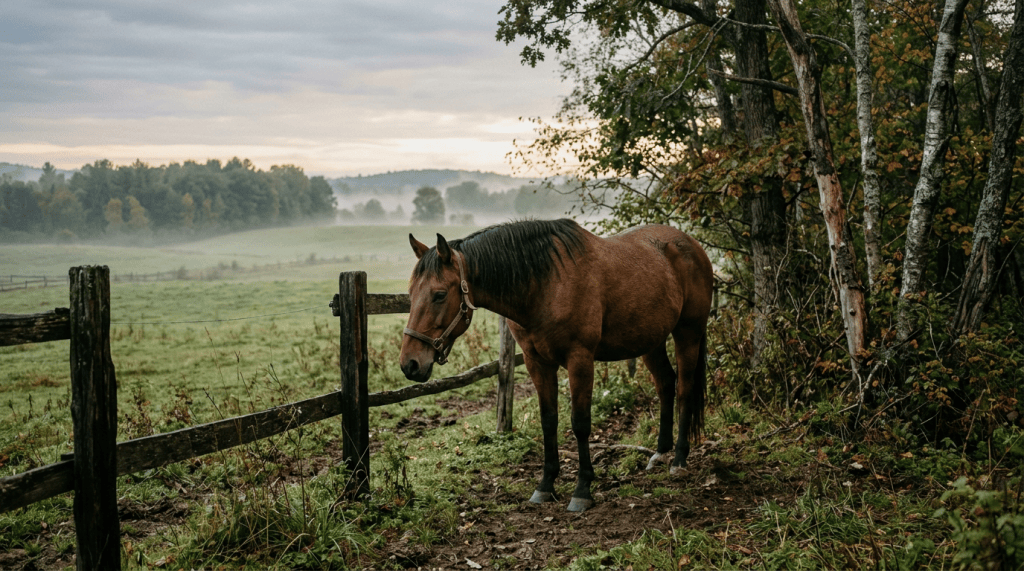
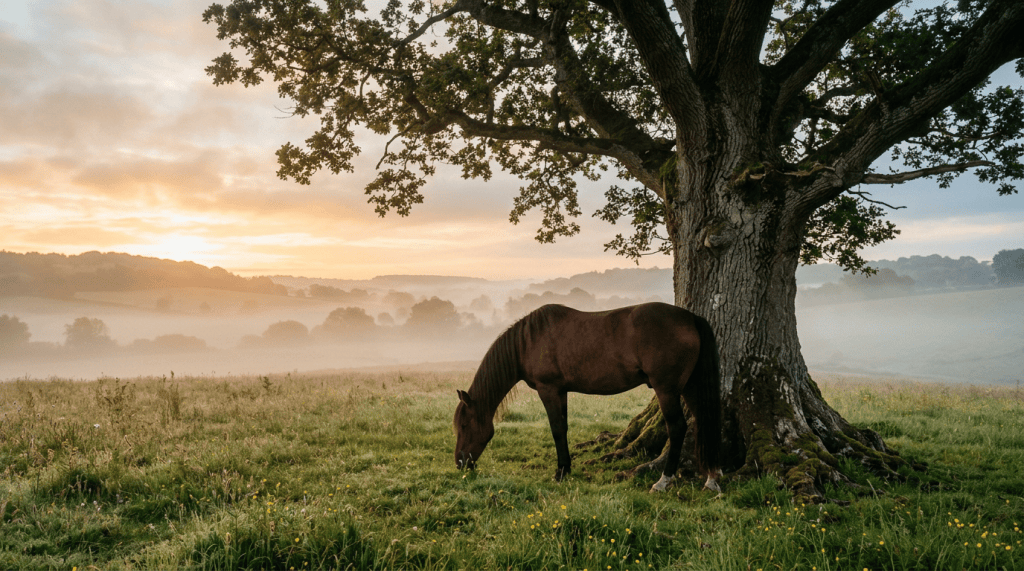
  • Dark horse grazing beneath a large oak tree in a misty meadow

    Restoring the Cultural Importance of Horses

    Restoring the Cultural Importance of Horses

    Returning to relationship, remembrance, and healing with the more-than-human world

    There was a time when human beings did not experience themselves as separate from the living world. The river was not merely water, the forest was not simply timber, the land was not property, and an animal was not an object whose value depended upon what it could provide for us. Life was understood through relationship, through the recognition that human beings were part of a much larger community of beings, each with their own presence, intelligence, nature and place within the whole.

    This way of knowing the world has often been described as animism, although no single word can contain the many ways in which ancestral peoples have understood their relationships with animals, plants, land, weather, ancestors and the unseen. At its heart is a recognition that the world is alive and that we are not standing outside of it. We are embedded within it, dependent upon it and continually shaped by our relationships with it.

    To live this way is not simply to hold a particular belief about nature. It is to allow relationship to become the foundation of how we live.

    Much of the rupture of our time has come from forgetting this.

    The rupture of relationship

    Over generations, human cultures have increasingly separated themselves from the living world and learned to see it through categories of ownership, usefulness, productivity and control. Animals became livestock, property, workers, performers and commodities. Land became something to possess and develop. Forests became resources, rivers became infrastructure, and the lives of other beings became increasingly measured according to what they could provide for human purposes.

    This separation has caused enormous suffering, not only to the beings and ecosystems subjected to our extraction, but also within human beings themselves. When we continually place ourselves outside and above the living world, we lose an essential understanding of our own nature. We become disconnected from the rhythms of our bodies, from place, from the other beings around us and from the experience of belonging to something larger than ourselves.

    The consequences can be seen in the ecological crisis, but also in the profound loneliness, alienation and fragmentation that have become so familiar within human life. We have become extraordinarily skilled at controlling our surroundings while becoming less able to listen to them.

    Yet the relationship has never actually disappeared. The living world has not ceased to communicate simply because we have become less capable of hearing it.

    There remains an invitation to remember.

    Why horses

    Horses hold a particularly powerful place within this remembering because our history with them reaches so deeply into human culture. For thousands of years, horses have travelled alongside us, carried us across landscapes, worked with us, lived within our communities and participated in the changing stories of human societies. They have been companions, partners, workers, ceremonial beings and beings of immense cultural and spiritual significance.

    But their importance does not come only from what horses have done for human beings.

    It comes from who they are.

    A horse encounters the world through an extraordinarily refined sensitivity to movement, intention, rhythm, proximity, tension, breath and changes within the environment. They are deeply social beings, continually orienting themselves in relation to others. They notice what is happening around them, and they respond to what they perceive rather than to the stories we tell ourselves about what we are doing.

    This makes relationship with a horse a profound encounter with another way of being alive.

    A horse does not need us to explain ourselves. We can say that we are calm while our bodies communicate something entirely different. We can believe that we are offering connection while unconsciously asking for control. We can approach with the intention of helping while failing to notice that the other being has not consented to what we are offering.

    The horse can make these contradictions visible.

    Not by judging us, but simply by responding.

    This is where something important can begin.

    Beyond the horse as healer

    It is tempting to speak of horses as healers, and there is truth in the experience many people have of being changed through their relationship with them. Yet even this language can carry the danger of placing the horse once again in a role defined by human needs: the horse becomes valuable because the horse heals us.

    A deeper relationship asks something different.

    If we are willing to receive something from the horse, what does it mean to become genuinely available to the relationship itself?

    A right relationship is not simply a matter of taking and giving, of balancing what one receives against what one returns. Relationship is more alive and more mysterious than an exchange. It is an ongoing participation in one another’s lives, shaped by attention, presence, responsibility, freedom, boundaries, care and the countless things that cannot be measured. Reciprocity matters deeply, but it is not a transaction.

    This takes us beyond the idea of horses as therapeutic instruments and into a relationship in which the horse’s life matters in its own right. It asks us to become interested in the horse not only in relation to what we may experience through being with them, but in the horse as a being with their own needs, relationships, preferences, history, rhythms and ways of knowing.

    What allows this particular horse to flourish? What creates safety, freedom, companionship and choice in their life? What happens when we take their boundaries seriously, when a refusal is understood as communication rather than disobedience, and when their needs are allowed to influence the relationship as much as our own?

    These are not merely questions of horsemanship. They are questions of ethics, and ultimately questions about what kind of human beings we choose to become.

    Because relationship without reciprocity easily becomes extraction, even when our intentions are loving. And relationship that is reduced to an exchange of benefit and care still remains too small for the living complexity of what it means to belong to one another.

    Listening before acting

    There is a profound difference between interacting with a horse and entering into relationship with one.

    We can learn techniques for handling, training and communicating with horses, and those skills can be valuable. But technique alone does not create relationship. Relationship begins when we become willing to encounter the horse as another living subject, with a perspective and a way of knowing that is not ours to control.

    This requires a different quality of attention.

    We begin to notice before we intervene. We listen before we direct. We become curious about what the horse is communicating instead of immediately deciding what their behaviour means. We allow silence to become part of the encounter. We begin to recognise that communication is happening continuously, often through things much subtler than words.

    In this way, being with a horse has to become a practice of humility.

    The human being is no longer the one who knows, teaches and determines what should happen. We become one participant within a relationship that has its own intelligence.

    And something changes in us when we stop insisting that everything must revolve around our intention.

    Healing with the more-than-human world

    This is why I prefer to speak of healing with the more-than-human world rather than healing through it or from it.

    Healing is not something a horse does to a human being.

    It is something that can emerge within relationship.

    When we spend time in genuine contact with another living being, our attention can gradually return to the body and to the present moment. We notice breath, movement, weight, temperature, sound, distance and rhythm. We become aware of our own state because another being is responding to it. We are reminded that our bodies communicate constantly, whether or not our conscious minds are aware of what they are saying.

    A horse can therefore become a powerful companion in the process of coming back into embodied relationship with life.

    But the movement is not one-directional.

    As we become more sensitive to the horse, we also become more aware of the conditions in which the horse is living. We begin to notice whether there is enough space, rest, companionship, choice and safety. We become more attentive to the difference between what we want from the horse and what the horse is actually experiencing.

    The healing becomes reciprocal because the relationship itself becomes the place of attention.

    The wisdom of our ancestors

    This way of being is not something we need to invent.

    Human beings have spent the greater part of our existence living within intimate relationship with the more-than-human world. Before the increasing separation produced by systems of domination, commodification, colonialism and industrialisation, human life was embedded in relationships with animals, plants, waters, landscapes, seasons, ancestors and the unseen. These relationships were expressed differently from place to place and from people to people, but the fundamental reality was not abstract: human life depended upon and participated in the lives of countless other beings.

    We should be careful not to turn this into a story of a pure past from which modern humans have simply fallen. Human history contains complexity, conflict, violence, care and contradiction. Yet the fact remains that the separation between human beings and the rest of the living world is not the original condition of humanity. It is a particular historical development, and one that has been profoundly shaped by colonialism, land dispossession, industrialisation and the transformation of living beings into resources and property.

    For many peoples, these forces did not merely change an idea about relationship. They violently disrupted living relationships with land, animals, ancestors, language, ceremony and community. In many places, the consequences are not historical in the sense of being finished; they continue in the present.

    Remembering this matters.

    Because returning to relationship cannot mean taking knowledge from peoples whose relationships were attacked and placing it into another modern framework for our own use. It asks for humility about where knowledge comes from, whose lives have carried it, what has been lost, what continues to be protected and what it means to approach ancestral ways without appropriating them.

    Our ancestors are not an idealised past to which we can simply return. They are part of the living lineage through which we have arrived here, carrying both wisdom and wounds, relationship and rupture.

    Ceremony and remembrance

    Ceremony can be one way of entering this field of relationship.

    It interrupts the ordinary assumption that the world exists simply for our use. Ceremony asks us to become attentive, to acknowledge relationship, to make offerings, to remember those who came before us and to recognise that we are participating in something that began long before our individual lives.

    Ritual can return us to a different quality of attention. It can slow the habitual movement of taking and doing and invite us into participation, listening and presence. It can remind us that we are part of relationships larger than the individual self, and that there are ways of acknowledging life, place, ancestors and other beings that do not depend upon explanation or control.

    For beings whose cultural and spiritual traditions have been disrupted through colonisation, forced assimilation, displacement and other forms of violence, ceremony can carry profound meanings of continuity, survival, sovereignty and reclamation. Many traditions have endured through extraordinary efforts to protect relationships, knowledge, language, land and ways of being. To recognise this asks for care: these living traditions are not resources for others to borrow, reproduce or extract from, but belong within the peoples and relationships that have carried them.

    We each carry ancestral histories, whether they are close to us or obscured by generations of rupture, migration, religious change, displacement or forgetting. Part of our own work may therefore be to approach those histories with honesty and tenderness, to become curious about what has been lost or transformed, to honour what can genuinely be remembered, and to find ways of restoring relationship within our own lives without reaching for what belongs to another lineage.

    In this way, ceremony need not become an attempt to recreate something that has been lost or to imitate someone else’s way of being. It can instead become an opening into deeper attention, responsibility and relationship—a way of remembering that we have ancestors, that we belong to places and histories, and that our own lives can become part of the ongoing work of caring for what is alive.

    Ceremony, in this sense, is not decoration around the work.

    It can be part of remembering how to belong.

    Our ancestors and the work of repair

    To bring our ancestors into this work is not to idealise them. It is to acknowledge that we are the continuation of lives that began before us and that much of what we carry was shaped long before we arrived.

    Our bodies contain history. Our ways of relating have histories. The stories we inherited about animals, land and ourselves have histories. So does the separation that we are now attempting to understand.

    The question is not simply what we want to create in the future, but what has been broken, interrupted, suppressed or forgotten along the way.

    What relationships were once tended that are now neglected? What forms of knowledge were violently interrupted? What ways of listening were dismissed, prohibited or made difficult to continue? What relationships with land and other beings have survived despite everything that was done to sever them?

    There is no single answer to these questions, and there is no universal ancestral past waiting to be recovered.

    There are many histories, many lineages and many forms of relationship.

    Our task is therefore not to create a romantic image of what came before, nor to appropriate traditions that belong to others. It is to become honest about the histories we have inherited and to listen with care for the responsibilities they place upon us.

    The horse can stand beside us in this remembering, not as a symbol of some lost past, but as a living being with whom relationship is possible now.

    What we receive, and what we return

    There is much that horses can awaken in us. They can draw our attention back into the body and into the present. They can expose the difference between intention and impact, between control and connection, between forcing a response and creating the conditions in which genuine communication can emerge.

    They can teach us to become attentive to subtlety, to regulate our own presence, to respect boundaries and to recognise that trust cannot be demanded.

    But what matters just as much is the relationship itself.

    What becomes possible when we stop asking only what horses awaken in us and begin allowing the horse’s own life to matter fully within the relationship?

    We may begin to understand that care is not something we provide in return for what we receive. We care because the horse is alive. We make space because their life matters. We listen because another being is communicating, not because listening will ultimately benefit us.

    We can offer environments in which horses are able to experience meaningful social relationships, movement, rest, safety, choice and the possibility of expressing their own nature. We can learn their individual language and allow it to influence how we live alongside them.

    And perhaps what we return most deeply is our willingness to enter relationship without needing to possess, define or use the other being.

    This is where reciprocity becomes more than an exchange. It becomes a way of belonging.

    A different way of living

    Deeply lived animism is not a philosophy that needs to be placed on top of our lives. It is a way of allowing relationship to become the ground from which life is lived.

    It changes the way we meet another being. It changes how we inhabit a landscape, how we understand our bodies, how we approach death, how we remember our ancestors and how we participate in the places that sustain us.

    It asks us to move away from the question, What can this give me?, and toward a more relational awareness: Who is here? What is happening between us? What am I being asked to notice? What responsibilities arise from being part of this relationship?

    That shift can change a life.

    Not because animism offers another system of beliefs to adopt, but because it asks us to experience ourselves differently. We are no longer isolated individuals moving through an environment. We are living beings within a living world, dependent upon countless relationships and carrying responsibilities that extend beyond our own immediate needs.

    Returning to belonging

    Perhaps this is ultimately why horses matter so much.

    They can meet us at the place where the human story of separation begins to loosen. They can remind us, through relationship rather than explanation, that communication existed before language and that intelligence is not limited to the human mind.

    They bring us into contact with a form of life that is different from ours, yet intimately entangled with ours. They ask us to become present enough to notice, humble enough to listen and responsible enough to allow what we hear to change us.

    And when we enter that kind of relationship, healing is no longer something we seek to obtain from another being.

    It becomes something we participate in.

    Healing with the horse.

    Healing with the land.

    Healing with our ancestors.

    Healing with the living world of which we have never actually been separate.

    This is not a return to an imagined past, nor an attempt to escape the realities of the present. It is a remembering of relationship as a way of life and a recognition that the repair of our world will require more than technological solutions or intellectual understanding.

    It will require us to change how we belong.

    To listen before taking.

    To give without turning relationship into a transaction.

    To recognise other beings as participants in their own lives.

    To make room for reciprocity, freedom and difference.

    To restore the relationships upon which life depends.

    And perhaps, above all, to devote ourselves to becoming people who can live in relationship again.

    The horse is not waiting for us to discover its healing power.

    The horse is already living its life, sensing, responding, communicating and participating in the world.

    The invitation is for us to become present enough to meet that life.

    And from that relationship, hopefully, the work of repair can begin.

    Intentional Solidarity

    Continues Liberation

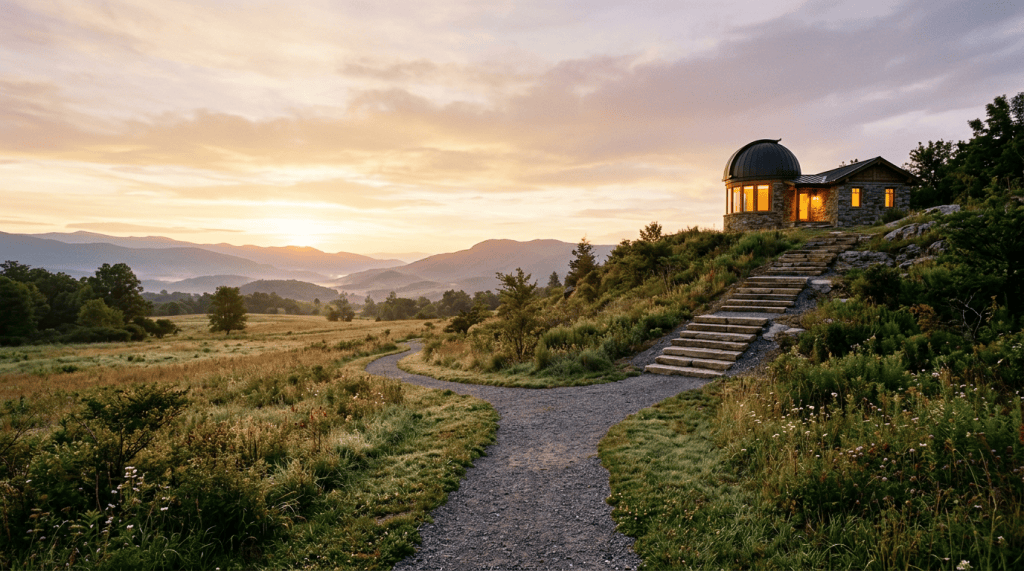
  • Stone observatory above a meadow with mountains at sunset

    Weekly Sky Reflection August 31–September 6, 2026

    Weekly Sky Reflection

    August 31–September 6, 2026

    When the Dream Becomes Real

    The Sky at a Glance

    We are stepping into a very different chapter of the astrology this week.

    The eclipses have brought a period of endings, revelations and deep recalibration, and although their effects continue to unfold, the emphasis now begins to shift from release toward creation. On Monday, Jupiter forms a trine to Saturn for the first of three exact connections over the coming eleven months. It is a meeting between expansion and structure, possibility and reality, vision and the discipline required to give that vision a life.

    Jupiter asks us to think beyond the limits we have become accustomed to. Saturn asks what can actually be built with what we have learned. Together, they open a longer period in which something that has existed primarily as a dream, longing or possibility can begin taking physical form.

    The timing matters. We are coming directly out of an eclipse season that has been clearing old identities, patterns and attachments. Some things are not coming back, and that creates space for something else to develop.

    Uranian energy remains strong throughout the week, bringing unexpected openings, sudden insights and moments that seem to arrive from outside our carefully constructed plans. Venus moves through a series of archetypal encounters with Isis, Kali, Eris and Hecate, bringing questions of desire, life force, truth and direction into the process.

    The deeper theme running through all of it is congruency: bringing what we know, what we feel, what we value and what we actually do into greater alignment.

    Because there comes a point when the dream is no longer asking to be imagined.

    It is asking to be lived.


    This Week’s Invitation

    There is something different about the moment after a major period of clearing.

    During eclipse season, attention naturally goes toward what is leaving. We notice the structures that no longer hold, the relationships that have changed, the identities that have become too small and the patterns that have finally become impossible to ignore. There can be a tremendous amount of psychological and emotional energy involved in recognizing what needs to end.

    But once something has been released, a different question emerges.

    What are you going to do with the space it created?

    This is where Jupiter and Saturn become particularly interesting.

    Jupiter trine Saturn is not the astrology of dreaming without limits, nor is it the astrology of reducing a vision until it becomes safe enough to manage. It is the meeting point between the two. Jupiter expands the field of possibility while Saturn asks for enough structure, commitment and patience to allow that possibility to survive contact with reality.

    The first exact trine opens an eleven-month period in which this relationship between vision and embodiment will continue to develop.

    That is a long enough horizon to build something meaningful.

    And building something meaningful requires more than knowing what we want. It requires our actual lives to begin reflecting that knowledge.

    If a dream matters, it eventually changes the way we spend our time. It changes what we say yes to, what we decline, what we prioritize and what we are willing to practice consistently. At some point, the difference between wanting a life and creating a life becomes the willingness to participate in the process of making it real.


    The Dream Needs a Structure

    There is a tendency to think of Saturn as the planet that limits Jupiter’s optimism, but their relationship this week tells a more interesting story.

    A vision without structure remains vulnerable to circumstance. It can inspire us, but it cannot necessarily sustain us. Saturn brings the less glamorous dimensions of creation into the picture: repetition, responsibility, boundaries, time, patience and the willingness to keep showing up after the initial excitement has passed.

    This is where a dream becomes a commitment.

    Not necessarily a rigid commitment to one particular outcome, but a commitment to the values underneath it.

    If what you want is meaningful creative work, what does your life need to look like to make room for it? If you want deeper relationships, what kind of relating can support that depth? If you want greater freedom, which structures currently make freedom impossible? If you know that something is part of your path, what are you willing to reorganize in order to give it enough attention to actually develop?

    These are Saturnian questions, and they are not meant to make the dream smaller.

    They are what allow it to become tangible.

    Jupiter gives us permission to imagine more. Saturn asks whether we are willing to build accordingly.


    The Endings Are Part of the Beginning

    The eclipse story is still very much present.

    This matters because creation is rarely a matter of simply adding more to our lives. Sometimes something new can only develop because something else has stopped consuming the energy required to sustain it.

    The eclipses have been revealing where life force has been tied up in old patterns, identities and attachments. Some of those things may still be emotionally present even when their role in our lives has ended. We may continue investing energy in something because we have not yet fully adjusted to the fact that it is over.

    This week begins to expose the cost of that.

    There is a finite amount of attention available to us. When it is continually directed toward maintaining something that no longer has life in it, very little remains for what is trying to emerge.

    Release therefore becomes part of creation.

    The empty space is not a problem to be immediately filled.

    It is part of the new structure.


    Congruency Is Where the Power Is

    Mars square Saturn on Tuesday brings this question into sharper focus.

    There can be tension between desire and action, between what we want to move toward and the structures that currently organize our behaviour. This can be frustrating, but it can also reveal something important.

    Where are our actions actually congruent with what we say matters?

    It is easy to have a compelling vision of a future self while continuing to make choices that belong to an older version of us. We can say that health matters while organizing every day around exhaustion. We can say that creativity matters while leaving no space for it. We can say that freedom matters while continuing to make every important decision from fear.

    The issue is not hypocrisy. Human beings are complicated, and change takes time.

    But these discrepancies contain information.

    When mind, heart, body, values and action begin moving in the same direction, something changes. We no longer have to spend quite so much energy negotiating with ourselves.

    That is the deeper meaning of congruency.

    It is not perfection.

    It is the gradual reduction of the distance between what we know and how we live.


    Breathing Life Into What Is Emerging

    On Wednesday, Venus forms supportive connections with Isis and Kali, bringing a distinctly different quality into the week’s creation story.

    There is a form of creation that comes through effort, discipline and conscious construction. There is another dimension that has more to do with vitality: knowing what is alive enough to deserve our attention and allowing ourselves to become genuinely connected to it.

    Isis carries the archetype of restoration and reanimation, of gathering what has been fragmented and bringing life back to what still has a future. Kali introduces a more uncompromising force, cutting through what has become stagnant so that energy can move again.

    Together with Venus, these archetypes bring us into relationship with desire itself.

    What do we actually want to bring into the world?

    What has enough vitality that we are willing to nourish it?

    And where have we confused force with devotion?

    Something that is aligned can still require enormous work. The difference is that the work feeds something that matters rather than continually draining us in an attempt to make something lifeless survive.

    Creation needs effort.

    It also needs life.


    The Truth About Desire

    Venus opposing Eris on Thursday brings another necessary question: whose desire is this?

    Eris has a particular relationship with truth. She is not especially interested in the version of ourselves that has been edited for social approval, family expectations or cultural conditioning.

    This becomes important whenever we begin creating a new chapter.

    Because it is surprisingly easy to build an impressive life around someone else’s definition of what a good life should look like.

    We can inherit ambitions.

    We can inherit ideas about success.

    We can inherit what relationships should look like, what work should mean, what adulthood should be, what we should want by a certain age.

    And because these expectations are often absorbed so early, they can feel indistinguishable from our own desires.

    The question is not whether those inherited ideas are objectively wrong. It is whether they are actually alive in us now.

    A desire that belongs to the soul has a different quality from a desire that exists primarily to prove something.

    As this new creation window opens, that distinction becomes increasingly important.


    What Isn’t Coming With You

    Friday’s symbolism brings the process into the body. Medusa and Persephone evoke the shedding of an old identity and the passage through a threshold, while Mars conjunct Lilith brings instinct, anger, desire and embodied life force into the foreground.

    There are times when an identity has become so familiar that we continue performing it even after we have outgrown it.

    The responsible one.

    The good one.

    The one who holds everything together.

    The one who never asks for too much.

    The one who needs to be needed.

    The one who is always strong.

    The one who keeps the peace.

    These roles are not necessarily false. Many of them developed for good reasons. But an identity can begin as an adaptation and eventually become a prison if we never revisit whether it still belongs to us.

    This is one of the places where the body can become informative. Restlessness, exhaustion, constriction, anger or a sudden surge of energy can sometimes reveal that something in us has already moved ahead while our conscious identity is still trying to keep up.

    The question is not simply what we want to add to the next chapter.

    It is also what no longer belongs in it.


    The Intelligence of the Crossroads

    Venus sextile Hecate on Saturday brings us to the crossroads.

    Hecate is an archetype of thresholds and liminal spaces, where one direction has ended but the next has not yet become completely visible. These are uncomfortable places for a mind that wants certainty.

    We often want to know that a decision is correct before we make it. We want guarantees, evidence and a clear map of the future.

    But not every meaningful decision comes with that kind of certainty.

    Sometimes direction is recognized through a quieter form of knowing: an attraction that keeps returning, a possibility that creates unexpected energy, a door that opens at precisely the moment we are ready to walk through it, or a persistent sense that one direction is more alive than another.

    This is also where the strong Uranian influence of the week becomes relevant. Sudden insights, strange coincidences, unexpected meetings, unusual dreams or abrupt changes in circumstance can interrupt the linear story we have been telling ourselves.

    Not every coincidence is a message, and discernment matters.

    But neither does everything meaningful arrive through rational planning.

    Sometimes life changes the question before we have finished answering the old one.


    What Deserves Your Life Force?

    By Sunday, the Moon joins Mars and Lilith while Venus opposes Vesta, bringing the week’s themes back to devotion.

    We all have limited resources of attention, energy and time. One of the more consequential choices we make is therefore not simply what we pursue, but what we allow to occupy our inner world.

    There are things we continue tending because they are genuinely meaningful. There are others we tend because we feel responsible for them, because they are familiar, because someone expects us to, or because we have invested too much already to admit that the investment no longer makes sense.

    Vesta asks us to become more conscious of devotion.

    What receives our best attention?

    What are we willing to protect?

    What deserves consistency?

    And what has been taking up space simply because we have never stopped to question whether it still belongs there?

    This matters particularly now because the coming eleven months are not an abstract promise of possibility. They are a period in which sustained attention can compound.

    What we repeatedly give our energy to will shape what has the opportunity to grow.


    An Eleven-Month Window

    The most interesting thing about this Jupiter–Saturn cycle may be its timescale.

    We are not being asked to transform everything immediately.

    Eleven months gives a different kind of perspective. It allows something to develop through stages, to be tested against reality, revised and strengthened. A vision can become more precise as we begin living it. The first version does not have to be the final version.

    That is part of the wisdom of bringing Jupiter and Saturn together.

    Jupiter keeps the horizon open enough that we don’t confuse our current limitations with the limits of possibility. Saturn keeps us grounded enough that possibility becomes something we can actually work with.

    The question for this week is therefore not how to manifest an entire future.

    It is much more practical:

    What deserves to become real now?

    And once you know, what would it look like for your actual life to begin reflecting that knowledge?


    Reflection Questions

    A Contemplative Closing

    There is a particular kind of magic in the moment when possibility meets reality.

    It is quieter than fantasy and more demanding than inspiration.

    The dream has to survive Tuesday morning. It has to survive the practical details, the uncertainty, the repetition and the moments when the original excitement is no longer carrying you. It has to find a place in your calendar, your relationships, your finances, your body and your ordinary routines.

    That is not the death of the dream.

    It is the beginning of giving it a life.

    The eclipses have helped reveal what cannot continue. Now the astrology begins asking what is worthy of the energy that has been freed.

    This is where the distinction between desire and direction becomes important. We can want many things. We cannot devote ourselves to everything. Creation requires selection, and selection requires honesty.

    The coming eleven months offer time to discover what happens when vision is backed by sustained attention. There will be unexpected turns along the way, new information, doors that open and others that close. The path may not unfold exactly as imagined.

    But the work is not to control every detail.

    It is to remain sufficiently connected to what matters that you can recognize the next step when it appears.

    The dream does not need more fantasy.

    It needs participation.

    It needs your time, your attention, your courage, your discernment and your willingness to become congruent with the life you say you want.

    Coming out of the eclipses, this is the shift:

    From releasing what is no longer alive to investing in what is.

    From imagining possibility to giving it structure.

    From knowing what matters to living accordingly.

    The next chapter does not need to be forced into existence.

    It needs to be built.

    And this week, the first foundations are being laid.

    Intentional Solidarity

    Continues Liberation

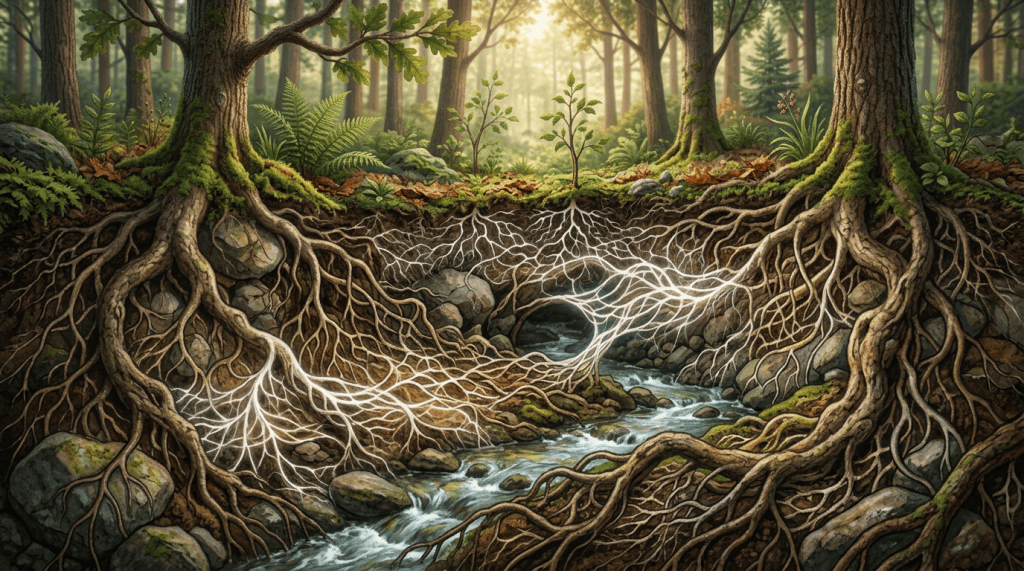
  • Illustrated forest cross-section with trees, intertwined roots, and underground stream

    The Wound of Separation: Supremacy, Cultural Harm, and the Work of Belonging

    The Wound of Separation: Supremacy, Cultural Harm, and the Work of Belonging

    The lineage work we are doing may appear, at first, to be primarily about family and personal healing. We look at what was carried by our parents and grandparents, at what happened in the lives of those who came before us, at what was lost, survived, silenced, repeated, or never given the opportunity to heal.

    But a lineage has never existed outside of culture.

    Our ancestors did not only inherit family stories. They inherited worlds. They inherited ideas about who mattered, what mattered, whose lives were valuable, what belonged to whom, what could be taken, what could be controlled, what could be believed, whose bodies could be desired or disciplined, whose land could be occupied, whose suffering could be ignored, and which ways of knowing were considered legitimate.

    The personal is therefore inherently cultural.

    And the cultural is carried personally.

    We can begin lineage work with our own wellbeing—with the body, the nervous system, our relationships, our capacity to feel safe enough to look. We need that groundwork. But as our capacity grows, another layer becomes visible: the cultural pain running through our lineages and through the world we inhabit.

    It is useful to have a framework for recognizing it.

    One way of beginning to name the problem is through the idea of supremacy.

    At its most basic, supremacy is the belief—or embodied assumption—that one being, group, way of living, worldview, identity, species, or form of existence is entitled to stand above another.

    It is the energetic and cultural logic of:

    We are better than you.

    Our nation is better.
    Our religion is better.
    Our ancestors are better.
    Our culture is better.
    Our way of loving is better.
    Our bodies are better.
    Our worldview is correct.
    Our species is more important.
    Our people deserve more.

    Supremacy can exist as an attitude inside an individual. But it can also become organized into institutions, economies, laws, traditions, family systems, identities, and entire cultures.

    That distinction matters.

    Because cultural harm is not only something one person does to another. A supremacist attitude can become a system. A system can shape a family. A family can shape a child. And what was once systemic can eventually feel simply like “the way things are.”

    Perhaps the most useful way to understand this is not as six completely separate problems, but as several expressions of a recurring cultural logic.

    I think of six major forms of cultural disruption.

    They all show up in our lineages, in different forms and to different degrees. And within each of us, we may carry experiences of being harmed, experiences of participating in harm, and adaptations to both. We need the full spectrum.

    The point is not to divide humanity into victims and perpetrators forever.

    The point is to become capable of recognizing what has been carried.

    These patterns are toxins.

    And toxins can become medicine.

    When we can recognize a pattern, feel what it has cost, understand how it was transmitted, and interrupt its reproduction, we become participants in cultural transformation.

    1. Human Supremacy

    The first form is human supremacy: the assumption that our species is fundamentally above the rest of life.

    For many people, this is difficult even to perceive because it is so deeply normalized. We speak of “nature” as though humans were somehow outside of it. We speak of animals as resources. Land becomes property. Forests become timber. Rivers become water supplies. Other beings become food, commodities, experiments, entertainment, or obstacles.

    From an animist perspective, this represents a profound shift.

    At some point in many lineages, people moved—or were forced to move—away from a worldview in which the world was experienced as alive, relational, and inhabited by beings with whom humans existed in reciprocal relationship.

    The medicine is not to make humans worthless.

    It is to remember kinship.

    To remember that we are not separate from the living world.

    We are not humans who happen to live on Earth.

    We are beings of Earth.

    The movement is therefore not from human superiority to human inferiority, but from domination to reciprocity.

    2. Economic Supremacy: Extraction, Accumulation, and Hoarding

    A second form appears in our relationship with resources.

    We can organize economies around the assumption that accumulation is good even when accumulation for some depends upon deprivation for others.

    We can create systems in which having vastly more than we need is considered success while other people lack food, housing, security, time, or access to basic resources.

    There is a strange collective illusion here:

    That I can have far more than others while they have far less—and that this is somehow an acceptable state of the world.

    Extraction turns relationship into transaction.

    Hoarding turns abundance into possession.

    Competition turns another person’s wellbeing into something that can feel threatening to our own.

    The medicine is not simply the redistribution of money. It is a deeper remembering of sufficiency, reciprocity, stewardship, and sharing.

    The question changes from:

    How much can I accumulate?

    to:

    What is enough, and how do we live well together?

    An economy is ultimately a way of organizing relationship.

    What does it say about us if our systems require endless accumulation in a world of finite resources?

    What does it do to the human psyche to spend our lives proving our worth through productivity and possession?

    These questions lead directly into another form of supremacy.

    3. Gender, Sexual, and Bodily Supremacy

    Patriarchy is one expression of the belief that some bodies and ways of being are more legitimate, powerful, valuable, or desirable than others.

    But this extends beyond sexism.

    It includes misogyny, discrimination based on sexual orientation, repression and shame around sexuality, rigid ideas about gender, policing of gender expression, and the assumption that there is one correct way for a body to be.

    It can also appear in the capitalist valuation of the body itself.

    A body is considered valuable insofar as it is productive.

    Young bodies are valued differently from old bodies. Able bodies differently from disabled bodies. Conventionally attractive bodies differently from bodies that do not conform to dominant standards.

    We begin to evaluate human beings according to their usefulness.

    The body becomes a function.

    The medicine is not simply reversing who occupies the top of the hierarchy.

    It is remembering bodily dignity and plurality.

    It is making room for queer lives, celebrating and uplifting diverse bodies, different abilities, different ages, different forms of gender and sexual expression, and forms of existence that do not need to justify themselves through productivity.

    It is remembering that a human being does not have to be useful in order to be worthy.

    4. Colonial Supremacy

    Colonialism makes supremacy explicit in its relationship to land and peoples.

    It is the logic that says:

    We can arrive somewhere and claim what was already held in relationship by someone else.

    Land becomes territory. Territory becomes property. People become obstacles. Culture becomes something that can be erased, appropriated, controlled, or replaced.

    Colonialism is not simply a historical event that ended.

    Its consequences continue through land ownership, political structures, economic arrangements, cultural erasure, displacement, and the continuing loss of sovereignty.

    Its underlying wound is relational.

    A relationship to land is replaced by ownership of land.

    The medicine therefore includes restitution, sovereignty, restoration of resources, cultural continuity, and movements such as Land Back.

    But beneath these political forms is a deeper remembering:

    Land is not merely something we own. It is something we are in relationship with.

    5. Racial Supremacy

    Racism is another expression of the human tendency to turn difference into hierarchy.

    The idea that humanity is divided into biologically distinct races, arranged in a hierarchy of value, is historically constructed. Yet the consequences of that construction have been extraordinarily real.

    White supremacy and European supremacy created systems in which certain people were positioned as normative, civilized, intelligent, beautiful, rational, or fully human, while others were positioned as inferior.

    Ancestral supremacy itself is not new. Human groups have long imagined themselves to be superior to others.

    But modern racial categories provided a particularly powerful system for organizing those hierarchies.

    The medicine is not colorblindness.

    It is not pretending that difference does not exist.

    It is proactively celebrating ancestral diversity while telling the truth about hierarchy and repairing the structures through which racism continues to operate.

    Difference does not need to become hierarchy.

    We can see one another more clearly without needing one another to be less.

    6. Ideological Supremacy

    The sixth form may be the most subtle because it can appear in almost any belief system.

    It is the attitude:

    My view is the correct one.

    My religion.
    My politics.
    My philosophy.
    My science.
    My spirituality.
    My tradition.
    My understanding of history.

    Ideological supremacy turns a worldview into a weapon.

    It does not merely say, “This is what I see.”

    It says:

    If you see something else, you are wrong, inferior, dangerous, ignorant, or illegitimate.

    Fundamentalism can emerge anywhere.

    The medicine is not to believe nothing.

    It is epistemic humility.

    We can have convictions without requiring domination.

    We can have values without becoming rigid.

    We can discern without dehumanizing.

    We can say, “This is what I believe,” without needing to say, “Therefore you must become me.”

    The Deeper Pattern: Separation

    These six forms of supremacy are not identical, and their histories are not interchangeable.

    But they share a recurring mechanism.

    Supremacy creates separation.

    It divides the world into above and below, worthy and unworthy, civilized and primitive, productive and useless, human and nonhuman, us and them, correct and incorrect.

    Once separation is established, domination becomes easier.

    If another being is truly separate from me, their suffering becomes easier to ignore.

    If another person belongs to an inferior category, their deprivation can become acceptable.

    If another culture is considered less developed, taking its land can be justified.

    If another body is considered less valuable, excluding it can feel natural.

    If another worldview is considered dangerous, silencing it can feel righteous.

    Separation makes domination possible.

    And domination produces trauma.

    That trauma does not simply disappear when the original event ends.

    It enters bodies, families, relationships, stories, identities, institutions, and nervous systems.

    It becomes part of what is inherited.

    The Hidden Consequence: Loneliness

    But as I followed this pattern more deeply, another consequence began to stand out.

    Perhaps one of the deepest wounds produced by these systems is loneliness.

    Not simply being alone.

    Something more profound.

    A sense of being fundamentally separate.

    People can be surrounded by hundreds of others and still experience an almost unbearable isolation.

    They can have families, friendships, partners, communities, careers, social media, and full calendars—and still carry somewhere inside themselves the feeling:

    I am alone here.

    Perhaps this loneliness is one of the hidden consequences of cultural separation.

    Supremacist systems organize the world through hierarchy and separation. Repeated over generations, this can become alienation: from land, from the body, from community, from ancestry, from meaningful work, from other species, from our own vulnerability, and from one another.

    Alienation is then experienced personally as loneliness.

    This is why the problem cannot be understood only as an individual psychological problem.

    If the world repeatedly teaches us that we are autonomous individuals competing for scarce resources, that vulnerability is weakness, that dependence is failure, that our worth is measured through productivity, that difference is threatening, and that security comes through accumulation and control, then loneliness is not an accidental side effect.

    It becomes structurally predictable.

    And loneliness can make us vulnerable to the very systems that produced it.

    Because when we do not experience belonging, we may search for security elsewhere.

    We may seek superiority.

    We may seek rigid identity.

    We may seek ideological certainty.

    We may seek control.

    We may seek accumulation.

    We may seek belonging through exclusion.

    There is a terrible paradox here:

    Supremacy can become a substitute for belonging.

    If I cannot experience the safety of being with you, perhaps I can experience the safety of being above you.

    I am safe because I am above you.

    But belonging offers an entirely different answer:

    I am safe because I am with you.

    These are two radically different ways of organizing a human life.

    The Relational Self

    Perhaps one of the most important things for humanity to remember is that we are not separate beings who happen to have relationships.

    We are relational beings whose lives are constituted through relationship.

    We become ourselves through relationship—with caregivers, families, ancestors, communities, land, culture, other species, and the larger living world.

    This changes the meaning of healing.

    Lineage healing is not only about healing what happened to our ancestors.

    It can also be about learning to recognize which patterns of separation entered our lineages.

    What relationships were broken?

    What was lost?

    What was forbidden?

    Who had to be rejected in order to belong?

    Who had to dominate in order to survive?

    What forms of superiority were taught?

    What forms of inferiority were endured?

    What did our ancestors have to disconnect from in order to survive their world?

    And what capacity for relationship is waiting to be restored?

    This is where personal healing and cultural healing meet.

    We can discover that something we experience as “my problem” may have a much longer history.

    And we can also discover that what we heal personally can change what we reproduce culturally.

    From Toxin to Medicine

    The goal is not to create a world without difference, conflict, disagreement, or complexity.

    Nor is it to replace one hierarchy with another.

    The deeper task is to develop cultures in which difference does not require hierarchy, belonging does not require exclusion, security does not require domination, and abundance does not require someone else’s deprivation.

    The medicines begin to reveal themselves.

    Human supremacy becomes kinship with the more-than-human world.

    Extraction becomes reciprocity and sufficiency.

    Gender hierarchy becomes bodily dignity and plurality.

    Colonial domination becomes sovereignty, restitution, and restored relationship with land.

    Racism becomes truth, ancestral diversity, justice, and repair.

    Ideological rigidity becomes humility, curiosity, and plural ways of knowing.

    And underneath all of them is the same movement:

    from separation toward relationship.

    Not just from individual to collective, but from the isolated self to the relational self.

    Not from certainty to believing nothing, but from certainty without domination to humility.

    Not from wealth to poverty, but from endless accumulation to enough.

    Not from hierarchy to chaos, but from domination to reciprocity.

    The medicine is not simply the opposite ideology.

    It is relationship restored.

    The Work of Our Times

    Perhaps this is why the work of lineage healing matters so much.

    We are not only trying to understand where our pain came from.

    We are learning to recognize the worlds that shaped the people who came before us—and the worlds that are still shaping us.

    We are learning to hold the full spectrum within ourselves: the places where we were harmed, the places where we adapted, the places where we may have participated in harm, the places where we inherited privilege, the places where we inherited wounds, and the places where our ancestors carried wisdom that can help us now.

    We do not need to condemn our ancestors in order to see clearly.

    Nor do we need to idealize them.

    We can become capable of telling the truth while remaining in relationship.

    That may be one of the deepest forms of ancestral healing:

    to stop reproducing what we inherited without having to reject the people from whom we inherited it.

    We can stay connected to our people while looking honestly at the cultural troubles they lived inside.

    We can say:

    This happened.

    This was carried.

    This shaped us.

    This harmed us.

    This helped us survive.

    And it does not have to continue through us.

    Because cultural transformation does not begin somewhere far away from the human heart.

    It begins wherever a pattern of domination is recognized and a different relationship becomes possible.

    A child who is allowed to be fully themselves.

    A body that is no longer treated as a machine.

    A person who can receive without shame.

    A community that shares rather than hoards.

    A society that repairs rather than erases.

    A human being who remembers that the forest is not merely a resource.

    A person who can disagree without needing to destroy.

    A culture that can encounter difference without turning it into hierarchy.

    These may seem like small acts.

    They are not.

    They are rehearsals for another way of being human.

    Perhaps the deepest remembering is this:

    We belong to one another, and to the living world, before we belong to any hierarchy.

    We are not separate beings who must earn our right to exist.

    We do not need someone beneath us in order to know that we belong.

    We do not need domination in order to be safe.

    We do not need sameness in order to be connected.

    And we do not need superiority in order to have dignity.

    The great task may therefore not be to create a perfect culture.

    It may be to remember how to belong without needing someone else to be beneath us.

    That is the movement from supremacy to reciprocity.

    From separation to relationship.

    From alienation to belonging.

    From inherited trauma to conscious participation.

    And perhaps, ultimately, from loneliness back into the living web from which we were never truly separate.

    Intentional Solidarity

    Continues Liberation

  • Lunar eclipse above a mountain lake reflecting the moon and surrounding peaks

    Weekly Sky Reflection August 24–30, 2026

    Weekly Sky Reflection

    August 24–30, 2026

    The End of a Two-Year Chapter

    The Sky at a Glance

    This week brings us to the culmination of a two-year eclipse story. At 6:12 AM on Friday August 28, the Full Moon Lunar Eclipse in Pisces reaches its peak, bringing the Pisces–Virgo eclipse chapter that began in September 2024 to a close. Two years is a significant amount of time—long enough for identities to change, relationships to transform, priorities to rearrange, and beliefs we once considered fundamental to become something else entirely.

    Mercury is deeply involved in this eclipse, moving across the South Node and reaching a cazimi at the time of the Full Moon. This can amplify the mind’s ability to recognize something that has previously been difficult to articulate, while also making synchronicities, dreams, intuitive impressions and unusual connections feel louder than usual. As Mercury enters Virgo and forms a trine to Chiron, something that has been difficult to understand may begin revealing the wisdom underneath it.

    A Finger of God involving Pluto and Neptune points toward the Sun, bringing together the shadow, the unconscious and the mystical with a question of identity: What is all of this making possible for the soul? Then Uranus enters the picture, creating pressure for what has been revealed to become movement rather than remaining simply another insight we carry around.

    The larger invitation of this eclipse feels remarkably clear: to recognize what has completed its purpose, to understand more deeply what has been shaping us, and then to allow that understanding to change the way we live.


    This Week’s Invitation

    There are certain astrological moments that feel less like a beginning and more like a reckoning with what has already happened. This eclipse feels like one of them.

    A Full Moon brings something into illumination, while an eclipse can mark a turning point in a longer process. And because this is the final eclipse in a Pisces–Virgo story that has been unfolding since September 2024, it offers us a rare opportunity to step back and look at the larger arc of our lives.

    Go back to September 2024 for a moment.

    Who were you then? What were you navigating? What did you believe about yourself, your relationships, your spirituality, your purpose and your future? What were you trying to make work? What were you afraid to lose? What did you think you needed?

    And now look at yourself today.

    What changed?

    What fell away? What did you choose, and what chose you? What became more important? What simply stopped mattering? What do you understand now that you couldn’t have understood then?

    And perhaps the most revealing question of all:

    What still hasn’t changed?

    Where are you still caught in the same loop? Where do you keep having the same reaction, fear, relationship dynamic, hesitation or block, even though you have worked on it? Where do you know better but somehow keep doing the same thing?

    That is worth paying attention to.

    Because we can understand a pattern and still be inside it. We can know where it came from and still react from it. We can journal about it, talk about it, analyze it and name it—and still not be free of it.


    The Pattern You Can See—and the One You Can’t

    There is a particular kind of frustration that comes with realizing you are still caught in something you understand intellectually. We can become remarkably sophisticated at describing our own patterns. We can develop an entire vocabulary around our wounds and know exactly where they originated, while our actual behaviour remains largely unchanged.

    Understanding matters. It can be the beginning of transformation. But understanding is not the same thing as transformation.

    And this is where the South Node becomes especially interesting in this eclipse. It doesn’t only point toward the stories we already know about ourselves. Symbolically, it can take us toward material that operates beneath conscious awareness: ancestral patterns, deeply absorbed conditioning, unconscious emotional structures and, depending on one’s worldview, even past-life material.

    You may know the symptom without knowing what is underneath it.

    Why do I keep holding back here? Why does this scare me so much? Why do I keep choosing this? Why can’t I seem to move past this one particular thing?

    Sometimes reflection gives us an answer. Sometimes a conversation or therapeutic process opens something. And sometimes we have to go somewhere deeper before we can actually see the structure we have been living inside.

    That is part of what this eclipse is opening.

    The unconscious is not simply the place where everything we don’t want to know gets stored. It can also contain information, instinct, memory and forms of wisdom that have not yet become available to the conscious mind.


    The Medicine Beneath the Wound

    As Mercury enters Virgo and moves into a trine with Chiron, there is an opportunity for something that has been difficult to understand to become clearer. Chiron reminds us that the place where we have been wounded can also become a place where a particular kind of knowledge develops—not because suffering is inherently meaningful, but because what we learn through living can become a capacity we would otherwise not possess.

    A wound may have taught you discernment. It may have taught you boundaries, compassion, courage or the ability to recognize something in another person because you have experienced it yourself. The difficulty is that we often focus so completely on what hurt us that we overlook the intelligence that developed in response to it.

    Perhaps this week asks us to look again.

    What wisdom exists underneath the thing I have spent years trying to overcome?

    This isn’t an invitation to romanticize suffering or turn every painful experience into a spiritual lesson. Some things are simply painful. But it is possible to acknowledge the wound without allowing it to have the final word.

    Sometimes there is medicine underneath what we have spent so long trying to escape.


    When the Mystical Meets the Shadow

    The Finger of God involving Pluto, Neptune and the Sun adds another dimension to this process. Pluto takes us toward what is hidden, psychologically charged and difficult to control, while Neptune opens the symbolic, mystical and imaginal dimensions of experience. Both ultimately point toward the Sun: toward identity, consciousness and the question of who we are.

    What if the material coming to the surface this week is not only asking us to understand our past, but showing us what needs to change so that a different version of ourselves can emerge?

    Sometimes we cannot see the next version of ourselves until we are willing to see what the current version has been built around. We may discover that certain identities were constructed around fear, adaptation, loyalty or survival, and that what once helped us navigate life has now become the very thing restricting our movement.

    Perhaps one of the most destabilizing realizations is not “This is wrong.”

    It is:

    “This is no longer me.”

    That recognition can be painful, but it can also be profoundly freeing.


    The Eclipse: What Is Actually Finished?

    On Friday (CET), the Full Moon Lunar Eclipse in Pisces brings the two-year chapter to its culmination. Pisces can dissolve boundaries and return us to the emotional, spiritual and unconscious dimensions of experience. At the South Node, this can feel like a great unravelling of material that has been carried for a long time: old karma, old contracts, old wounds, old identities and old versions of ourselves.

    Something may simply be done.

    And with Mercury reaching a cazimi around the eclipse, there may be moments of unusual clarity where something becomes unmistakably obvious. Perhaps you finally understand why a particular chapter could not continue, or why a certain pattern has been repeating. Perhaps you recognize that something you have been trying to revive has already completed its purpose.

    Sometimes freedom begins with being able to name an ending.

    This is finished.

    I don’t want this anymore.

    I am no longer available for this.

    This was part of my life, but it isn’t part of my future.

    There can be grief in that recognition, even when the ending is right. But grief and clarity can coexist. We do not need to make something wrong in order to let it go.


    The Body Knows

    At the same time, Uranus activates Venus around the eclipse, bringing a very different question into the picture: What makes you feel alive?

    Uranus disrupts what has become stagnant, while Venus speaks to what we value, desire and are drawn toward. This creates an interesting contrast with the South Node material. As some things are revealed as complete, other things may suddenly become much more vivid.

    The body can be helpful here.

    Notice what happens physically when you imagine continuing something for another five years. Notice what happens when you imagine walking away. Pay attention to the contraction, the relief, the energy, the numbness or the unexpected excitement.

    The body is not infallible, and sensation alone does not make a decision for us. But it often registers the truth of our lived experience before the conscious mind has managed to construct an argument around it.

    So perhaps the question this week is not only What should I do? but also:

    What happens inside me when I imagine actually doing it?

    What makes you feel more alive? What restores energy rather than continually consuming it? What feels like movement rather than maintenance?

    These are not trivial signals.


    What Has Been Revealed Wants Movement

    There is a tendency after a major realization to assume that seeing is enough. Sometimes we believe that once we understand something, the transformation has already happened.

    But insight creates possibility. Action creates change.

    As the Sun moves into tension with Uranus on Friday, what has been revealed may become increasingly difficult to leave untouched. This doesn’t necessarily mean making dramatic decisions or acting impulsively. It means allowing insight to alter behaviour.

    If you understand that a relationship needs a different conversation, have it. If you recognize a habit that is keeping you in an old loop, change something concrete. If you know that a particular direction no longer fits, stop pretending it does. If something has been calling you for a long time, take one step toward it.

    There is a point at which continued analysis can become another way of avoiding movement.

    So the question becomes:

    What will be different because I understood this?


    Who Are You Now?

    As the week progresses, the eclipse story brings us back to a question that is both simple and surprisingly difficult:

    Who are you now?

    Not who you were in September 2024. Not who you were before the relationship ended, before the loss, before the awakening, before the disappointment or before you learned what you now know.

    Who are you now?

    What matters to you now? What do you value? What are you no longer willing to compromise? What kind of relationships, work, environment and inner life actually fit the person you have become?

    There is a particular kind of suffering that comes from trying to make an old life fit a new self. We can spend enormous amounts of energy trying to repair structures that are no longer appropriate for who we are.

    Sometimes the work isn’t to fix the old structure.

    Sometimes it is to acknowledge that we have outgrown it.


    From Revelation to Reality

    By Sunday, Jupiter and Saturn form a harmonious relationship, bringing a grounded quality to the end of the week. After all the uncovering, remembering, questioning and releasing, we are asked to consider how to make what has been revealed real.

    Jupiter can expand the vision, while Saturn asks for structure, commitment and responsibility. Together they remind us that psychological or spiritual insight only becomes transformative when it enters ordinary life.

    If you realize that a relationship no longer works, what conversation needs to happen? If you recognize a pattern, what habit needs to change? If you discover that a goal was never truly yours, what are you going to stop pursuing? If you understand what matters now, what will you build your life around?

    This is where the eclipse becomes more than an interesting psychological experience.

    The realization has to reach the ground.

    We have to make the conversation, make the decision, change the habit, take the step. We have to bring the upgrade into the structure of our actual lives.


    Looking Back Without Going Back

    Two years is a long time. Perhaps when the Pisces–Virgo eclipse story began, you could not have imagined the person who would be standing here now.

    Looking back can help us recognize that.

    Not so that we can romanticize the past or judge ourselves for what we didn’t know, but so that we can see the evidence of our own becoming. Look at what life has taught you. Look at what you survived. Look at what you stopped tolerating. Look at what you finally understood. Look at what you thought you couldn’t live without—and then discovered that you could.

    And then look honestly at what remains.

    Because completion does not mean that everything is resolved. A chapter can close while a pattern continues. An eclipse can reveal something without automatically changing it.

    The invitation is to take what has been revealed and participate consciously in what comes next.


    Reflection Questions


    A Contemplative Closing

    Two years ago, you were standing at the beginning of a story you could not yet see. You didn’t know what would leave, what would arrive, which relationships would change, which beliefs would dissolve, or which parts of yourself would become stronger. You simply lived forward, one decision and one experience at a time.

    And now you are here.

    Perhaps this eclipse is an invitation to pause long enough to recognize the distance you have travelled—and then to become honest about what remains.

    Because there is a difference between carrying something consciously and being unconsciously carried by it. There is a difference between understanding a pattern and being free from it. And there is a difference between knowing what matters and actually building a life around it.

    The eclipse may illuminate something that has been waiting for your attention: an ending, a wound, a truth, a forgotten desire, a pattern you are finally ready to see. We don’t have to rush to turn every revelation into a spiritual lesson. We can let it be information first. We can listen, notice and feel.

    And then we can ask the question that matters:

    What does this make possible now?

    Because perhaps the real completion of this two-year eclipse chapter is not simply releasing who we were. It is becoming willing to live as who we are now.

    Have the conversation. Make the decision. Change the habit. Take the step. Bring the insight into the structure of your actual life.

    Look back with honesty.

    Release what is finished.

    Listen for what remains alive.

    And then, quietly and deliberately,

    make it real.

    Intentional Solidarity

    Continues Liberation

  • Owl perched on a fence post overlooking a misty countryside path

    Weekly Sky Reflection August 17–23, 2026

    Weekly Sky Reflection

    August 17–23, 2026

    Radical Soul Truth

    The Sky at a Glance

    This week continues to open the deeper layers revealed during eclipse season. Eris becomes one of the loudest archetypal voices, bringing the energy of the truth warrior—the part of us that refuses to keep betraying the soul simply to maintain peace. Mars asks us to move, while Neptune reminds us that not every movement needs to be external; sometimes the most powerful action begins within.

    As the Sun approaches the South Node, ancestral patterns, old identities, unconscious material and hidden emotional territory may rise into awareness. Lilith and the Black Moon deepen the invitation to reclaim what has been exiled, while Mercury helps us translate what we are sensing into language, understanding and conscious choice.

    The sky seems to be asking one coherent question:

    What becomes possible when we stop abandoning what is true in our soul?


    This Week’s Invitation

    There are moments when the invitation is not to become someone new, but to become more honest about who we already are, and this week feels like one of those moments.

    The eclipse has opened a doorway, making what has been hidden easier to see, what has been draining our life force harder to ignore, and what genuinely brings us alive more difficult to overlook. The question is not simply What do I want? but something deeper: What does my soul want? And perhaps even more importantly, How does my soul speak to me?

    It may speak through joy, through expansion, through the people and places where we feel more like ourselves, through creativity, or through a quiet inner knowing. Sometimes, however, it speaks through the opposite—the contraction, exhaustion or persistent sense that something is no longer aligned.

    This week invites us to become more finely attuned to these signals, to notice what helps us hear ourselves, and to become willing to trust what we hear.


    The Truth Warrior

    Eris is one of this week’s strongest archetypal energies, and she has very little interest in keeping the peace if keeping the peace means betraying the soul. She is the truth warrior, not the warrior who fights from woundedness and not destruction for the sake of destruction, but the part of us that becomes unwilling to continue abandoning ourselves simply to remain acceptable to others.

    Eris is an antidote to people-pleasing and an antidote to self-abandonment, asking us to look honestly at what no longer lights us up. Not what looks good, not what we have invested years into, not what our family expects and not what we think we should want, but what actually brings our soul alive?

    There can be grief in answering this honestly. Sometimes we discover that something we once loved has changed; sometimes we realize that a goal was never truly ours; and sometimes we see that we have been maintaining a connection, identity or direction long after the life has left it.

    This does not mean that the past was wrong. It means that we have changed, and perhaps part of radical truth is allowing ourselves to acknowledge that without needing to justify it.


    Listening for the Voice of the Soul

    Soul truth does not always arrive as a dramatic revelation. Often, it is subtle: it is the person with whom you suddenly breathe more deeply, the place where your creativity returns, the practice that brings you back into your body, the conversation that leaves you feeling more like yourself, or the work that gives something back to you instead of constantly taking.

    And sometimes it is simply the feeling: Something in me is alive here.

    This week, we might pay attention to those moments and begin asking ourselves who helps us attune to our soul, which places bring us closer to ourselves, which actions restore our life force, and which connections make it easier to hear our own inner voice. It is also worth noticing where we have become so accustomed to disconnection that we no longer notice it.

    The more familiar we become with our own frequency, the easier it becomes to recognize what is aligned—and what is not.


    The Shadow Isn’t the Enemy

    As the South Node opens more fully, old material may surface: old fears, old family stories, old patterns of self-abandonment, ancestral material, unconscious memories, and the parts of ourselves we have kept hidden because they were too painful, too inconvenient or simply too difficult to understand.

    The door to the underworld is wide open, and while this can feel intense, it also creates an extraordinary possibility: liberation.

    Because what becomes conscious can begin to move. The shadow is not necessarily the enemy; often, it is a part of ourselves waiting to be witnessed. Beneath every shadow, there may be a gift waiting to be reclaimed, beneath every wound, wisdom waiting to be lived, and beneath every old identity, more of us.

    We do not have to become fascinated with our darkness; we simply have to stop being afraid of looking at it. And we don’t have to carry everything we discover. Some things belong to the past, some things belong to our ancestors, some things were learned as survival strategies, and some things have simply completed their purpose.

    We can honor what shaped us without continuing to carry it.


    The Karmic Backpack

    Eclipse season has a way of revealing what we have unconsciously carried: family expectations, inherited fears, ancestral patterns, old loyalties, roles we took on because someone had to, and beliefs we absorbed before we were old enough to question them.

    Sometimes we mistake all of this for destiny, but inheritance is not the same as destiny. Just because something has been repeated through generations does not mean we are required to repeat it.

    Perhaps this is part of what liberation looks like: recognizing what is ours, recognizing what isn’t, and gently putting down the things we no longer need to carry. We do this not with blame and not with rejection of where we came from, but with consciousness.

    The karmic backpack does not have to come with us into the future.


    Seeing From a Higher Perspective

    When old material surfaces, it can be tempting to become completely immersed in the story, asking ourselves why this happened, who caused it, why we are like this, or where the pattern began. These questions can be meaningful, but there is another possibility: we can step back, not to disconnect, but to see more clearly.

    From a higher perspective, we can witness the pattern without becoming the pattern. We can see what shaped us without allowing it to define where we are going, and this is one of the gifts of consciousness:

    I can understand my history without surrendering my future to it.

    Perhaps this is also why spirituality matters so much in a week like this—not spirituality as escape and not spirituality as bypassing suffering, but spirituality as the capacity to remember that there is more to us than the story currently unfolding.


    Discernment on the Spiritual Path

    There is another shadow that may become visible now: the shadow within spiritual spaces themselves. Teachers, gurus, communities, beliefs and systems that once appeared elevated or sacred may reveal their distortions, and this naturally brings us to deeper questions. What happens when something that claims to lead us toward freedom actually asks us to surrender our discernment? What happens when belonging requires us to silence our own knowing?

    This week invites a deeper form of spiritual maturity, not cynicism, but discernment.

    Does this actually bring me closer to my soul?

    Does it create more freedom, more integrity, more compassion and more truth, or does it create dependence, fear, hierarchy or disconnection from our own inner authority?

    Not everything that looks spiritual carries a high frequency, and sometimes something falling away is not a spiritual failure. Sometimes it is the clearing that allows something more honest to emerge.


    When Truth Becomes Action

    Mars reminds us that awareness eventually asks for movement, but with Mars in Cancer and its connection with Neptune, action may not always look like pushing forward in the external world. Sometimes action is internal: choosing to feel instead of suppressing, choosing to rest instead of forcing, choosing to protect our energy, choosing to have the difficult conversation, choosing to stop participating in a pattern, or choosing to take one small step toward what is alive.

    There is a difference between action driven by urgency and action guided by the soul. One says, I have to do something now because I am afraid, while the other says, I know what matters, and I am willing to move toward it.

    Perhaps the practice this week is learning to tell the difference.

    What action would my soul take today—not my fear?


    The Liberator Within

    Lilith brings another powerful current into this week’s landscape. She represents the part of the feminine that refuses domestication, the part that has been silenced, exiled, shamed or made unacceptable—and eventually remembers its own authority.

    There is something of Medusa here too: the removal of the mask, the moment when we stop performing the version of ourselves that others can comfortably relate to.

    What remains when we no longer need to be agreeable at the cost of authenticity?

    Perhaps something fierce, perhaps something tender, perhaps something that has been waiting a very long time to come home.

    Liberation does not always look like rebellion. Sometimes it looks like simply no longer pretending.


    Building Soul Stamina

    There is a particular kind of strength required to remain connected to the soul while living in a world that can be painful, confusing and overwhelming, but perhaps soul stamina is not what we have sometimes imagined it to be.

    It does not mean becoming so spiritually practiced that nothing overwhelms us. It does not mean learning to stay permanently calm, detached or untouched by what happens around us. And it certainly does not mean turning our own emotional responses into another measure of how spiritually evolved we are. There can be a very subtle performance hidden inside the desire not to be overwhelmed: the belief that if we were truly conscious, truly grounded, truly connected to spirit, then we would somehow be able to experience everything without being shaken by it.

    But we are human, and sometimes we are overwhelmed.

    Sometimes the world is too much. Sometimes another person’s pain reaches us deeply- hopefully! Sometimes our own lives contain more emotion, uncertainty or change than we have the capacity to process in that moment. Sometimes we lose our centre, become exhausted, need to withdraw, cry, rest, or simply admit that we cannot hold everything at once.

    This does not mean that we have lost our spirituality.

    Perhaps mature spirituality is not the attempt to prevent ourselves from being overwhelmed, but the willingness to be honest when we are. It is the ability to say, This is a lot. I am affected by this. I don’t know how to hold all of it right now, without turning that experience into a failure.

    Soul stamina may therefore be less about enduring more and more, and more about developing a relationship with ourselves that can remain present through whatever is actually happening. It is the capacity to be overwhelmed without abandoning ourselves inside the overwhelm, to feel deeply without believing that every feeling must immediately be solved, and to allow ourselves to be human without demanding that spirituality make us invulnerable.

    We can hold both:

    The world is difficult, and sometimes it overwhelms me.

    And:

    There is still something sacred I can participate in.

    The two truths do not cancel each other out.

    We strengthen this capacity through practice, but not through the practice of becoming perfect. We strengthen it through prayer, meditation, nature, creativity, movement, honest conversations, relationships that nourish rather than deplete, and through returning, again and again, to whatever helps us remember what is true.

    And sometimes the most spiritual thing we can do is simply stop trying to be okay when we are not okay, give ourselves permission to be where we actually are, and trust that being overwhelmed is not the same as being lost.

    Perhaps soul stamina is not the ability to remain untouched by the storm.

    Perhaps it is knowing that even when the storm moves through us, we can eventually find our way back to ourselves.


    Reflection Questions

    • How does my soul speak to me, and what helps me hear it more clearly?
    • What no longer lights me up, even if I once believed it was meant for me?
    • What ancestral or unconscious pattern am I ready to stop carrying?
    • Where am I being asked to move energy rather than remain stuck in analysis?
    • What spiritual beliefs, communities or authorities no longer feel aligned with my deeper truth?
    • What action would my soul take if fear were not making the decision?

    A Contemplative Closing

    Sometimes a teaching doesn’t leave us alone. It keeps nudging, keeps asking the same question: What truth am I still avoiding?

    If that question keeps returning this week, perhaps it is worth listening a little more closely—to the conversations, the emotions, the endings, the people crossing your path, the places where life suddenly feels impossibly tight, and the things that no longer light you up.

    Perhaps none of these are asking you to become someone else. Perhaps they are helping you return to yourself.

    Sometimes alignment means returning to a path we temporarily left. Sometimes it means releasing that path completely. And sometimes it means stepping into the next greatest expression of who we are becoming.

    We do not have to know the whole trajectory. We can begin by telling ourselves the truth, by noticing what brings us alive, by allowing what has completed its purpose to fall away, by making space for the parts of ourselves that have been waiting to come home, and by trusting that beneath the noise, beneath the conditioning, beneath the inherited stories, there is still a voice that knows.

    Walk gently.

    Tell yourself the truth.

    Listen for what brings your soul alive.

    And when you hear it—

    have the courage to follow.

    Intentional Solidarity

    Continues Liberation

  • Solar eclipse with glowing corona above mountain range and reflective lake at twilight

    Weekly Sky Reflection August 10–16, 2026

    Weekly Sky Reflection

    August 10–16, 2026

    The Courage to Become Who You Already Are

    The Sky at a Glance

    This week brings us to the heart of eclipse season: the New Moon Solar Eclipse in Leo on August 12. With Mars and Chiron activating the lunar nodes, Hecate close to the North Node, Venus deepening desire through Pluto while meeting Neptune, and Mercury forming a powerful opposition to Pluto, the sky speaks in one remarkably coherent language:

    Get free. Get attuned. Get honest about what is alive in you—and have the courage to follow it.

    This is not simply a week for imagining a new future.

    It is a week for beginning to live from it.


    This Week’s Invitation

    There are moments when life stops asking us to understand and starts asking us to choose.

    This eclipse feels like one of them.

    A New Moon is always a beginning. A solar eclipse intensifies that symbolism, creating a threshold between what has been and what is ready to emerge. And with this eclipse taking place in Leo, the invitation becomes deeply personal:

    What wants to come alive through me now?

    Leo speaks to authentic expression, creativity, courage, joy, heart and the willingness to occupy our own place in the world.

    Not the version of ourselves shaped by expectation.

    Not the version designed to receive approval.

    Not the version carrying an inherited idea of who we are supposed to be.

    But the self that is becoming increasingly impossible to betray.

    The eclipse asks us to plant seeds for that life.

    And to recognize that some of the old ground may no longer be able to hold us.


    What Is Being Eclipsed Out?

    Eclipse energy is often associated with beginnings, but every genuine beginning also creates an ending.

    Something has to make space.

    This may be an identity. A relationship to the past. A way of earning love. A definition of success. A goal we once thought was ours.

    Or perhaps something much quieter:

    A family pattern we have absorbed so deeply that we mistook it for personality.

    A belief inherited from our ancestors.

    A karmic imprint that has shaped our choices without our conscious permission.

    A role we learned to play because it kept us safe.

    Eclipse season can be an invitation to look at the backpack we have been carrying and ask:

    Is this actually mine?

    Not everything we carry belongs to us.

    Some things were handed down.

    Some things were learned.

    Some things were necessary once.

    And some things have simply remained because nobody ever stopped to question them.

    Perhaps this is the week to put some of that weight down.

    Not with anger.

    Not with blame.

    But with awareness.

    The karmic backpack does not have to come with us into the next chapter.


    The New Moon: Planting Seeds for a Different Life

    On Wednesday, the New Moon Solar Eclipse in Leo marks the central threshold of the week.

    New Moons are moments of planting.

    And Leo asks us to plant from the heart.

    But not the small heart that asks, Will they like me?

    The deeper heart.

    The wise heart.

    The heart of the warrior.

    The part of us that knows what we are willing to live for, create for, stand for and protect.

    This is not about performing uniqueness.

    It is about becoming so aligned with what is true that our uniqueness no longer needs to be announced.

    It simply becomes visible.

    The question is not:

    How can I become more special?

    It is:

    What is my most authentic expression asking to emerge now?

    What wants to be created?

    What wants to be lived?

    What wants to be said?

    What part of me has been waiting for permission that I can finally give myself?


    Soul Desire or Borrowed Desire?

    As the eclipse approaches, we may also become more aware of the difference between desire and conditioning.

    Not every goal that motivates us belongs to our soul.

    Some goals belong to the ego.

    Some belong to our family.

    Some belong to culture.

    Some belong to an old version of ourselves who believed that achievement, recognition or approval would finally make us feel whole.

    The eclipse offers a moment of radical honesty.

    Is this actually what I want?

    Or is it simply what I learned to want?

    There is a different quality to soul desire.

    It may not always be logical.

    It may not fit the plan.

    It may not impress anyone.

    But something inside us recognizes it.

    It has life in it.

    And this week, the invitation is to become exquisitely sensitive to that difference.


    The Fire of the Present Moment

    One of the most important questions for this eclipse may be surprisingly simple:

    Is this true now?

    Not five years ago.

    Not according to my old identity.

    Not because I once promised someone I would want this forever.

    Now.

    Is it alive now?

    Does it have soul in it now?

    Does it move energy through me now?

    Eclipse season has a way of revealing where life has already left.

    And when something is no longer alive, continuing to force it can become an act of self-abandonment.

    Perhaps part of freedom is learning to recognize when the fire has gone out.

    And then having the courage to stop pretending that it hasn’t.


    From Woundedness to the Spiritual Warrior

    Mars and Chiron are deeply woven into the eclipse story this week, activating the lunar nodes and bringing another layer to the question of how we move forward.

    Mars is action, desire, courage and the will to move.

    Chiron carries the memory of the wound.

    Together, they can reveal where old wounds have shaped the way we fight, defend ourselves, pursue what we want or protect what matters.

    We may begin to see where an immature form of masculine energy has been operating through us—not only in society or in others, but in the places where we ourselves have learned to force, control, dominate or fight from fear.

    The invitation is not to reject strength.

    It is to evolve it.

    The wounded warrior becomes the spiritual warrior.

    The one who no longer fights because he is wounded.

    The one who acts because he is aligned.

    Who knows what is worth protecting.

    Who knows what is worth releasing.

    Who can move with courage without abandoning compassion.

    This is a different kind of power.

    Not power over.

    Power in service of the soul.


    Attunement Beyond the Mind

    Hecate’s presence near the North Node adds another important dimension.

    She is the threshold keeper, the guide at the crossroads, the one who sees into places that cannot be reached through ordinary logic.

    Her medicine is attunement.

    The future cannot always be reasoned into existence.

    Sometimes it has to be sensed.

    There may be glimpses this week—visions, dreams, intuitive knowing, unexpected realizations, subtle inner movements that seem to arrive from somewhere beyond the analytical mind.

    We do not have to immediately explain them.

    We can listen.

    Perhaps the question is less:

    What does my mind think I should do?

    And more:

    Where is life quietly pulling me?

    The North Node does not necessarily feel familiar.

    That is part of its nature.

    It can feel like a territory we have never inhabited before.

    Hecate reminds us that we do not need to see the entire road.

    We only need enough inner light to recognize the next threshold.


    Love Wants to Become More Real

    Venus adds another layer to the week as she deepens her relationship with Pluto while opposing Neptune.

    Desire may become more intense.

    Love may become more revealing.

    Illusions may also become easier to see.

    Venus asks a beautiful question:

    How does love want to be expressed through me?

    Not how should love look?

    Not what did I learn love was supposed to be?

    But how does love actually want to move through me?

    This can touch relationships, creativity, beauty, sensuality and the simple experience of being alive.

    What opens the flow of love?

    What makes creativity return?

    What feels real enough that I no longer have to convince myself?

    Neptune can blur the line between longing and fantasy, while Pluto takes us beneath the surface.

    Together, they may reveal where we have been romanticizing something that has already ended—or longing for something because it represents an idea rather than a living truth.

    The deeper invitation is not to become less idealistic.

    It is to make our ideals more honest.


    When Illusion Meets the Truth

    Mercury opposing Pluto can bring a powerful confrontation between perception and reality.

    Something may become impossible not to see.

    A thought.

    A truth.

    A pattern.

    A conversation.

    An obsession.

    A story we have told ourselves for years.

    The mind can be brilliant at constructing realities that protect us from uncomfortable truths.

    This week may offer a few moments when that structure cracks.

    And while this can feel intense, it can also be liberating.

    Because we cannot free ourselves from what we refuse to see.

    The eclipse does not ask us to believe every thought that passes through the mind.

    It asks us to become more discerning.

    To distinguish soul knowing from fear.

    Intuition from projection.

    Desire from fantasy.

    Authenticity from performance.


    The Courage to Act

    There is a point in every transformation where insight is no longer enough.

    We know.

    We feel.

    We understand.

    And then we have to move.

    This is where Mars becomes important.

    The sky is not simply asking us to become more conscious. It is asking us to do something with our consciousness.

    To make the call.

    To leave what has ended.

    To begin what is calling.

    To create.

    To speak.

    To choose.

    To stop giving our energy to what continuously drains it.

    There is no place here for the passive victim of fate.

    Not because everything is within our control.

    It isn’t.

    But because within every circumstance there remains a territory of choice.

    And this week, that territory becomes sacred.

    You get to choose what you give your life force to.


    The Phoenix Principle

    Near the eclipse, the asteroids Isis and Osiris come together with the New Moon.

    Their archetypal story carries the mystery of death and resurrection.

    Osiris descends into the underworld.

    Isis gathers what has been broken and brings life back to what appeared lost.

    There is something profoundly fitting about this symbolism for a Leo eclipse.

    Because the Phoenix does not resurrect as its former self.

    It rises transformed.

    Perhaps something in us is being brought back to life this week.

    Not the old identity.

    Not the old dream.

    Not the old version of happiness.

    But the spark underneath all of it.

    The part that never actually died.

    The creative life force.

    The soul desire.

    The authentic expression.

    The thing that still makes us feel unmistakably alive.

    The question may therefore not be:

    What do I need to become?

    But:

    What in me is ready to come back to life?


    Reflection Questions

    • What am I carrying that was never truly mine to carry?
    • Which desire in my life feels genuinely soul-led rather than inherited or conditioned?
    • Where has life already left, and what would it mean to consciously let that ending happen?
    • What wants to be created or expressed through me now?
    • What is my heart asking me to have the courage to choose?

    A Contemplative Closing

    Perhaps this eclipse is not asking us to find a new version of ourselves.

    Perhaps it is asking us to become free enough to live as the one who is already here.

    Free from the family stories that no longer define us.

    Free from the karmic patterns we have mistaken for destiny.

    Free from goals that were never ours.

    Free from identities that once protected us but can no longer contain us.

    Free to listen.

    Free to feel.

    Free to choose.

    Free to act.

    And most of all, free to follow the quiet intelligence of the soul.

    Leo reminds us that our life is not meant to be lived as a copy.

    There is something uniquely ours to bring into the world.

    The eclipse does not promise that stepping toward it will be comfortable.

    But perhaps comfort is no longer the measure.

    Perhaps aliveness is.

    So as the old continues to collapse and the new begins to take root, we can ask:

    What is still alive?

    What is truly mine?

    What does my soul want now?

    And then, with courage, we can begin there.

    Not someday.

    Not when everything is certain.

    Now.

    Intentional Solidarity

    Continues Liberation

  • Dark volcanic rock with bright molten lava glowing through cracks

    The Quiet Courage of Coherence

    We live in a time that celebrates visibility. We are encouraged to speak, to share, to build a personal brand, to find our voice, to stand out. Yet I find myself wondering if visibility is really what the world is asking of us.

    Perhaps what is needed is something quieter. Something less performative. Something far more demanding.

    Coherence. Not perfection. Not certainty.

    Coherence.

    The kind that emerges when our values are no longer ideas we admire, but principles that shape the way we live. When what we believe, what we choose, and how we show up begin to speak with the same voice. To me, this is what integrity looks like. Not never falling short. But becoming increasingly unwilling to betray what we know to be true.


    Responsibility is one of those words that has quietly lost its meaning. Many experience it as obligation, pressure, or burden. As something that limits freedom. Perhaps because so much of what we have learned to carry was never ours in the first place. Other people’s emotions, other people’s expectations, or roles we inherited. Conflicts we tried to resolve for others.

    No wonder responsibility can feel heavy. But responsibility, in its truest sense, is not about carrying more. It is about carrying what is ours, the willingness to answer for our lives. To respond consciously instead of reacting unconsciously. To become trustworthy to ourselves. Not because someone is watching, but because our dignity asks for it.

    Responsibility is not the opposite of freedom. It is what makes freedom meaningful.


    I often think about sovereignty. The word can sound distant, almost political. Yet I experience it as something deeply intimate.

    Sovereignty is not standing above others. Nor is it standing alone.

    It is standing fully within one’s own life.

    Owning our choices, honoring our values. Speaking our truth with humility. Inviting others to do the same.

    There is a quiet strength that arises when we stop outsourcing our authority. When we no longer wait for permission to become who we already know ourselves to be. Not louder. Not more important.

    Simply more whole.


    Perhaps this is why so many of us fear our own potential. We rarely admit it. Instead, we tell ourselves we are afraid of failure. But beneath that often lies another fear.

    What if I actually become visible?

    What if I stop hiding my gifts?

    What if I can no longer pretend I don’t know what matters to me?

    What if life begins asking more of me because I have finally stopped asking less of myself?

    Growth changes us. Not only from within. It changes our relationships. Our habits. Our identities. Sometimes even the places where we once belonged. Every authentic step forward asks us to leave something behind. Not because growth is cruel. But because coherence rarely allows us to keep living divided lives.


    Here, in the lands that adopted me, people often say,

    Cada persona es un mundo.

    Every person is a world.

    The longer I live, the more literally I understand these words.

    Every person carries invisible landscapes. Generations of ancestors that shaped them. Sorrows that were never witnessed. Dreams they never dared to speak aloud. Contradictions they are still learning to hold.

    How quickly we assume we know someone.

    How impossible that truly is.

    We mistake visibility for depth.

    We reduce people to opinions, professions, diagnoses, identities or the best and worst moments of their lives. Yet every human being is infinitely larger than the story we tell about them. The same is true for ourselves.


    Perhaps maturity is learning to hold two truths at once.

    To stand unwavering in our values. And to remain humble in our perception.

    To know what we stand for without believing we possess the whole truth. To let our convictions give us roots. And our curiosity give us wings.

    This is not contradiction.

    It is coherence.

    Because coherence does not make us rigid.

    It makes us real.


    For a long time, I thought authenticity meant expressing myself. Now I think it means embodying myself. The world does not need more declarations. It needs more people whose lives quietly reflect what they believe.

    People who walk their talk.

    Who apologise when they miss the mark.

    Who allow themselves to grow.

    Who choose courage over comfort.

    Who understand that accountability is not punishment, but an act of self-respect. Because accountability simply asks one question:

    Does my life reflect my values?

    Again and again.

    Not with shame.

    But with honesty.


    Perhaps this is what this moment is asking of us. Not to become bigger. Not to become more impressive. But to become more congruent.

    To stop shrinking.

    To stop performing.

    To stop waiting.

    To trust that our gifts are meant to be lived rather than hidden. Not because we need to be extraordinary. But because the world is changed by ordinary people who are deeply aligned. The ones whose actions carry the same quiet truth as their words. The ones who can be trusted because they have become trustworthy to themselves.

    Maybe that is what sovereignty truly is. Maybe that is what responsibility was always pointing toward.

    And maybe coherence is simply what the soul feels like when we finally stop living in pieces.

    Intentional Solidarity

    Continues Liberation