Autor: Sina Maria Schultz

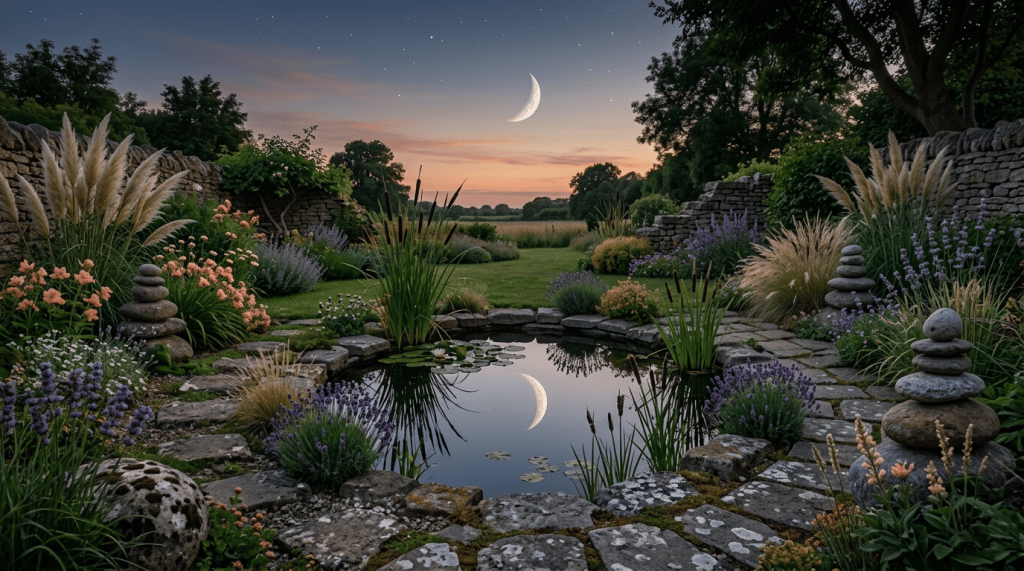
  • Watercolor garden pond reflecting a crescent moon, surrounded by plants and stacked stones

    Weekly Sky Reflection October 5–11, 2026

    Weekly Sky Reflection

    October 5–11, 2026

    What Is Waiting to Be Known?

    The Sky at a Glance

    Venus is moving retrograde through Scorpio, shifting attention away from what appears beautiful or desirable on the surface and toward the deeper structures underneath. Questions of intimacy, attraction, pleasure, self-worth, power, and relationship may take on another dimension. We may find ourselves wondering not only what we want, but where those desires came from, what we have learned to suppress, and which choices have been shaped by the expectations of others.

    There is a particular kind of honesty that can emerge with Venus in Scorpio. It does not necessarily arrive as a dramatic revelation. More often, it asks us to become less certain about the stories we have been telling ourselves. Something may provoke or unsettle us, touching a place we thought we already understood. Rather than immediately deciding what it means, we can allow ourselves to become curious about the experience itself.

    This is especially relevant because Mars and Pluto are also involved in the week’s unfolding pattern. There is considerable intensity, but intensity does not always mean that something needs to be acted upon. Sometimes it simply indicates that we are close to material that has not yet found an adequate place in conscious awareness. The work may therefore be less about fixing what emerges and more about becoming able to stay present with it.

    What comes forward may be difficult, but it may also include qualities we once had to restrain because they did not fit our circumstances: creativity, sensuality, spontaneity, anger, confidence, desire, intuition, or a simple capacity for pleasure.

    The week culminates in Saturday’s Libra New Moon, which gives this inward movement somewhere to go. There is an opportunity to begin again, not by covering over what has been revealed, but by allowing what we discover about ourselves to become part of what we consciously choose next.

    The question running underneath the week may therefore be a quiet one:

    What becomes possible when I am willing to know more of what is already here?


    When Desire Becomes a Question

    Venus retrograde begins the week as its central thread, and in Scorpio she brings us into territory where desire is rarely as simple as it first appears.

    We often speak about desire as though it were entirely personal: I want this, I do not want that, this relationship suits me, this does not. Yet much of what we call desire has been shaped by family, culture, relationships, fear, belonging, and expectations we absorb without necessarily realizing it. We learn what kind of person is considered attractive, what ambition should look like, which forms of pleasure are acceptable, what makes someone worthy of love, and what a successful life is supposed to contain.

    Eventually, it can become difficult to distinguish between what genuinely belongs to us and what we have simply become very good at wanting.

    Venus retrograde does not require us to reject what we have chosen. Instead, it invites greater attention to the origins of those choices. What happens when we stop asking whether something looks right from the outside and become interested in how it actually feels from within?

    This can be especially meaningful when it comes to pleasure. We may find ourselves evaluating whether we are enjoying ourselves enough, whether an experience is worthwhile, what it says about us, or whether someone else would understand it. Yet pleasure does not always need to justify itself. Listening to desire does not mean following every impulse or assuming that whatever feels intense must be true; it means allowing ourselves to notice what we want before deciding what to do about it.


    What Our Reactions Can Reveal

    As the week develops, the emotional atmosphere becomes more concentrated. Mercury’s contact with Venus in Scorpio brings thought and feeling closer together, while Mars and Pluto give greater weight to what has already been moving through our inner lives.

    Our reactions sometimes know something before our explanations do. A feeling can arrive with a history attached to it: anger may contain an old experience of having no voice, jealousy may touch a fear of being replaced, and the need to control may conceal uncertainty about whether we are safe. Even a strong desire can carry layers of memory that have little to do with the immediate circumstances.

    When something is activated, we often move quickly toward a conclusion. We decide who is responsible, explain why we feel this way, identify the problem, and begin searching for a response. Understanding is valuable, but the first explanation is not necessarily the deepest one.

    If something catches us this week, there may be value in allowing it to remain unresolved for a while. We do not have to dismiss it, act on it, or immediately turn it into a story about ourselves. We can notice what is present and see what else may exist alongside the first reaction.

    Sometimes we may simply be tired, disappointed, lonely, overstimulated, or carrying more than we realized. At other times, the first emotion may be the outer layer of something older. Curiosity allows us to discover the difference without deciding in advance what we are going to find.


    The Parts We Learned to Leave Behind

    Most of us have qualities that became less visible over time, not necessarily because anyone explicitly told us to hide them, but because experience taught us that certain ways of being were easier to live without. Perhaps we became less expressive because our intensity was difficult for others, learned to suppress anger because being agreeable helped keep relationships stable, or began to treat desire as something to manage rather than listen to. Sensitivity may have been treated as weakness, independence as selfishness, or creativity as impractical.

    These adaptations are not failures. They often help us belong and function in circumstances that leave little room to be fully ourselves. The difficulty comes later, when circumstances change but the adaptation remains. Something that once protected us can eventually become a way of keeping ourselves at a distance from our own lives.

    This is where the language of shadow can still be useful, provided we do not make it too dramatic. The shadow is not necessarily a hidden monster waiting to be confronted. Sometimes it is simply an aspect of our experience that has not been given enough permission to participate.

    What has been left outside the acceptable version of ourselves may not be destructive at all. It may be creativity, confidence, sensuality, the ability to take up space, or the willingness to say what we actually want. A quality we once rejected may have been carrying a capacity we were not yet able to receive.


    Going Beyond the Story

    By Wednesday, as Mercury moves further into Scorpio, the week’s inward quality deepens. Mercury in Scorpio can be understood less as a search for hidden secrets than as a willingness to stay with an experience long enough to discover that the first story about it may not be the whole story.

    We are remarkably capable of explaining ourselves. We know how to make our choices sound reasonable, describe our emotions in ways others can understand, and adjust our language to anticipate their responses. These abilities are valuable, but there are moments when being understandable to others becomes more important than being honest with ourselves.

    There are things we know before we can explain them, and experiences that make sense in the body before the mind has assembled a coherent argument. Intuition is not necessarily a dramatic voice; sometimes it is simply a small recognition that becomes clearer when we stop trying to persuade ourselves otherwise.

    That does not mean every feeling should be treated as truth. Discernment matters, especially when emotions are strong, but discernment is different from dismissal. We can listen without immediately believing, feel without immediately acting, and allow something to be true about our experience without deciding that it must become a permanent truth about who we are.

    That spaciousness may be one of the more mature forms of self-knowledge available this week.


    The Weight We No Longer Need to Carry

    As Venus approaches the heart of her retrograde journey, another possibility comes into view: perhaps growth is not always about adding something new, but about questioning what we have been carrying for too long.

    A role we took on because someone had to be responsible. An identity built around being capable. The habit of always accommodating. The belief that being needed is the same as being loved. The expectation that our lives should look a certain way by a certain age. The assumption that pleasure must be earned. The idea that our worth depends on being desirable, productive, impressive, or useful.

    None of these beliefs need to be condemned. Many may once have been necessary or helpful. The question is simply whether they still belong to the life we are living now.

    There is something liberating about allowing an old structure to become unnecessary without turning it into an enemy. We do not have to know what will replace it. Sometimes making room is already a form of change.


    The Body Has Its Own Language

    The middle of the week may also remind us that not everything can be resolved through thought. When emotional material becomes concentrated, the mind often tries to move faster: analysing, interpreting, searching for causes, anticipating consequences. This can create a sense of progress while keeping us slightly removed from the experience itself.

    The body offers another route. Movement, a slower breath, music, writing by hand, stretching, dancing, or simply sitting quietly can return us to direct experience. Their value need not be to fix anything; they allow us to inhabit our experience rather than only thinking about it.

    Some feelings become more comprehensible once they have been allowed to move. Sadness may soften when it is no longer resisted, anger may reveal a boundary, fear may become more precise, and desire may become less urgent and more recognizable.

    This is especially relevant with Mars and Pluto. Their symbolism can easily be interpreted as a demand for action, but sometimes the deeper movement is internal. Before deciding what to change externally, we may need to understand what is actually asking to change within us.


    The New Moon: Beginning Without Bypassing

    By Saturday, the week arrives at its New Moon in Libra. New Moons invite beginnings, intentions, and possibility, while Libra brings questions of relationship, balance, reciprocity, and the ways we create a life alongside other people.

    Yet this New Moon comes after a week of considerable inward attention, and that matters. There is a difference between beginning again and simply beginning somewhere else because we would rather not look at what is already here.

    We can make room for what we are becoming without pretending that everything difficult has already been resolved. We can recognize an old pattern without making it our identity, and allow ourselves to want something different without needing a complete explanation for why.

    Perhaps the most useful quality of this New Moon is therefore not certainty, but honesty. What kind of relationship do you actually want to participate in? What kind of life feels reciprocal rather than merely impressive? What would you choose if you were no longer organizing your desires around what you believe you are allowed to want?

    These questions do not necessarily require immediate answers. They may simply be worth carrying into the next cycle.


    What Happens When We Stop Watching Ourselves?

    One of the quieter themes running through Venus retrograde is the difference between experiencing life and observing ourselves experiencing it. A subtle distance can develop as we begin to wonder how we appear while living it: How does this relationship look? Does this choice make sense? Am I enjoying myself enough? What does this say about me? Would other people understand?

    Even pleasure can become something we evaluate from the outside.

    This week offers an opportunity to notice what changes when we are fully inside an experience rather than performing it, documenting it, interpreting it, or deciding whether it is significant enough. It might be something ordinary: a meal, music, a conversation, affection, movement, or time alone.

    The point is not to make these moments sacred, but to notice what happens when we are no longer looking at ourselves from the outside. Perhaps one form of intimacy we are being invited toward is simply greater intimacy with our own experience.


    What We Feel Is Not Necessarily What We Must Do

    Sunday brings the Moon into Scorpio, activating Venus, Mars, Pluto, and Neptune and giving the end of the week a particularly emotional quality.

    Strong feeling can create the impression that something must be done immediately, but feeling something deeply does not necessarily make it an instruction. We can experience desire without turning it into a demand, anger without making another person responsible for resolving it, grief without deciding that something has gone wrong, and uncertainty without rushing toward certainty simply to make the discomfort disappear.

    Allowing an emotion to exist without giving it complete authority over our behaviour is not suppression. It is a willingness to remain present long enough for the feeling to become more nuanced. The first wave of emotion is not always the final truth. Sometimes, after the intensity passes, something quieter remains, and that quieter thing may be what we were actually trying to hear.


    The Qualities We Have Not Yet Fully Claimed

    Perhaps one of the more useful questions this week is whether we have been too quick to assume that everything we have pushed aside belongs to the category of what is wrong.

    There are qualities we may have restrained because they were inconvenient, unfamiliar, or difficult for others to receive: a strong voice or desire, a capacity for pleasure, a creative instinct, a need for solitude, a willingness to challenge, a sensitivity to what is happening beneath appearances, or a refusal to continue participating in something that no longer feels true.

    Some of these qualities may have become distorted through fear or circumstance. They may need discernment and integration rather than simple celebration. But beneath the distortion there can still be something valuable. What has been neglected may contain precisely the quality we need in order to move forward with greater wholeness.

    The week’s inward movement can therefore be restorative not only because it helps us identify what needs to be released, but because it makes us more familiar with what has been asking for a place in our lives.


    Reflection Questions

    • What am I discovering about my desires when I stop asking whether they make sense to other people?
    • Where have I learned to experience myself from the outside rather than from within?
    • What tends to activate me, and what might those reactions be revealing?
    • Which qualities of myself did I once learn were difficult, inconvenient, or unacceptable?
    • What might those qualities have been trying to protect?
    • Is there something I rejected in myself that may also contain a gift?
    • What am I carrying because it is still necessary, and what am I carrying simply because it has become familiar?
    • What does my body seem to know before I can explain it?
    • What do I want when I am not negotiating with what I believe I am allowed to want?
    • What would a new beginning look like if it included, rather than bypassed, what this week has revealed?
    • Can I allow a feeling to be real without immediately turning it into an instruction?
    • What part of my experience have I kept at a distance, and what might change if I became willing to know it more fully?

    A Contemplative Closing

    Perhaps the deeper invitation of this week is not to become more conscious by discovering one more thing about ourselves, but to become a little less divided from our own experience.

    Venus’s retrograde through Scorpio asks us to look more carefully at desire, but desire is rarely isolated from the rest of our lives. It carries memory and expectation, as well as the influence of people we have loved, worlds we have lived in, and versions of ourselves we once needed to become. To look at desire honestly is therefore also to look at the self that formed around it.

    What did we learn to want? What did we learn not to want? Which qualities of ourselves became easier to live with when we made them smaller, and what might still be waiting for our attention?

    The answer may not be dramatic. It may be something ordinary: a preference we stopped trusting, a creative impulse we postponed, a boundary we have been reluctant to acknowledge, a form of pleasure we forgot was available to us, or the recognition that our lives have been organized around values that no longer feel entirely like our own.

    There is no need to force these things into revelation. The deeper work may be quieter: to notice, remain curious, let the body have a place in the conversation, allow an emotion to move before deciding what it means, and distinguish between what genuinely needs to be released and what simply needs more room.

    The Libra New Moon offers its own kind of promise—not that everything we have encountered during the week will be resolved, but that we can begin making choices with a little more of ourselves present.

    Perhaps that is what a new beginning sometimes is: not becoming someone else, but allowing more of who we already are to participate in the life we are creating.

    There may be experiences we have called shadows simply because we had not yet found a safe way to know them. With time, some may reveal themselves differently—not as problems to solve or wounds that need to become lessons, but as aspects of our nature that were waiting for enough honesty, space, and kindness to be met.

    So perhaps the question for this week is not What do I need to get rid of? nor even Who am I becoming?

    Perhaps it is something more modest:

    What is already here that I am ready to know more deeply?

    We do not have to answer immediately. We can simply stay close to the question and see what becomes possible when we stop turning away from our own experience.
    Intentional Solidarity

    Continues Liberation

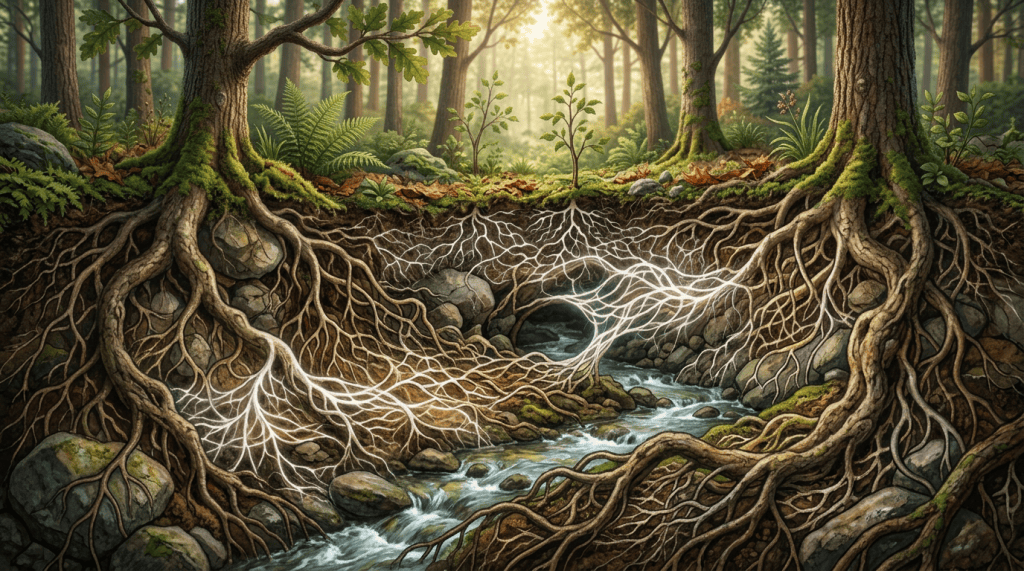
  • Moonlit forest above a glowing underground cavern with exposed tree roots

    Weekly Sky Reflection September 28–October 4, 2026

    Weekly Sky Reflection

    September 28–October 4, 2026

    What Is Already Alive in You?

    The Sky at a Glance

    Other weeks are oriented toward the future. They ask us to make plans, gather momentum, take decisive action, and imagine what might be possible if we simply move forward. This week has a different rhythm. Rather than pushing us toward the next horizon, it draws our attention inward, toward the quieter territory where desire, intimacy, pleasure, values, and identity begin to speak in a language that is not always easy to translate.

    The defining movement arrives on Saturday, when Venus begins her retrograde journey through Scorpio and Libra. Over the weeks that follow, questions of love, sexuality, money, self-worth, beauty, pleasure, and relationship move into a more reflective register. Venus is not concerned only with romance; she describes the entire landscape of what we value, what we are drawn toward, what we allow ourselves to receive, and what we are willing to invest in.

    During a Venus retrograde, some of our familiar answers can begin to feel less convincing. What we once accepted without question may suddenly invite a second look. Desires we thought were settled may return. Relationships may reveal another layer. The things we have been pursuing can begin to feel different once we ask whether they actually belong to us—or whether we simply became very good at wanting what we were taught to want.

    There is also a longer memory embedded in this cycle. Venus’s retrograde echoes an eight-year rhythm, inviting us to look back toward the autumn of 2018 and notice what was alive in us then. Who were we becoming? What did we believe would make us happy? What did we want from love, work, money, or life itself? The purpose is not necessarily to recover something from the past. Sometimes we look backward simply to recognize how far we have travelled.

    The week prepares the ground for this descent. Mercury enters Scorpio, encouraging a willingness to move beneath appearances, while the interplay of Mercury, Pele, Chiron, and Pluto can bring long-contained material closer to the surface. There is intensity here, but the invitation is not simply to react to what emerges. With Mary Magdalene and Sophia accompanying the week’s symbolism, there is another possibility: to listen from a deeper place, where intuition, embodiment, and lived experience are allowed to participate in what we know.

    This is not a week about becoming more desirable, more impressive, or more accomplished.

    It is a week about becoming more intimate with your own experience.

    What actually moves you? What do you genuinely enjoy? What do you long for when you are no longer imagining how it will look to anyone else?

    And perhaps the most important question of all:

    What becomes possible when you stop experiencing your own life from the outside?


    Venus Begins Her Descent

    On Saturday, Venus begins a 41-day retrograde journey through Scorpio and Libra, opening a period of reconsideration around the things we love, value, desire, and choose to invest ourselves in.

    Venus is often reduced to romance, beauty, attraction, and pleasure, but her territory is considerably larger. She speaks to the subtle economy of our lives: what we give, what we receive, what we consider worthy, what we find beautiful, what we are willing to spend our time and resources on, and the ways we experience ourselves through relationship.

    In Scorpio, those questions become more intimate. Scorpio is rarely satisfied with the surface explanation. It wants to know what is underneath the answer, beneath the performance, beneath the story we have learned to tell.

    What do you want when you remove the expectation of what you should want? What remains when you stop trying to be reasonable, agreeable, or easy to understand? Which desires have you quietly dismissed because they seemed inconvenient, excessive, impractical, or somehow inappropriate? And where have you become accustomed to observing yourself from a distance rather than inhabiting your own experience?

    A Venus retrograde does not necessarily arrive with immediate answers. Its gift is often subtler: it creates enough interior space for questions that have been drowned out by habit to become audible again.

    This matters because desire is rarely formed in isolation. We absorb ideas about beauty, success, partnership, sexuality, security, and happiness from the world around us. We learn what a good relationship is supposed to look like, which ambitions are admirable, which pleasures are acceptable, and what kind of life should make us feel fulfilled.

    Over time, the distinction between genuine desire and inherited desire can become surprisingly difficult to see.

    Venus invites us to become curious about that distinction—not by rejecting everything we have chosen, and not by assuming that every hidden impulse contains some profound truth, but by listening with greater precision.

    The deeper question is therefore not simply, What do I want?

    It is:

    What do I want when I am actually inside my own experience?

    That is a different question, and sometimes it leads to a very different kind of answer.


    Stop Watching Yourself From the Outside

    There is a particular kind of distance that can develop between ourselves and our own lives. We begin to experience ourselves as though through an imagined camera: How does this look? What will people think? Is this impressive enough? Am I doing this correctly? Does this relationship say the right thing about me? Does my body look the way it should? Is this experience meaningful enough to justify the time I am spending on it?

    Even pleasure can become something we observe ourselves having.

    We take the photograph before we have finished experiencing the moment. We wonder whether we are enjoying ourselves enough. We compare the reality of an experience with the version we imagined beforehand. We turn an ordinary pleasure into something that needs to be documented, interpreted, or made significant.

    Venus moving inward offers a different experiment: What does this actually feel like to me?

    Not how does it look. Not what does it say about me. Not whether someone else would understand. Simply: what is the experience itself?

    There is something unexpectedly intimate about allowing ourselves to remain with that question.

    It might mean eating slowly enough to notice the food rather than consuming it between obligations. It might mean listening to music without simultaneously doing something else. It might mean feeling sunlight on your skin, receiving affection without deflecting it, or allowing yourself to enjoy something without immediately turning the experience into content, productivity, or proof.

    Pleasure does not always have to be earned.

    Nor does it necessarily need to lead anywhere.

    Sometimes pleasure is simply a way of being in relationship with life.

    Perhaps this is one of the quieter invitations of Venus retrograde: to become less interested in how an experience appears from the outside and more attentive to how it feels from within.


    When Something Needs to Move

    Tuesday may bring a more volatile emotional current as Mercury meets Pele and opposes Chiron. Pele’s volcanic symbolism speaks to what has been gathering beneath the surface, while Mercury gives language to what has previously remained unspoken. Chiron, meanwhile, can bring us into contact with the places where old wounds continue to influence how we interpret ourselves, our relationships, and the world around us.

    This combination can be revealing, but it does not necessarily reward immediate action.

    Sometimes what first emerges is not the clearest truth. It may arrive as anger, grief, desire, resentment, longing, or a sentence you have been holding back for months. A realization can surface with such force that the mind immediately wants to explain it, name it, and decide what must happen next.

    But there is value in allowing the energy to move before asking it to become a conclusion.

    The aim is neither suppression nor impulsive expression. Strong emotion is information, but it is not always instruction.

    There is often a difference between the first expression of a feeling and the understanding that becomes available once the feeling has been given somewhere to go.

    So if something rises this week, give it a container before giving it a conclusion. Ask yourself: What does this feeling need in order to move through me without taking over?

    Then, when the intensity has softened, ask the quieter question:

    What remains true?


    Beneath the Polite Answer

    On Wednesday, Mercury enters Scorpio, deepening the week’s inward turn. Mercury in Scorpio has little patience for superficial explanations. It wants to know what lies beneath the polished version, the socially acceptable answer, the story we tell because it is easier for everyone involved.

    Most of us become remarkably skilled at explaining ourselves. We know how to make things sound reasonable. We know how to soften difficult truths, anticipate other people’s reactions, and present our experience in a way that can be comfortably received.

    Sometimes that is kindness.

    Sometimes it is self-abandonment.

    The distinction is worth noticing.

    Mary Magdalene and Sophia add another dimension to this moment, suggesting a form of knowing that does not depend entirely on analysis or external validation. There are experiences we understand before we can explain them, recognitions that arrive as a quiet inner certainty rather than a perfectly organized argument.

    This does not mean every intuitive impression deserves to be believed. Discernment remains essential. But there are truths that become difficult to hear when our attention is constantly organized around how other people might respond.

    So notice what happens when you stop managing the reception of your own experience.

    What do you know when you are no longer trying to make yourself understandable?

    What do you feel when you do not have to make your experience convenient for someone else?

    What answer appears when you stop trying to control the outcome?

    The most honest answer may not be dramatic. It may be almost ordinary in its simplicity—the answer that feels quietly, unmistakably yours.


    What Are You Ready to Take Off?

    By Thursday, the atmosphere begins to feel preparatory. Venus is approaching her retrograde station, and the symbolism of Inanna’s descent offers a striking image for what is beginning.

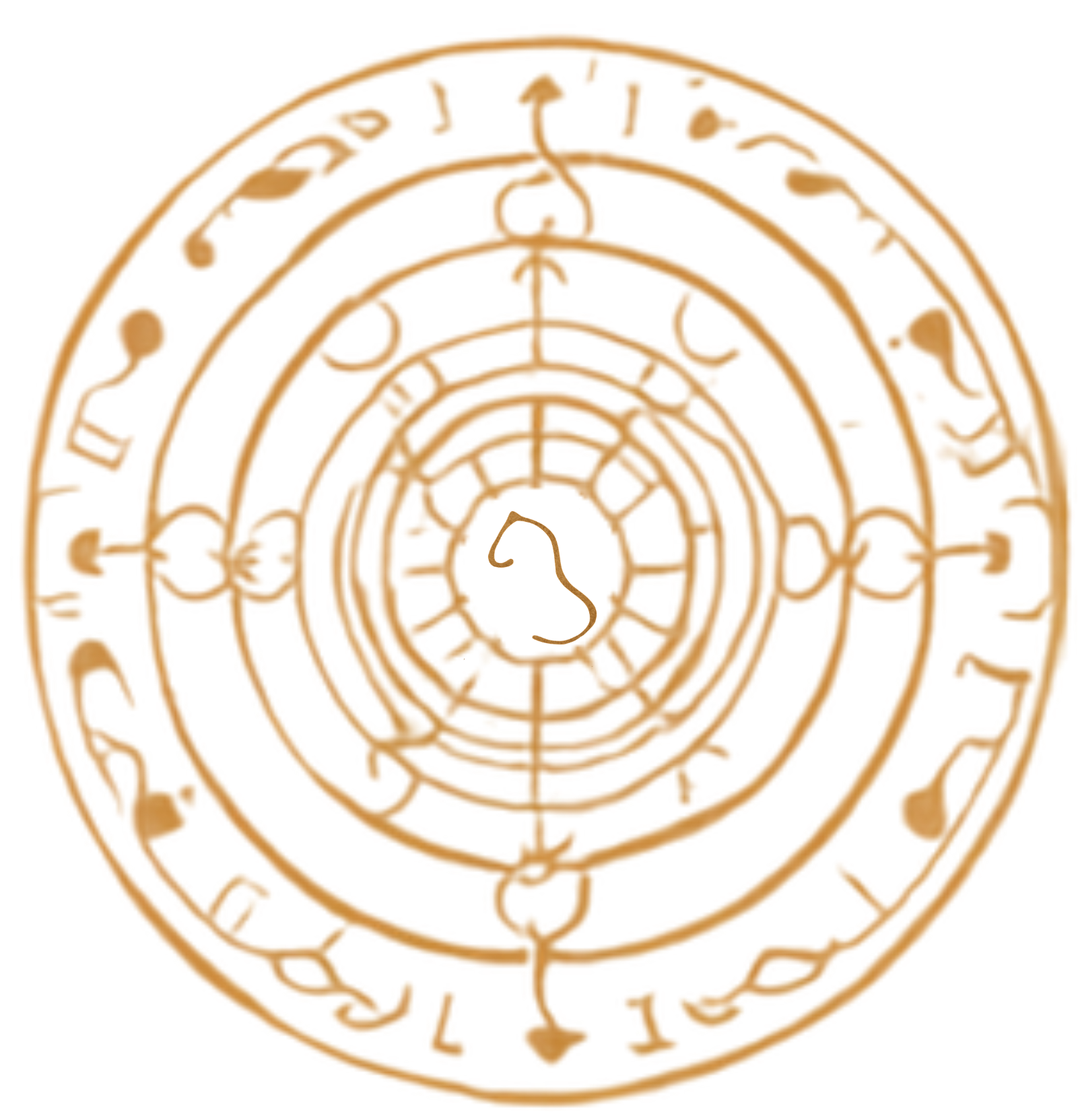
    Inanna passes through seven gates, and at each one she is required to surrender another piece of what she carries. The journey is not about acquiring a new identity. It is about gradually relinquishing what has accumulated around the self.

    That makes the story a useful mirror for this moment.

    What are you carrying because it genuinely belongs to you, and what are you carrying because you once needed it, because someone expected it from you, or simply because you have become accustomed to seeing yourself that way?

    Perhaps it is a role. Perhaps it is an expectation, an old definition of success, or a belief about the kind of person you have to be in order to be loved.

    Perhaps you have built an identity around being the strong one, the accommodating one, the responsible one, the capable one, or the person who always knows what to do.

    None of these identities are necessarily false, and none need to be condemned. Some may have served you beautifully. They may have helped you survive, belong, create stability, or move through a difficult chapter.

    But something can be useful for one season and restrictive in another.

    The descent asks us to become sensitive to that difference.

    Not everything needs to come with us. And we do not necessarily need to know what will replace it.

    Sometimes freedom begins with the simple act of putting something down.


    Go Beneath the Story

    Friday brings a concentrated combination of Mars, Mercury, and Pluto, increasing the pressure around whatever has been stirring beneath the surface. Intensity, however, is not necessarily evidence that something is wrong. Sometimes it simply means that we are close to something important.

    The difficulty is that activation tends to make the mind move quickly toward explanation.

    This is happening because…

    They did this because…

    I always do this because…

    This must mean…

    A compelling explanation can feel like relief because it gives an experience a shape. Yet the first explanation is not always the deepest one.

    When something catches you this week, try staying with the question a little longer.

    What’s underneath this?

    And then ask again.

    What is underneath the anger? What is underneath the fear? What is underneath the need to control? What is underneath the desire to be chosen? What is underneath the urge to leave?

    Sometimes the answer will be wonderfully unremarkable. Perhaps you are tired. Perhaps you are overstimulated, disappointed, lonely, or carrying more than you have admitted.

    But sometimes there is another layer beneath the obvious one, and reaching that layer changes the quality of the choice that becomes possible.

    The point is not to analyze yourself into oblivion. It is to become curious enough that the first story does not automatically become the final truth.


    The Desire That Belongs to You

    Then, on Saturday, Venus turns retrograde, marking the central threshold of the week.

    For the next 41 days, questions of love, intimacy, sexuality, money, beauty, pleasure, self-worth, and relationship enter a more reflective phase. And because Venus is returning to an eight-year pattern, the past may become part of the conversation.

    The last time you encountered this cycle, you were living a different chapter of your life. Perhaps you remember what you wanted then, who you were trying to become, or a relationship, longing, choice, or version of yourself that seemed all-important at the time.

    It can be illuminating to look back without turning the past into a template.

    Who were you then? What did you believe would make you happy? What did you believe you needed from another person? What were you willing to compromise, and what had become non-negotiable? What did you imagine your life would look like by now?

    Most importantly, what do you know now that you could not have known then?

    The purpose is not to recreate the past. It is to recognize the movement between then and now.

    Sometimes we do not realize how much our desires have changed until we encounter an earlier version of ourselves. At other times, we discover that something we believed we had outgrown is still alive.

    Either discovery is valuable.

    A retrograde does not necessarily tell us what to do with what we find. It gives us the opportunity to notice.


    Pleasure Without an Audience

    One of the simplest ways to work with Venus retrograde is to return to direct experience.

    Choose something this weekend that exists solely for your pleasure—not because it improves you, advances you, makes you more interesting, or gives you something to share, but simply because you enjoy it.

    Then let yourself take your time.

    Notice what happens when you are not evaluating the experience from the outside.

    This may sound almost too ordinary to matter, yet there is something quietly radical about allowing pleasure to remain private.

    We live in a culture that encourages us to document, display, compare, and evaluate our experiences almost as quickly as we have them. Venus invites us back into the experience itself.

    You do not have to prove that you are enjoying your life.

    You can simply enjoy it.

    Perhaps that is one of the deeper forms of self-knowledge available during this retrograde: learning what feels nourishing before asking whether it looks meaningful.


    Can You Hold What Is True?

    Sunday brings the Sun opposite Saturn, giving the end of the week a more grounded and contained quality. After the emotional movement of the preceding days, this aspect asks a different kind of question: can you stay with what you feel without immediately needing to resolve it?

    Can you acknowledge desire without turning it into a demand? Can you experience grief without deciding that something has gone wrong? Can you feel pleasure without questioning whether you deserve it?

    There is a particular maturity in allowing an experience to exist without either suppressing it or acting on it immediately.

    We sometimes imagine emotional freedom as the ability to express everything. Yet another kind of freedom comes from becoming spacious enough to let an emotion be present without allowing it to dictate our behavior.

    This is where Saturn can become a useful companion to Venus.

    Desire does not have to be denied; it needs a container. Emotion does not have to be eliminated; it needs somewhere safe enough to be felt. And truth does not always need immediate expression. Sometimes it needs time to become clear enough that, when we finally speak, we are speaking from ourselves rather than from the intensity of the moment.


    The Eight-Year Conversation

    Venus retrograde offers another way of entering this cycle: through conversation with a former version of yourself.

    Think back to the autumn of 2018. You do not need to reconstruct the entire period. Instead, notice what was alive in you.

    What were you longing for? What were you afraid of? What did you believe love meant? What did you believe you needed to become in order to be valued? What were you beginning, and what were you leaving behind?

    And perhaps the most revealing question of all:

    What did you think your life would look like by now?

    There can be tenderness in meeting that earlier self. Some things may have unfolded differently from what you expected, while others may have arrived in forms you could not have imagined. You may also recognize that the person you are now has access to choices, perspectives, and freedoms that were not available to you then.

    This is not an invitation to judge the past.

    It is an invitation to recognize continuity.

    The person you were is part of the person you are, but you do not have to remain organized around their desires, fears, or definitions of happiness.

    Sometimes looking backward is exactly what allows us to feel the distance we have travelled.


    What Are You Actually Building Your Life Around?

    Eventually, Venus retrograde brings us back to values—not the values we can list when someone asks us what matters, but the values our actual lives reveal.

    Where does your time go? Where does your attention go? What receives your money? Who receives your care? What do you make space for? What do you continually postpone?

    Our lives are often more honest about our values than our words are.

    That realization can be uncomfortable, but it can also be liberating. If something matters to you, perhaps it deserves more room. If something no longer matters, perhaps you are allowed to stop feeding it.

    If pleasure matters, perhaps it needs to become part of your life rather than something you permit yourself only after everything else is finished. If intimacy matters, perhaps you need relationships in which you can actually be known. If freedom matters, perhaps some structure needs to change. If creativity matters, perhaps it deserves a place on the calendar rather than remaining an abstract aspiration.

    Venus is not asking us to make our lives beautiful from the outside.

    She is asking whether the life we are living feels valuable from within.


    The Heart Knows in a Different Language

    Mary Magdalene and Sophia accompany the threshold of Venus’s descent, offering another way into the week’s central questions.

    There is a kind of wisdom that becomes available when we stop trying to rise above our own complexity. We often want to transcend the difficult parts of ourselves—to become more conscious, more healed, more spiritual, more evolved. But there is another path.

    We can go into the heart of the experience itself.

    Into uncertainty. Into desire. Into grief. Into contradiction. Into the parts of ourselves that do not yet have a clean explanation.

    This does not mean becoming lost in emotion. It means allowing the heart to participate in our knowing.

    Perhaps you do not need to decide immediately whether something is right or wrong. Perhaps you can first ask what it feels like to be in relationship with it.

    Does it create more honesty? More aliveness? More spaciousness? More integrity?

    Or does maintaining it require you to abandon yourself?

    These questions can tell us a great deal.

    The heart does not always speak in conclusions. Sometimes it speaks through a subtle shift in our relationship to an experience: the difference between what allows us to become more present and what requires us to disappear.


    Reflection Questions


    A Contemplative Closing

    Perhaps the deepest invitation of this Venus retrograde is not to find the perfect relationship, make the perfect decision, or finally arrive at a definitive answer about what you want. Perhaps it is simply to become more intimate with your own experience: to notice what moves you before you explain it, what you desire before you negotiate it away, what feels beautiful before you ask whether it is useful, and what hurts before you turn the pain into a problem that must immediately be solved.

    There is also an invitation to become curious about the parts of yourself that have been living beneath the surface, waiting for enough safety, space, or honesty to become visible.

    Venus’s descent reminds us that not everything valuable is found in the light.

    Some things become visible only when we are willing to go deeper: the desire we could not name, the anger that was protecting something important, the tenderness beneath defensiveness, the longing beneath ambition, the pleasure we stopped allowing ourselves to receive, and the part of us that became so accustomed to adapting that we forgot to ask what we wanted.

    None of this needs to be dramatized. It needs to be felt.

    Perhaps becoming more fully ourselves is not always about adding another layer of knowledge or constructing another version of who we think we should be. Sometimes it is about removing what has accumulated between us and our own experience—one expectation, one role, one performance, one old definition at a time.

    Venus is beginning her descent, and perhaps we can allow ourselves to descend with her, not because something is wrong beneath the surface, but because there may be something there worth meeting.

    Something that has been waiting patiently.

    Something that still has life in it.

    Something that belongs to us.

    So rather than asking only, What should I want? Who should I be? What should I choose? perhaps this week we can sit with a quieter question:

    What do I desire when I am completely inside my own life?

    And then listen.

    Not for the answer that makes the most sense, nor for the answer that will make everyone comfortable, but for the one that feels quietly, unmistakably alive.

    Because perhaps the purpose of this descent is not to take us somewhere else.

    Perhaps it is to bring us closer to the part of ourselves that has been here all along.

    Intentional Solidarity

    Continues Liberation

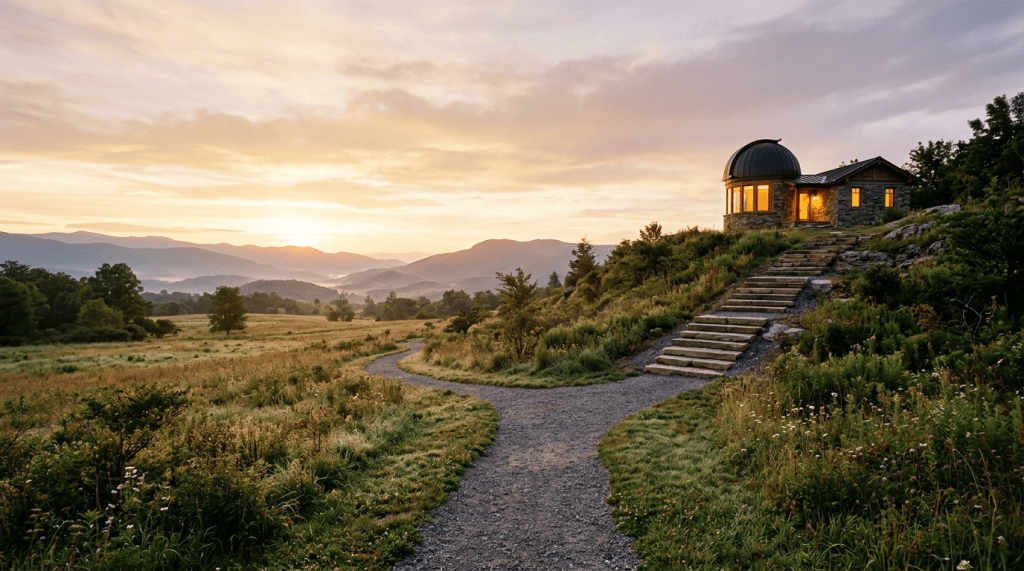
  • Winding trail through meadow toward mountains under sunset and moonlight

    Weekly Sky Reflection September 21–27, 2026

    Weekly Sky Reflection

    September 21–27, 2026

    What Has All of This Made Possible in You?

    The Sky at a Glance

    There are weeks when the astrology seems to ask us to move forward, to make decisions, begin something new or respond to the changes taking place around us. And then there are weeks when it turns our attention inward, asking us to pause long enough to recognize what those changes have actually been doing to us. This week carries both movements. The Equinox opens a new seasonal cycle, while Friday’s Aries Full Moon brings the focus back to the self, illuminating the person we are becoming after months of profound evolutionary movement.

    We have been moving through a year of significant shifts, and it can be easy to become so absorbed in what is changing that we forget to notice how much we ourselves have changed along the way. We may have released old patterns, moved through difficult thresholds, encountered new possibilities or discovered parts of ourselves that were previously difficult to access. Yet even when something within us has shifted, our understanding of ourselves does not always catch up immediately. We may continue to live according to an older image of who we are, even when that image no longer tells the whole story.

    This week begins with Mercury sextile Jupiter, opening the mind to new ideas, broader perspectives and possibilities that may feel larger than what we had previously imagined. There is something expansive about this energy, but it also asks for discernment. Not every idea needs to become a commitment, and not every moment of inspiration needs to be translated into immediate action. Sometimes we need to allow a vision to grow before we decide what it means for our lives.

    Then, on Tuesday, the Equinox marks a powerful turning point. With the Sun entering Libra and the Dark Feminine energies of Black Moon Lilith and Kali involved, this is not simply a moment to consider balance, harmony or the beginning of a new season. It is an invitation to look more honestly at the relationship we have with our own fullness. What parts of ourselves have we learned to leave out? What have we made smaller in order to belong, to be loved or to maintain a sense of safety? And what might become possible if we were willing to inhabit more of who we actually are?

    The Aries Full Moon arrives on Friday, bringing this inquiry into even sharper focus. Aries turns our attention toward selfhood, instinct, sovereignty and the path that belongs to us. After all the movement of the past months, the question is no longer simply what is changing in the world around us, or even what we are becoming. It is what all of this has made possible in us.

    With Neptune conjunct the Full Moon, the answers may not arrive through analysis alone. Some things cannot be understood simply by thinking about them. They need to be felt, experienced and encountered through the body, the imagination or the quieter layers of our inner world. This Full Moon may therefore be less about finding the perfect explanation and more about becoming receptive to what is already present.

    Because perhaps there is more to us than we have yet realized. Perhaps some of what we have been seeking through the next breakthrough, the next healing or the next stage of our development is already here, waiting for us to recognize it.


    Two Thresholds, One Big Week

    The Equinox and the Aries Full Moon create two important turning points within the same week, and together they invite us to look at the relationship between where we have been and who we are now. The Equinox offers a natural moment to reflect on the cycle that began at the June Solstice, while the Full Moon illuminates the self that has emerged through those months of experience.

    We often move through time without fully receiving what it has brought us. We notice what remains unresolved, what still needs to change and what we have not yet achieved, but we may overlook the quieter evidence of our own evolution. A fear that once shaped our decisions may no longer have the same power. A relationship may have taught us something we could not have learned anywhere else. A boundary that once felt impossible may now feel necessary and natural. Something we had only imagined may have become part of our actual lives.

    These changes do not always announce themselves. Sometimes they become visible only when we look back and realize that we are no longer responding to life in quite the same way.

    The Equinox asks us to take the time to notice this. Before rushing into another cycle, we might allow ourselves to acknowledge what the last three months have actually brought forth. What has fallen away? What has become clearer? What has begun to grow? And what have we learned about ourselves that we have not yet fully allowed to matter?

    There is a tendency to treat transformation as something that must always lead to another destination. We move from one threshold to the next, assuming that the purpose of each experience is to prepare us for whatever comes afterward. But perhaps there is also a need to pause between the thresholds and receive what has already taken place.

    The Equinox opens that space. The Full Moon then turns the light toward the self, asking us to consider not only what has happened, but who we have become through it.


    There May Be More of You Than You Realize

    The presence of Black Moon Lilith and Kali around the Equinox brings a deeper and more provocative dimension to the question of fullness. Both archetypal energies invite us to encounter the parts of ourselves that have been rejected, suppressed or pushed beyond the boundaries of what we have considered acceptable. They remind us that becoming whole is not always about refining ourselves into something more manageable or more easily understood. Sometimes it involves reclaiming what we have learned to exclude.

    Most of us have developed certain ideas about which parts of ourselves are welcome and which are not. We may have learned to hide our anger, soften our ambition, silence our desires or make ourselves smaller in order to maintain connection. We may have become accustomed to being the responsible one, the accommodating one, the strong one or the person who does not need too much. These identities may have served an important purpose at one point in our lives, but they can eventually become restrictive when we continue to inhabit them long after our circumstances have changed.

    There may be aspects of ourselves that we have not rejected because they are wrong, but because they seemed too difficult to integrate into the life we were living. A powerful desire, an uncomfortable truth, an instinct for freedom or a need that did not fit the role we had taken on may have been pushed aside simply because there was no room for it at the time.

    The invitation of this Equinox is not to act on every impulse or to abandon everything we have built. It is to become more honest about the parts of ourselves we have been leaving out. What would it mean to allow ourselves to be more fully present in our own lives? What have we been asking ourselves to suppress in order to remain familiar to others? And what might become available if we stopped assuming that every part of us needed to be corrected before it could belong?

    Wholeness does not mean that every desire must be followed or every emotion must determine our actions. It means that we become willing to see ourselves more completely. Sometimes the beginning of a deeper relationship with ourselves is simply the recognition that there is more here than we had previously allowed ourselves to know.


    Don’t Believe Everything You Think

    Mercury sextile Jupiter opens the week with the possibility of expanded thinking, and this can be a beautiful time for inspiration, learning and imagining new directions. Yet the same expansive quality can also make it difficult to distinguish between a genuine possibility and an idea that has grown larger simply because we are excited by it.

    There are moments when a new insight seems to contain an entire future. We suddenly see what could happen, what we could create or who we could become, and the mind begins to move quickly toward making it real. Before long, an idea has become a plan, the plan has become a commitment and the commitment has become another demand on our time and energy.

    This week invites us to interrupt that process. We can allow a vision to expand without immediately deciding that we must pursue all of it. We can be inspired without overestimating what we have the capacity to hold. We can remain open to possibility while giving ourselves enough time to understand which possibilities are truly ours.

    This is particularly important because the astrology is also drawing us toward a deeper, more intuitive way of knowing. Not everything that feels exciting is necessarily aligned, and not everything that is difficult to explain is necessarily ungrounded. Discernment may require us to move more slowly, to notice how an idea feels after the initial enthusiasm has passed and to allow our understanding to develop through experience.

    Sometimes the most useful thing we can do with a new vision is to give it space. We do not need to turn every opening into an obligation.


    When Insight Becomes Wisdom

    Wednesday brings a more electric quality as Mercury makes a challenging connection with Uranus, while Chiron forms supportive aspects to the Nodes of Fate. This combination may bring unexpected insights, unusual connections or a new way of understanding something that has been part of our story for a long time.

    There can be a particular kind of relief in seeing an old experience differently. Something that once seemed only painful may reveal a lesson. A pattern we have repeated for years may suddenly become visible. We may recognize how an experience has shaped us, or how the very thing we once wished had never happened has contributed to the wisdom we now carry.

    But insight and integration are not the same thing.

    We can understand something intellectually without yet knowing how to live differently because of it. We can recognize the meaning of a wound and still need time to discover what that understanding asks of us. Chiron reminds us that the experiences that have hurt us may eventually become sources of compassion, knowledge and medicine, but this transformation is rarely something we can force.

    When an insight arrives this week, it may be worth allowing it to settle before deciding what it requires. Not every revelation needs to become an immediate conversation, a new direction or a major change. Some understanding needs to move through the body before it can become a reliable guide.

    Perhaps the question is not only what we have learned from our wounds, but how that learning is changing our relationship with ourselves now. What wisdom have we gathered that we once could not have imagined possessing? And where are we beginning to recognize that an old experience no longer has to define the way we meet the future?


    Before the Full Moon, Something Is Rising

    By Thursday, the energy of the Full Moon is building, and the deeper themes of the week may begin to feel more present. The Dark Goddess T-square continues to draw attention toward what has been hidden, unacknowledged or waiting beneath the surface. This can be a time when something becomes more difficult to ignore, but that does not necessarily mean it needs to be resolved immediately.

    We are often quick to respond to whatever arises within us. If something feels uncomfortable, we want to understand it, fix it or make it go away. If a difficult truth appears, we may feel compelled to decide what to do with it before we have even allowed ourselves to see it clearly.

    Yet there is another possibility. We can give an experience enough space to reveal itself without immediately turning it into a problem.

    Perhaps a feeling that has been returning is trying to show us something. Perhaps a desire that we have dismissed is asking to be acknowledged. Perhaps we are beginning to recognize a part of ourselves that has been present for much longer than we realized.

    The practice today may be to become a little less hurried in our relationship with our own inner world. We do not have to understand everything as soon as it surfaces. Sometimes the most important thing is to remain present long enough for what is emerging to become more visible.


    The Full Moon Makes It Personal

    Friday’s Aries Full Moon brings the week’s themes into a deeply personal place. Aries is concerned with the self, with instinct, identity, autonomy and the movement toward a life that feels genuinely one’s own. After months of evolutionary shifts, this Full Moon asks us to look at the relationship we have with ourselves and to consider what has changed in the way we inhabit our own lives.

    There is a difference between becoming aware of a change and allowing that change to alter our relationship with ourselves. We may have learned something important, moved through a difficult experience or released an old pattern, yet still continue to see ourselves through the lens of who we were before. Sometimes the next stage of growth is not another transformation, but the willingness to recognize that the transformation has already taken place.

    What does it mean to belong more fully to yourself? Perhaps it means trusting your own experience more deeply. Perhaps it means allowing your desires to matter without needing to justify them to everyone else. Perhaps it means recognizing that your path does not have to look familiar to the people around you in order to be meaningful.

    With Neptune conjunct the Moon, the invitation is to approach these questions through experience rather than relying entirely on the mind. We may not be able to think our way into a new relationship with the soul. There may be something that becomes available through stillness, embodiment, meditation, dreams, creativity or time spent in nature.

    This Full Moon does not necessarily ask us to know exactly where we are going. It asks us to become more intimate with the self who is making the journey.

    And perhaps the most important question is not, What should I do next? but:

    What is my next right relationship with my own soul?


    Go Somewhere Your Mind Can’t

    With Neptune so close to the Full Moon, this may be a week to remember that not everything meaningful can be reached through thought. The mind is an extraordinary instrument, but it is not the only way we encounter truth. There are experiences that become accessible only when we stop trying to explain them and allow ourselves to be present with them.

    We can spend an enormous amount of time trying to understand who we are, what our experiences mean and what direction our lives should take. Sometimes this reflection is necessary. But there are also moments when the effort to understand becomes a way of remaining at a distance from what we are actually feeling.

    The body may know before the mind has found the words. A dream may reveal something that cannot yet be organized into a clear conclusion. A moment of stillness may bring a recognition that has been difficult to reach through analysis. A walk, a meditation or a simple experience of being in nature may allow something within us to become more audible.

    Around the Full Moon, consider giving yourself some uninterrupted space to move beyond the need to figure everything out. You might choose a practice that helps you become receptive rather than productive: meditation, journeying, dreamwork, creative expression or simply sitting quietly with whatever is present.

    You do not need to make the experience meaningful immediately. You do not need to turn it into a lesson or a plan. Sometimes it is enough to allow yourself to be somewhere your mind cannot completely lead you.

    Because there may be parts of your own becoming that you will not discover by thinking about who you are, but by experiencing yourself more fully.


    What Remains True When the Reaction Passes?

    The Full Moon energy continues into Saturday, offering space for integration and a deeper connection with the inner world. This may be a useful time to stay close to whatever the Full Moon has illuminated without feeling the need to immediately translate it into action. Sometimes the most valuable part of an experience is what becomes clear after the intensity has softened.

    On Sunday, Mars square Chiron and Mercury opposite Eris may bring a more charged quality to the day. Old wounds may be touched, conversations may become more provocative, or something we have been holding back may suddenly demand attention. These moments can reveal important truths, but they can also make it difficult to distinguish between what is genuinely asking to be addressed and what is being activated through an older story.

    When we are emotionally charged, it is easy to believe that the intensity of our response is proof of the importance of the moment. We may feel that we must speak immediately, make a decision or take action before the feeling changes. Yet sometimes the most useful response is to allow the first wave of emotion to move through us.

    This does not mean ignoring what has been stirred. It means giving ourselves enough space to recognize what is underneath it. Is there a boundary that needs to be acknowledged? Is there a truth that needs to be spoken? Is there an old wound asking for care? Or is the reaction itself making it difficult to see what is actually happening?

    We do not need to suppress our feelings in order to respond consciously. We simply need to become willing to meet them without automatically allowing them to determine our next move.

    The question for Sunday may therefore be:

    What remains true when the reaction has passed?


    The Work of Receiving

    One of the deeper themes of this week is the possibility that we have become so accustomed to looking toward the next stage of our development that we have forgotten to receive what has already happened.

    We are often encouraged to keep growing, keep healing, keep expanding and keep becoming. There is always another insight to explore, another pattern to release or another version of ourselves to move toward. This can be a beautiful expression of our desire to evolve, but it can also make it difficult to recognize when something important has already been accomplished.

    We may have spent months moving through change, and yet our attention remains fixed on what is still incomplete. We may have crossed a threshold without pausing to acknowledge that we are no longer standing where we were before.

    The Aries Full Moon offers an opportunity to turn toward ourselves and notice what has become different. What do we know now that we could not have known three months ago? What has lost its hold on us? What have we learned to trust? What has become possible because of the experiences we have moved through?

    Perhaps there is a part of us that no longer needs to work so hard to prove its worth. Perhaps there is a desire that has become more honest. Perhaps we have developed a capacity that we have not yet fully recognized. Perhaps the person we were trying so hard to become is already present in ways we have not taken the time to appreciate.

    Receiving our own becoming does not mean that there is nothing left to learn. It means that we allow what has already changed to become part of our understanding of ourselves.

    We do not always need another breakthrough.

    Sometimes we need to recognize the one we have already had.


    What Needs to Change Around You?

    The Full Moon may illuminate the self, but the changes taking place within us eventually ask to be reflected in the lives we are living. It is possible to experience profound inner movement while keeping the external structures of our lives almost exactly the same. We can have a realization, discover a new desire or recognize that an old pattern no longer belongs to us, and then return to the same routines, commitments and expectations as before.

    At some point, however, the person we are becoming needs somewhere to live.

    This does not necessarily mean making a dramatic change. It may be something as simple as creating space in the calendar, having a conversation we have been postponing, allowing a desire to receive our attention or changing a boundary that no longer reflects what we know about ourselves.

    The question is not whether we can transform everything at once. It is whether our lives are beginning to make room for what has changed within us.

    If we have become more honest, where can that honesty be expressed? If we have discovered a new desire, what would it mean to take it seriously? If we have outgrown an identity, what would a day in our lives look like without having to perform it? If we have begun to trust ourselves more deeply, where might we allow that trust to shape a decision?

    The outer world does not always catch up with our inner experience automatically. Sometimes we need to make a small, tangible adjustment that acknowledges what we already know.

    The new version of ourselves needs somewhere to land.

    And perhaps one of the most meaningful forms of integration is allowing our actual lives to begin reflecting the person we have already become.


    Reflection Questions


    A Contemplative Closing

    Maybe this week is not asking you to figure out what comes next.

    Maybe it is asking you to pause long enough to recognize what has already arrived.

    We are so accustomed to moving toward the next thing that we can forget to look at the life we are already living. We search for another breakthrough, another healing, another awakening or another version of ourselves somewhere ahead, without always noticing that the journey has already changed us in ways we could not have anticipated.

    The Equinox invites us to look back over the last three months and acknowledge what has taken place. The Aries Full Moon then turns the light toward the self, asking us to consider who we are now, after everything that has moved through our lives.

    Perhaps there are things you no longer need to carry.

    Perhaps there are parts of yourself that are ready to return.

    Perhaps there are desires that have become clearer, boundaries that have become stronger or truths that no longer need to be negotiated away.

    Perhaps something has changed so quietly that you have not yet given yourself permission to recognize it.

    This week, before reaching for what is next, allow yourself to receive what is here.

    You do not have to turn every insight into a plan. You do not have to make another commitment to your own becoming. You do not have to know exactly where your path is leading.

    You can simply take the time to meet yourself as you are now.

    Because perhaps the most important part of transformation is not only what we release or what we become, but what we learn to recognize and welcome within ourselves.

    And perhaps the question underneath this Full Moon is not:

    What do I still need to become?

    But something more intimate:

    What has already become possible because I am no longer who I was?

    Let yourself sit with that.

    Let yourself feel the answer before you try to name it.

    And when you begin to recognize what has changed, allow it to have a place in your life.

    Let it inform the way you move, the choices you make, the relationships you nurture and the space you create for yourself.

    Because you do not always need to reach for another version of who you might become.

    Sometimes the invitation is simply to turn toward the person who is already here.

    And to finally let yourself receive

    all that you have become.

    Intentional Solidarity

    Continues Liberation

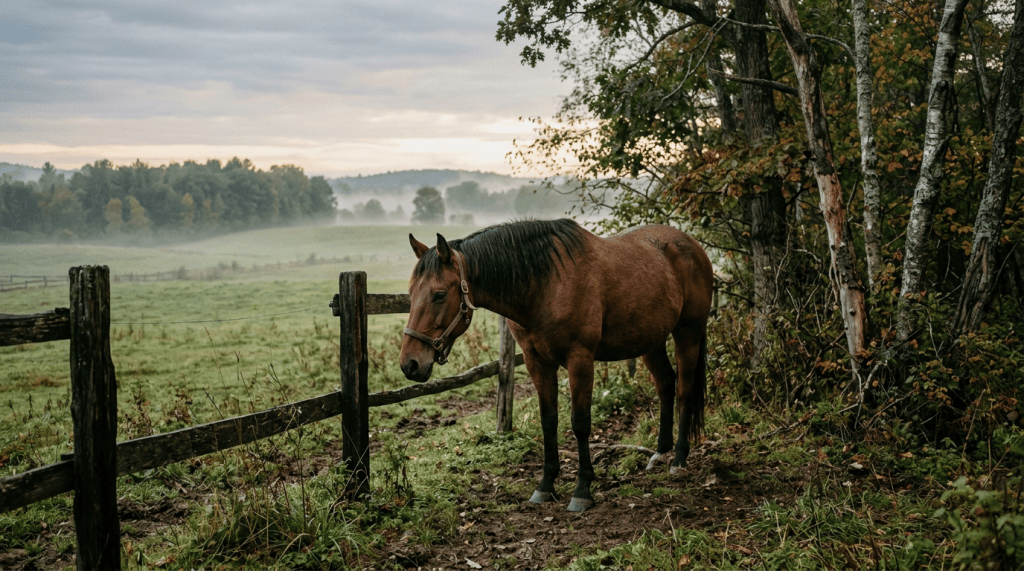
  • Brown horse standing beside a fence overlooking a misty pasture

    Ancestral Healing and The Work of Reconnection

    I sometimes struggle to explain what I do. Not because I don’t know what it is, but because the words available to us are often either too small or too polished. “Coaching” does not describe it. “Therapy” does not describe it. “Spiritual work” is too vague, and often carries a language I don’t particularly want to use.

    What I do is, at its heart, work of reconnection.

    I work with people who are trying to find their way back into relationship: with their own bodies and inner lives, with their ancestors, with the land beneath their feet, with spirit, and with parts of their personal and cultural histories that have been forgotten, silenced, severed or pushed away. I work one-to-one and in groups, online and in person. Sometimes horses are part of the work, sometimes they are not. Sometimes we sit with them or lie down beside them; sometimes they participate more actively in constellation work or ancestral processes. Sometimes there is ceremony or ritual, sometimes there is simply a conversation in which something that has been difficult to name finally has enough space to become visible.

    The deeper I go into healing, the less I believe that it is about becoming a better, more evolved or more spiritual version of ourselves. Increasingly, I think it has something to do with becoming right-sized again: right-sized in relation to other human beings, to animals, to the land, to our ancestors, to death, to mystery, and to the things we know as well as the things we do not know.

    That is not a process that happens quickly. In many ways, it takes a lifetime, and perhaps more than one.

    I have also become increasingly suspicious of the idea that healing anything like a linear journey.

    There is a particular story of transformation that is very deeply embedded in our culture: the individual leaves home, enters the unknown, faces the monster, finds the treasure and returns transformed. It is a powerful story, but it is also a very particular story of awakening. It is individual, directional and heroic, and I have come to see how much of that image reflects a masculine understanding of what it means to find one’s way through the unknown.

    My experience has been much more feminine than that.

    The feminine journey, as I have come to know it, is often circular, bodily, relational and chaotic. It does not necessarily move forward in a straight line. It can take us underground and back again. It can involve birth and death, grief and rage, sexuality and shame, deep silence, sudden revelation and long periods in which nothing seems to make sense. It can ask us to surrender the idea that we are in control of the process at all.

    That wildness is not something I want to hide from.

    Engaging with spirit for real is wild. It can be beautiful, intimate and profoundly healing, but it can also be disorienting, demanding and unpredictable. It can bring us into contact not only with love, belonging and ancestral gifts, but with grief that has travelled through generations, with histories of oppression and violence, with things that were never given a place in ordinary family narratives.

    This is part of why I take the work seriously.

    I do not believe that every difficult experience is an initiation, and I do not think every crisis needs to be given a spiritual meaning. Sometimes pain is simply pain. Sometimes a person needs psychological or medical support, medication, sleep, food, a safe home, a clear boundary, or distance from a situation that is harming them. Sometimes the most important thing we can do is not open further into the unseen world, but become more grounded in this physical one: to eat, sleep, breathe, walk, work with our hands, be with safe people, tend to the body and remember where we are.

    This is particularly important when working with spirit.

    I am not a psychotherapist, and I am not a trauma specialist. I have lived through significant trauma myself and have learned a great deal through my own healing journey, as well as through training, practice, teachers and years of experience accompanying other people. But I do not want to present that experience as a qualification that I do not have.

    This work was one of the things that changed the direction of my own life most profoundly, and I have seen its potential for transformation again and again. Precisely for that reason, I believe it needs to be approached with care. In an acute psychotic state, severe personal disorientation, acute retraumatization or other situations in which a person is not sufficiently grounded in ordinary reality, engaging more deeply with spirit can sometimes become more overwhelming rather than more healing. There are moments in life when the work is to come back to the earth, to the body and to ordinary human support, and there are moments when the first task is simply to establish safety and get out of a harmful situation.

    Knowing that difference is part of my responsibility.

    For me, boundaries are therefore not an optional addition to spiritual work. They are one of its foundations. Before engaging with ancestors or other spiritual realities, I want there to be a sufficiently clear sense of personal space, agency and safety. Can you feel your body? Can you say no? Can you recognize what belongs to you and what does not? Can you close something when you need to? Is your space your own?

    And I do want to speak plainly about something else that is part of my understanding of the spiritual world: evil exists. Just as human beings are capable of cruelty, exploitation and destruction, I understand the spiritual realm to contain forces that are not benevolent either. I do not think this needs to become a source of fear, and I certainly do not believe that we need to seek them out, evoke them or make them larger through our attention. Quite the opposite. We do not invite harmful forces into the work. We maintain boundaries, we pay attention, and we take spiritual safety seriously.

    There are things that can be encountered that are too powerful, too specific or simply beyond what I and the people I work with are trained or equipped to handle. Having seen a fair amount does not mean that I believe I can handle everything. There are situations in which the most responsible thing I can do is stop and refer someone to a colleague with the appropriate experience. I am fortunate to have a network of practitioners whose knowledge is different from mine and whom I can trust. I don’t see that as a limitation of the work. I see it as part of practicing it with integrity.

    My own path into this work was not something I planned.

    I have a master’s degree in sociology and come from a culture in which the things I now work with were largely absent, or were treated as irrational, primitive, private or embarrassing. Having spirit contact and sensations of dimensional shifts throughout my childhood, then, at one point in my life, I was suddenly and intensely exposed to what I can only describe as the other side. I did not have a framework for what was happening. I had no elders who could guide me through it, no living cultural container that knew how to hold the experiences I was having, and no ancestral tradition I could consciously turn toward.

    It was a complete breakdown, but it was also an initiation, although I only came to understand that much later.

    There was a great deal of suffering and confusion in the years that followed. I discovered heavy early childhood trauma and began to understand that what was happening to me could not be separated from the history of my own body and family. I had to find my way through much of it myself, and I got things wrong along the way. I misunderstood experiences, I lacked language, and I had no simple map to follow.

    Eventually, though, something began to come together.

    I started to see that what I had experienced was not only about me. It was connected to ancestry, culture, systems, trauma, land, belonging and the loss of relationship with things that human beings have known how to relate to for a very long time.

    That realization changed the direction of my life.

    I began to follow the calls that came from it, not toward becoming special, but toward becoming more connected.

    That distinction has remained important to me.

    Ancestral healing, as I practice it, is not about idealizing the dead. Some of the dead are not well. Our ancestors were not all wise or kind, and they were not all victims. They harmed each other. They participated in systems of domination. They carried their own wounds and passed some of those wounds on. They were sometimes perpetrators, sometimes victims, and very often both.

    We inherit more than names and family stories. We inherit relationships, patterns, silences, fears, capacities, unfinished things and histories that may continue to shape the living even when nobody consciously remembers them.

    So in an ancestral lineage healing process, I guide a person toward a safe and actual relationship with their own ancestors. I am not there to tell them what their ancestors think or what their life should be. I accompany the process and provide structure and guidance. The client establishes contact with an ancestral guide who is well enough in spirit to take on the healing of the lineage. Within the practice, the lineage is then held in what we call a healing container, supported by benevolent spiritual forces while it receives what is needed for an initial stabilization and movement toward healing.

    We return to the process over several sessions. Information can emerge about the lineage, its burdens and repeating patterns, particular histories and lifetimes, and also the gifts that have been carried forward. The process can bring grief, recognition, changes in relationships, unexpected understandings and sometimes profound blessings. It can also be quiet. There is no fixed timetable. Some lineages move through the process relatively quickly; others take much longer, sometimes months or years. I have come to understand that this is not something that can simply be forced into a schedule. It has its own pace, and that pace is often connected to the relationship between the living and the dead.

    As the ancestors move toward a more healed state, they become what we call ancestralized: less defined by what they could not resolve and more able to stand in a healthy relationship with the living as ancestors. I do not see myself as making that happen. I am there to accompany the relationship and help create the conditions in which it can unfold.

    The horses have taught me a great deal about this kind of accompaniment.

    They have an extraordinary way of leading without dominating. They don’t need to convince anyone of their authority. They have presence, boundaries and a very immediate relationship with what is happening around them. They can be gentle and uncompromising at the same time.

    One teacher once described my way of working as “loving authority”, and I have thought about those words ever since. I don’t want authority over people. I do, however, want to be able to lead. I want to be able to hold the structure when someone else cannot, to notice when something has become too much, to say no when no is needed, and to remain steady when another person is moving through something intense.

    For me, that is a very different kind of power. It is power that does not need power-over.

    The horses embody that distinction beautifully.

    When they are part of ancestral work, they may simply hold the space. Their presence can help ground emotions and support regulation. They respond to changes in the person and, within the spiritual framework of the work, sometimes respond to spiritual contact as well, making something that is otherwise invisible more tangible. Their presence can make the process intimate, physical and calm.

    But the horse is not a prop and not a magical instrument. The horse is a living being with its own boundaries, perception and agency, and the relationship with the horse is itself part of what makes the work possible.

    This is also why my professional life and my daily life have become increasingly difficult for me to separate.

    I live in the countryside with animals. I milk. I make cheese. I train with horses. I make fires, tend the land, work with plants, cook, practice ritual and spend time learning about the old traditions of the place where I live.

    None of this makes me more authentic than someone who lives in a city. It simply means that these are the conditions in which I have chosen to practice my own relationship with life.

    I am interested in rewilding, but not as an aesthetic. I am interested in what happens when we actually learn what grows around us, how to make a fire again, how to make food, how to work with animals, how to read a landscape, sense, and how to stay somewhere long enough to become accountable to it.

    I am interested in recovering ancestral European relationships with land, season, spirit, craft and ritual. But I don’t want to invent an untouched European past that never existed. Much was lost, much was deliberately suppressed or demonized, much was transformed beyond recognition, and much of what existed was not innocent or harmonious either. Our ancestors were human beings, with all the beauty and violence that entails.

    So the task, as I understand it, is not to recreate some imagined golden age. It is to find out what can be recovered, what can be repaired, what needs to be relinquished, and what new relationships might become possible now.

    That is where ancestral work also becomes cultural work.

    I see the loss of relationship as one of the deep wounds of our time. We have separated ourselves from land, from ancestry, from elders, from the more-than-human world, from our bodies and from one another, while building systems that normalize forms of domination that would once have been unthinkable.

    In the work with the ancestors, we have come to recognize six cultural patterns that repeatedly appear underneath personal and collective suffering: human supremacy, exploitative economic systems and the hoarding of resources, patriarchy and misogyny, colonialism and the theft of land and culture, racism and the fiction of human racial hierarchy, and ideological supremacy—the conviction that one’s own worldview must be imposed as the correct one.

    These are not simply political ideas that I disagree with. They have histories, and they live in institutions, families, bodies and relationships. They also live in the culture that formed me.

    So I cannot approach this work as though I am standing outside the problem.

    I am inside it.

    If I speak about decolonization, I have to ask what that actually requires of me. What have I inherited? What do I benefit from? What have I been taught to consider normal? What relationships have been broken? What was taken? What has been silenced? What needs to be returned, repaired, shared or relinquished?

    I don’t believe these are questions that can be answered once and then put away. They are practices. They require humility, action, the willingness to be wrong, and the capacity to stay in relationship when things become uncomfortable.

    This is also why I don’t think personal healing can be separated entirely from the larger world.

    Personal healing matters enormously. A person needs enough safety, stability and connection to themselves before they can begin to take on larger questions. But once there is some ground beneath the feet, I believe there is another question waiting: what do we do with what we have healed?

    Do we simply feel better as individuals, or does our healing change the way we participate in our families, communities and cultures?

    For me, the work eventually has to move in that direction.

    Toward relationship.

    Toward responsibility.

    Toward repair.

    My work and the way I live have therefore become part of the same practice. I am trying to walk what I talk about, although I don’t pretend to do that perfectly.

    If I speak about relationship, how do I relate?

    If I speak about the land, how do I live on it?

    If I speak about ancestors, am I willing to face what they did as well as what they gave me?

    If I speak about healing, can I meet my own wounds?

    If I speak about community, am I willing to be accountable to other people?

    If I speak about power, am I willing to examine my own?

    These questions matter to me more than appearing coherent or spiritually accomplished.

    I am suspicious of presentation, certainty and spiritual hierarchy. I am suspicious of myself whenever I become too impressed with myself. There is a great deal in this field that can become performance. It is easy to speak beautifully about healing, ancestors, ceremony, feminine wisdom and connection while remaining remarkably disconnected from the actual demands of relationship.

    So I want my work to remain close to the ordinary.

    To the body.

    To the animals.

    To the land.

    To food and fire.

    To grief.

    To boundaries.

    To difficult conversations.

    To the willingness to say, “I don’t know.”

    The people I most want to work with are not necessarily people who have the right beliefs or the right vocabulary. They are people who are willing to be sincere, to feel, to question, to listen, to take responsibility and to enter relationship.

    I don’t need someone to agree with everything I believe. I need them to be willing to meet what is actually there.

    The work can be intimate. It asks for trust, but also for boundaries; vulnerability, but not performance; openness, but also discernment. Sometimes it will transform a person’s understanding of their family or their own life. Sometimes it will bring grief before it brings relief. Sometimes it will ask them to change something concrete in the way they live.

    I don’t promise that the work will make life easier.

    In some ways, genuine reconnection may make us more aware of what we had previously been able to ignore.

    But I do believe it can make life more alive.

    More relational.

    More rooted.

    More honest.

    Perhaps that is what I have been trying to find all along: not a way out of being human, and not a way to become more special, but a way further into being human. A way of becoming less isolated, less inflated, less afraid of mystery and more capable of relationship. A way of remembering that we belong to something larger than ourselves without losing our own discernment and responsibility within it.

    I don’t know where this work ultimately leads.

    I know only that I have been called to keep walking, to keep learning, to keep questioning myself, and to keep trying to live in a way that is congruent with what I ask of others.

    Intentional Solidarity

    Continues Liberation

  • Wildflowers and ivy growing beside a weathered stone wall

    Weekly Sky Reflection September 14–20, 2026

    Weekly Sky Reflection

    September 14–20, 2026

    What Is Wanting to Live Through You?

    The Sky at a Glance

    There are weeks when the astrology seems to ask us to move forward, and there are weeks when it asks us to slow down and look beneath the surface. This week asks for both. Something is moving us toward greater embodiment at the same time that another part of the astrology is drawing us into the underworld, toward the places where desire, fear, power and old patterns still have something to teach us.

    The descent begins on Monday, when Black Moon Lilith enters Capricorn and brings our attention to the foundations of our lives: the structures we rely on for safety, stability and belonging, as well as the unconscious beliefs that shape how we move through them. Then, on Tuesday, Venus squares Pluto, opening a much more personal doorway into the underworld. Relationships, sexuality, desire, jealousy, power dynamics and questions of worth can become more difficult to keep at a comfortable distance. Something may be revealed that we would rather not look at, but there may be more here than simply another wound to heal.

    The underworld is also where things have been buried. Alongside the parts of ourselves we rejected, suppressed or learned to hide, there may be gifts, desires and sources of power that have been waiting for us to become ready enough to reclaim them.

    At the same time, the astrology is asking us to build. The Moon reactivates the evolutionary “basket” on Wednesday, Chiron returns to Aries on Thursday, and by Friday Mercury opposes Saturn while the Moon enters Capricorn and meets Lilith. The question becomes increasingly practical: if something inside us has changed, what needs to change in the life around us so that this new version of ourselves actually has somewhere to live?

    The weekend brings another layer of movement as Venus quincunxes Uranus and Mars squares Eris, with Eris conjunct Vesta and the T-square with Pele intensifying the call toward truth, devotion and action. Something may quicken in us. We may suddenly know what matters, or recognize a desire we have been trying not to hear. The invitation is not necessarily to make a dramatic decision, but to pay attention to what has enough life in it that we can no longer comfortably ignore it.

    The deeper theme running through the week is therefore not simply healing or transformation. It is reclamation: descending far enough to encounter what has been buried, and then having the courage to bring what we find back into our lives.

    Because what if some of what we are looking for isn’t waiting somewhere ahead of us?

    What if part of it has been waiting underneath us all along?


    The Underworld Is Not Empty

    Venus square Pluto on Tuesday brings us into one of the most potent themes of the week: the relationship between desire and shadow.

    Pluto has a way of taking us beneath the story we have been telling ourselves. When Venus enters that territory, the material can become particularly intimate. A relationship may expose a power dynamic we hadn’t wanted to acknowledge. A feeling of jealousy may reveal something about what we actually want. A sexual desire may challenge an identity we thought we understood. We may suddenly become aware of how much of our sense of worth has been entangled with being chosen, desired, approved of or needed.

    The natural response can be to want to get rid of whatever surfaces. We want to become less jealous, less angry, less needy, less afraid. We want to fix the uncomfortable part so that we can get back to being the person we believe we are supposed to be.

    But the mythology of the underworld offers us another possibility.

    Persephone’s descent is not simply a journey into suffering. It is an initiation. She goes down as one version of herself and emerges with access to a power and identity that could not have been developed in quite the same way above ground. The underworld changes her relationship to herself.

    This is one of the reasons shadow work can be so much more interesting than simply trying to eliminate the parts of ourselves we don’t like. The shadow isn’t only where our wounds live. It is also where we may have placed the parts of ourselves that were too powerful, too inconvenient, too sexual, too angry, too ambitious or too truthful for the life we were living at the time.

    Sometimes anger contains information about a boundary that has been crossed. Sometimes jealousy reveals a desire we have been unwilling to admit. Sometimes the part of us we have spent years trying to suppress is carrying precisely the life force we need for the next chapter.

    So when something uncomfortable emerges this week, perhaps the first question doesn’t need to be, How do I get rid of this? We might instead ask, What is this trying to show me? And what might become possible if I stopped treating this part of myself as the enemy?


    Go Beneath the Structure

    Black Moon Lilith entering Capricorn on Monday gives this descent an even deeper foundation. Capricorn is concerned with structure: the things we build, the responsibilities we carry and the systems we create in order to make life feel manageable. Lilith, however, is interested in what exists underneath those structures.

    She asks us to look beneath the obvious problem and beneath the story we have learned to tell about why we need things to be the way they are. Beneath the money fear, the relationship anxiety, the need for control or the insistence that everything needs to be certain, there may be a much more fundamental question: Do I actually trust life?

    And perhaps even more importantly, do I trust myself to meet whatever life brings me?

    This is different from believing that everything will work out exactly as we want it to. Trust doesn’t require certainty. In fact, some of the deepest forms of trust develop precisely when certainty is no longer available and we discover that we can still respond, adapt and choose.

    Lilith doesn’t necessarily arrive to destroy the structure. Sometimes she simply begins moving underneath it, shifting the foundations enough that we can no longer pretend the old arrangement is entirely stable. What looked like a practical problem may turn out to be an existential one. What looked like a fear about money may actually be a fear of not knowing what comes next. What looked like a relationship problem may reveal a deeper question about whether we trust ourselves to survive being fully honest.

    This is why Monday through Wednesday can be such potent territory for working with Lilith. The invitation is not to rush toward an answer, but to become curious about what has been operating beneath the surface, quietly shaping the way we meet our lives.


    The Upgrade Needs Somewhere to Live

    While the astrology is taking us downward, it is simultaneously asking us to build something new.

    The Moon’s reactivation of the evolutionary “basket” on Wednesday brings this question into focus: if we really have changed, where is that change visible?

    It is remarkably easy to experience transformation internally while keeping the external architecture of our lives exactly the same. We can have a profound realization and then return to the same schedule, the same commitments, the same relationships and the same patterns of spending our time. We can know that something is different without yet making the practical changes that acknowledge it.

    Eventually, though, the new version of us needs somewhere to live.

    That might mean changing our calendar, creating space for a creative project, having a conversation we have been postponing, making a financial commitment, setting a boundary or taking one concrete step toward something we have been calling a dream. It doesn’t require knowing the entire path. In fact, it rarely does.

    What matters is allowing the physical world to begin catching up with what we already know internally.

    There is a point where evolution stops being an idea and becomes a reorganization of our lives.

    And perhaps that is one of the central tensions of this week: we are being asked to descend into ourselves at the same time that we are being asked to make something tangible from what we find there.

    The two processes are not opposites.

    They belong together.


    Maybe Some Wounds Are Meant to Be Outgrown

    Then Chiron retrogrades back into Aries, and an old wound may seem to make another appearance.

    There can be something almost comical about these moments. Seriously? This again? Haven’t I already worked on this?

    We often imagine healing as a process that eventually allows us to close the chapter completely. We identify the wound, understand where it came from, work through it and expect that one day it will simply stop affecting us.

    But perhaps some wounds don’t heal in quite that way. Perhaps some of them become smaller because we become larger.

    Something can remain tender without remaining in charge. A familiar trigger can still appear without having the power it once had. An old story can still exist somewhere in our history without being allowed to determine what happens next.

    This gives us a different way of meeting Chiron’s return. Instead of asking, Why am I still like this? we might ask, Does this still have the same authority over me?

    Sometimes the evidence of healing isn’t that the wound has disappeared.

    It is that we no longer organize our lives around it.


    When Desire Becomes Direction

    Venus remains central to the week, and this means that relationship and desire become important teachers. Venus doesn’t simply describe what we love. She also reveals what we value, what we are drawn toward and what we are willing to give our attention to.

    That makes relationships particularly revealing right now.

    The people we are attracted to, the people who irritate us, the dynamics that make us feel powerful or powerless, and the moments when we suddenly realize what we do or do not want can all become mirrors. Another person may not be creating the transformation in us so much as revealing something that was already there.

    Venus opposing Eris later in the week brings an especially important question: whose desire is this?

    It is surprisingly easy to build a life around inherited ideas of what we should want. We absorb definitions of success from our families, our culture and our communities. We learn what a good relationship is supposed to look like, what work should mean, what adulthood should look like and what kind of life should make us feel successful.

    Because these ideas are often absorbed so early, they can become difficult to distinguish from our own desires.

    Eris is less interested in the socially acceptable answer. She asks what is actually true now.

    That doesn’t mean every inherited value needs to be rejected. It simply means we need to become curious about whether the things we are pursuing are still alive in us. Is this something we genuinely want, or something we want because of what it proves? Are we moving toward something that nourishes us, or toward an image of ourselves that we think will finally make us enough?

    A desire that is truly ours tends to carry a different kind of energy.

    It doesn’t necessarily make the path easy, but it makes the effort meaningful.


    What Isn’t Coming With You

    The combination of Chiron, Lilith and the Capricorn energy also brings us into contact with identity. There are certain roles we can become so accustomed to performing that we continue inhabiting them long after the circumstances that created them have changed.

    The responsible one. The strong one. The good one. The one who keeps everyone together. The one who doesn’t need too much. The one who is always available. The one who keeps the peace.

    None of these identities are necessarily false. Many of them developed because they were useful. They may have helped us survive, belong, achieve or care for the people we loved.

    But an identity can begin as an adaptation and eventually become a prison if we never stop to ask whether it still belongs to us.

    This is one reason the body can be such an important source of information during periods of change. Restlessness, exhaustion, constriction, anger or a sudden surge of energy can sometimes tell us that something in us has already moved ahead while our conscious identity is still trying to catch up.

    The question is therefore not only what we want to bring into the next chapter.

    It is also what we are no longer willing to carry into it.


    The Intelligence of the Crossroads

    Uranian energy adds another dimension to all of this because evolution rarely unfolds exactly according to the plan we make for it.

    Venus quincunx Uranus over the weekend can bring surprises into the realm of relationship, desire and values. Something unexpected may interrupt the story we have been telling ourselves. A sudden realization, a new attraction, a change in circumstances or simply a growing need for freedom can reveal that what once fit no longer does.

    Not every disruption is a sign that we need to leave. Not every unexpected attraction is a calling. Discernment matters.

    But we don’t need to dismiss every surprise simply because it wasn’t part of the plan.

    Sometimes life changes the question before we have finished answering the old one.

    Uranus reminds us that freedom isn’t always a dramatic act of rebellion. Sometimes it is simply the realization that we are no longer required to keep being who we were.

    And perhaps the deeper question is not, What should I do? but, What makes me feel more alive?


    The Truth That Quickens You

    By the weekend, Mars, Eris and Vesta bring the week’s themes toward action.

    Vesta knows devotion. She asks what deserves the protection of our attention and what we are willing to tend consistently. Eris is willing to tell the truth even when that truth disrupts the arrangement. Mars brings the energy to move.

    Together, they create a potent question: What moves your spirit?

    Not what looks impressive. Not what you think you should want. Not what would make everyone else comfortable. What actually brings you alive?

    And then comes the more difficult question: what are you willing to do with that information?

    We don’t need to manufacture a dramatic decision simply because the astrology is intense. But neither do we want to hear ourselves clearly and then immediately talk ourselves out of what we heard.

    Sometimes action is very small. It might be making the call, sending the message, putting the date in the calendar, saying no, saying yes, beginning the thing or admitting to ourselves that something matters.

    The point isn’t to create chaos.

    It is to stop abandoning the truth once we recognize it.

    This is where the week’s descent begins to become a form of reclamation. We go down far enough to find what has been buried, and then we have the opportunity to bring that life force back into the world.


    What Deserves Your Life Force?

    All of this brings us to the question underneath the week: what is worth your life force?

    We have finite amounts of time, attention and energy, which means that one of the most consequential choices we make is not simply what we pursue, but what we continue feeding.

    Some things receive our attention because they are genuinely meaningful. Others receive it because they are familiar, because we feel responsible for them, because someone expects us to continue, or because we have already invested so much that it feels difficult to admit the investment is no longer making sense.

    Vesta asks us to become more conscious of devotion.

    What receives your best attention? What are you willing to protect? What are you willing to practice consistently? And what has been taking up space simply because you have never stopped to question whether it still belongs there?

    This matters because the energy we reclaim from what is no longer alive becomes available for something else.

    Release and creation are therefore not separate processes.

    Sometimes the first act of building the new life is stopping the endless maintenance of the old one.


    Reflection Questions


    A Contemplative Closing

    Maybe this week isn’t asking you to figure out what comes next.

    Maybe it is asking you to go down deep enough to hear what has been waiting for you there.

    The unlived part. The buried gift. The desire you haven’t quite let yourself know. The truth that has been underneath the structure for longer than you realized.

    We often imagine transformation as moving away from something: away from the wound, away from the old identity, away from the pattern, away from the version of ourselves we have outgrown. But this week suggests that transformation can also be a movement toward something that was already inside us.

    The descent is not the opposite of creation.

    It may be part of how creation begins.

    Because once we are willing to look beneath the surface, we may discover that some of what we thought needed to be fixed actually needs to be reclaimed. The anger may contain a boundary. The desire may contain direction. The old wound may show us how much we have grown. The relationship may reveal a truth. The disruption may open a door we couldn’t have imagined from where we were standing before.

    And then comes the practical part.

    What are you going to do with what you find?

    The person you are becoming needs somewhere to live. The dream needs somewhere to land. The truth needs a place in your actual life—not just in your journal, your meditation, your imagination or your understanding of yourself.

    That may mean a conversation. A boundary. A commitment. A beginning. A decision. Or simply one small change that tells your nervous system and your life, I believe what I now know.

    You don’t have to know the whole path.

    You don’t have to make everything happen this week.

    But perhaps you can become willing to listen closely enough to recognize what has life in it.

    And then protect it.

    Nourish it.

    Build around it.

    Let it change you.

    Because the question underneath this week’s astrology may not be What do I need to become?

    It may be something much more intimate:

    What is already alive in me that is asking to be lived?

    You don’t have to have the answer yet.

    Just be willing to descend far enough to hear it.

    And when you do, don’t leave it down there.

    Bring it back with you.

    Intentional Solidarity

    Continues Liberation

  • STILL

    STILL

    Last night I was lying in bed when, suddenly, I felt afraid. Not the small, everyday kind of fear. Not the fear of something that might happen to me personally. A much bigger fear. The fear that people are becoming blind again. That people are taking to the streets again to demonstrate against other people. That we are once again beginning to separate human beings from one another, to divide them into groups, to assign different values to their lives – until some people somehow become less human than others. Systematic dehumanisation.

    I feel like I recognise the old patterns. The same mechanisms. The same simplifications. The same enemy images. The same language that creates fear and turns people against one another. On Wednesday, thousands of people took to the streets across Spain to show their support for Ceuta and to protest against the government’s migration policies. In Ceuta itself, tens of thousands took part.

    What do we do with our fear? And who benefits when we are taught to direct that fear towards other human beings?

    Because that is where things become dangerous: when people start believing that the people arriving are the problem – rather than the political decisions, structures, power relations and systems that create and manage these situations. Separation as strategy. Divide people. Create fear. Name an enemy. Repeat the message. And eventually, the image of the enemy begins to feel like a fact. People who are afraid are easier to convince. And people who are different are easier to turn into enemies. The perfect service to any system that wants to preserve its power.

    I am afraid of this shift. Of this change in the energy. What if this gets out of control? What if we are moving in the wrong direction again? To the right. I keep asking myself: What is happening here? Have we forgotten? The machine is still working exactly as dangerously as it always has. And I have not only seen this since yesterday. I see it all the time.

    But I am also afraid of my own fear. Because sometimes I wonder whether fear itself can become part of what I am afraid of. Whether, through my fear, I enter a collective field of fear. Whether I might be feeding the very reality I am afraid of.

    My ancestors tell me something else: Feeling fear, knowing fear, is not the problem. Ignoring it is. Because what we do not consciously acknowledge does not disappear. It continues to act – in the hidden places, in the unconscious, in the body, in our decisions, in our relationships, in our politics.

    Yesterday, a friend said to me: We live here in “Andalucía baja” – in deep Andalusia. And he does not mean only a place. Maybe he means a time. The dictatorship ended here not so long ago. Its traces have not disappeared – despite the Pacto del Olvido, the Pact of Forgetting. Separation is everywhere. So is fear. And inside me, very old, very primal fears are being triggered. Fears I have known for years. And still – or perhaps precisely because of that – I have to look at them again: the fear of not belonging, the fear of being different. “Giri” – a colloquial Spanish word for foreigners, particularly those perceived as coming from elsewhere in Europe. Extranjero. Stranger. Outsider. A woman who lives alone. A woman with her own opinions, and the courage to speak them. A woman who practises agriculture in an animist way. A woman who does not fit easily into the forms that have been prescribed for her.

    The air is getting thinner. And the atmosphere is getting hotter. I no longer have a house. My animals no longer have land on which to live. My values have become a target. My existence has become a projection screen for other people’s fears and assumptions. And for others among us, it looks very different indeed. In Ceuta, people are becoming pawns in a deeply political and geopolitical crisis. People – including many minors – are being turned into symbols of something much bigger than themselves.

    And that is where one of the greatest dangers lies: when human beings are no longer seen as human beings, but as “migration”, as “invasion”, as “threat”, as a number, a mass, a problem. Then it becomes possible to talk about people without actually talking about them. Without knowing their names. Without hearing their stories. Without seeing their fear. Without recognising their dignity. The current events in Ceuta reveal this tension with frightening clarity. Migrants, and particularly unaccompanied minors, are living in precarious conditions while public debate is increasingly shaped by words such as “invasion” and “expulsion”.

    This is not personal. At least, not only. It is collective. Global. Cultural. Spiritual. Institutional. And above all: systemic. The person who fights against their neighbour is not necessarily resisting the system. Sometimes they are fulfilling its logic. When we fight each other, we stop looking upwards. When we fear each other, we stop asking who is making the decisions. When we dehumanise each other, we no longer have to change the structures. None of this is new. History is full of it. Racism and dehumanisation do not simply appear out of nowhere. They are produced and normalised through language, institutions, political decisions, media, power and repetition.

    And that is exactly why one thing frightens me most: that it still works. That we can still be persuaded to see other human beings as threats. That we can still be made to believe that our neighbour is our enemy. That we can still be made to believe that our safety requires someone else to have less of it. That we can still be made to believe that belonging has to come at the expense of someone else’s belonging.

    So what is left to do? I don’t know. I only know that racism and dehumanisation will not disappear as long as we refuse to transform the systems, structures and ways of thinking that keep reproducing them. And until then? I will stay with what I know. With the sacred values held by my faith and by my love for human beings and for this Earth. With dignity. With humility. With equality. With the right of every living being to life and safety. With belonging. With the understanding that no human being becomes less human because they were born differently, believe differently, look different, love differently, live differently, or seek safety somewhere else.

    Still.

    On Sunday, the annual village festival begins in my village here in “Andalucía baja”. The Virgen de la Luz will be carried from her chapel into the village, accompanied by around 300 horses and hundreds of people, and celebrated there. I don’t really feel like celebrating right now. And yet I will be there. This tradition asks an enormous contradiction of me: to stand between a male-dominated, nationalist, ideologically controlled and aristocratically shaped idea of superiority – and the sacred humility and devotion of the Virgen de la Luz. The Virgen who brings light and rain, who blesses and protects Mother Earth, who accompanies the harvest, who blesses the animals with health, who accompanies the farmers of this region, and who has supported me every day for the past six years in my spiritual practice. Gracias, Virgen de la Luz.

    This tradition carries its own history. Women were only officially allowed to participate in the event from 2001 onwards. Not because the structures suddenly changed by themselves, but because women resisted actual attacks and participated anyway. Giris came much later. There is a story told here- actually a bridge named «the bridge of the English lady», about a woman from England who, years ago, followed the procession on horseback – keeping enough distance to accompany the Virgen without officially becoming part of the procession itself. That too is history. That too is separation. That too is resistance.

    Perhaps this is where our task lies. Not in having no fear. Not in pretending that everything is fine. Not in separating myself from people who think differently from me. But in remaining awake. In feeling fear without allowing it to lead. In feeling anger without becoming dehumanising myself. In knowing history without accepting it as an unchangeable destiny. And in asking, again and again: Who is being turned into the enemy? Who benefits from it? Whose humanity is being made invisible? What fear is being sold to us? And what happens if we refuse to buy it?

    Maybe that is what “still” means.

    Still afraid. Still angry. Still carrying history. Still facing power. Still living with separation. Still refusing to believe that we do not belong together.

    Let us do what we can. Let us keep our eyes open. Let us refuse to be turned against one another. Let us refuse to be dehumanised – and to dehumanise others. Let us look more closely before we believe what we are being told. And let us learn to distinguish between what frightens us – and what is actually dangerous.

    Because perhaps the greatest danger is not the person standing next to us. Perhaps it is the moment when we forget that they are human.

    Still.

    I choose connection.

    I choose dignity.

    I choose life.

    I choose the Earth.

    I choose all of us.

    Intentional Solidarity

    Continues Liberation

  • Trotzdem – wenn Entmenschlichung wieder funktioniert

    TROTZDEM – über Angst, Entmenschlichung und die Entscheidung, Mensch zu bleiben

    Gestern Abend lag ich im Bett und hatte plötzlich Angst. Nicht die kleine, alltägliche Angst. Nicht die Angst vor etwas, das mir persönlich passieren könnte. Eine viel größere Angst. Die Angst, dass Menschen wieder blind werden. Dass Menschen wieder auf die Straße gehen, um gegen andere Menschen zu demonstrieren. Dass wir wieder dabei sind, Menschen voneinander zu trennen, sie in Gruppen einzuteilen, ihnen unterschiedliche Werte zuzuschreiben – bis die einen plötzlich weniger Mensch sind als die anderen. Systematische Entmenschlichung.

    Ich habe das Gefühl, die alten Muster wiederzuerkennen. Die gleichen Mechanismen. Die gleichen Vereinfachungen. Die gleichen Feindbilder. Die gleiche Sprache, die Angst erzeugt und Menschen gegeneinander stellt. Am Mittwoch gingen in Spanien Tausende Menschen auf die Straße, um ihre Unterstützung für Ceuta zu zeigen und gegen die Migrationspolitik der Regierung zu protestieren. In Ceuta selbst waren es Zehntausende.

    Was machen wir mit unserer Angst? Und wer profitiert davon, wenn wir anfangen, unsere Angst auf andere Menschen zu richten?

    Denn genau dort wird es gefährlich. Wenn Menschen glauben, dass die Menschen, die ankommen, das Problem sind – und nicht die politischen Entscheidungen, die Strukturen, die Machtverhältnisse und die Systeme, die solche Situationen hervorbringen und verwalten. Separation als Strategie. Teile die Menschen. Erzeuge Angst. Benenne einen Feind. Wiederhole die Botschaft. Und irgendwann fühlt sich das Feindbild wie eine Tatsache an.

    Wer Angst hat, glaubt leichter, was ihm erzählt wird. Und wer anders ist, kann leichter zum Feind erklärt werden. Der beste Service für jedes System, das seine Macht behalten möchte.

    Ich habe Angst vor dieser Verschiebung. Vor dieser Veränderung der Energie. Was, wenn das aus dem Ruder läuft? Was, wenn wir wieder in die falsche Richtung laufen? Nach rechts.

    Ich frage mich: Was passiert hier? Haben wir vergessen? Die Maschine funktioniert noch genauso gefährlich wie immer. Und ich weiß das nicht erst seit heute. Ich sehe es die ganze Zeit. Aber ich habe auch Angst vor meiner eigenen Angst. Denn manchmal frage ich mich, ob die Angst selbst zu einem Teil dessen wird, was ich fürchte. Ob ich durch meine Angst in ein kollektives Feld der Angst einsteige. Ob ich damit genau die Realität nähre, vor der ich mich fürchte.

    Meine Ahnen sagen mir etwas anderes: Die Angst zu spüren und zu kennen, ist nicht das Problem. Sie zu ignorieren, ist es. Denn was wir nicht bewusst wahrnehmen, verschwindet nicht. Es wirkt weiter. Im Verborgenen. Im Unbewussten. Im Körper. In unseren Entscheidungen. In unseren Beziehungen. In unserer Politik.

    Ein Freund hat gestern zu mir gesagt: Wir leben hier in „Andalucía baja“ – im tiefsten Andalusien. Und damit meint er nicht nur einen Ort. Vielleicht meint er eine Zeit. Die Diktatur ist hier noch nicht lange vorbei. Ihre Spuren sind nicht verschwunden – trotz des „Pacto del Olvido“, des Paktes des Vergessens. Separation ist allgegenwärtig. Angst auch.

    Und in mir persönlich werden gerade sehr alte, ursprüngliche Ängste getriggert. Ängste, die ich seit Jahren kenne. Und trotzdem – oder gerade deshalb – muss ich sie wieder anschauen: die Angst, nicht dazuzugehören. Die Angst, anders zu sein. „Giri“ – ein umgangssprachlicher spanischer Begriff für Ausländer*innen, insbesondere für Menschen aus anderen, meist nordeuropäischen Ländern. Extranjero. Stranger. Fremder.

    Eine Frau, die alleine lebt. Eine Frau mit einer eigenen Meinung, die sie ausspricht. Eine Frau, die Landwirtschaft auf eine animistische Weise betreibt. Eine Frau, die sich nicht problemlos in die vorgesehenen Formen einfügt.

    Die Luft wird dünner. Und es wird hitziger. Ich habe kein Haus mehr. Meine Tiere haben kein Land mehr, auf dem sie leben können. Meine Werte sind zur Zielscheibe geworden. Meine Existenz ist zur Projektionsfläche geworden.

    Und für andere von uns sieht das noch einmal ganz anders aus. In Ceuta werden Menschen zum Spielball einer ausgesprochen politischen und geopolitischen Krise. Menschen, darunter viele Minderjährige, werden zum Symbol für etwas gemacht, das viel größer ist als sie selbst.

    Und genau darin liegt eine der größten Gefahren: Wenn Menschen nicht mehr als Menschen gesehen werden, sondern als „Migration“, als „Invasion“, als „Bedrohung“, als Zahl, als Masse, als Problem. Dann wird es möglich, über sie zu sprechen, ohne über sie zu sprechen. Ohne ihre Namen zu kennen. Ohne ihre Geschichten zu hören. Ohne ihre Angst zu sehen. Ohne ihre Würde anzuerkennen.

    Die aktuellen Ereignisse in Ceuta zeigen diese Spannung mit erschreckender Deutlichkeit. Migrant*innen und insbesondere unbegleitete Minderjährige leben unter prekären Bedingungen, während die öffentliche Debatte zunehmend von Begriffen wie „Invasion“ und „Expulsion“ geprägt wird.

    Das hier ist nicht persönlich. Zumindest nicht nur. Es ist kollektiv. Global. Kulturell. Spirituell. Institutionell. Und vor allem: systemisch.

    Der Mensch, der gegen seinen Nächsten kämpft, widersetzt sich nicht dem System. Manchmal erfüllt er gerade dessen Logik. Wenn wir uns gegenseitig bekämpfen, schauen wir nicht mehr nach oben. Wenn wir uns gegenseitig fürchten, fragen wir nicht mehr, wer Entscheidungen trifft. Wenn wir uns gegenseitig entmenschlichen, müssen wir die Strukturen nicht mehr verändern.

    Das ist keine neue Erkenntnis. Die Geschichte ist voll davon. Rassismus und Entmenschlichung sind keine spontanen Naturereignisse. Sie werden durch Sprache, Institutionen, politische Entscheidungen, Medien, Macht und gesellschaftliche Wiederholung hergestellt und normalisiert.

    Und genau deshalb macht mir eines besonders Angst:

    Dass es trotzdem funktioniert.

    Dass wir Menschen immer noch dazu bringen können, andere Menschen als Bedrohung zu sehen. Dass wir immer noch glauben können, unser Nachbar sei unser Feind. Dass wir immer noch glauben können, Sicherheit bedeute, dass jemand anderes weniger Sicherheit bekommt. Dass wir immer noch glauben können, Zugehörigkeit müsse auf Kosten der Zugehörigkeit anderer entstehen.

    Was bleibt also zu tun?

    Ich weiß es nicht.

    Ich weiß nur, dass Rassismus und Entmenschlichung nicht verschwinden werden, solange wir die Systeme, Strukturen und Denkweisen, die sie immer wieder hervorbringen, nicht verändern.

    Und bis dahin?

    Bleibe ich bei dem, was ich weiß. Bei den heiligen Werten, die mein Glaube und meine Liebe zu den Menschen und zu dieser Erde vertreten. Bei Würde. Bei Demut. Bei Gleichwertigkeit. Bei dem Recht jedes Lebewesens auf Leben und Sicherheit. Bei Zugehörigkeit. Bei der Erkenntnis, dass kein Mensch weniger Mensch wird, weil er anders geboren wurde, anders glaubt, anders aussieht, anders liebt, anders lebt oder an einem anderen Ort Schutz sucht.

    Trotzdem.

    Am Sonntag beginnt in meinem Dorf in „Andalucía baja“ das jährliche Dorffest. Die Virgen de la Luz wird dabei mit ungefähr 300 Pferden und Reiter*innen und Hunderten von Menschen zu Fuss von ihrer Kapelle ins Dorf getragen und gefeiert.

    Mir ist gerade nicht sehr nach Feiern zumute. Und doch werde ich dort sein.

    Diese Tradition verlangt mir einen enormen Spagat ab: zwischen einer männlich dominierten, nationalistisch orientierten, ideologisch kontrollierten und aristokratisch geprägten Vorstellung von Überlegenheit – und der heiligen Demut und Hingabe der Virgen de la Luz.

    Der Virgen, die Licht und Regen bringt, die Mutter Erde segnet und beschützt, die Ernte begleitet, die Tiere mit Gesundheit segnet, die Landwirt*innen dieser Region begleitet und die mich seit sechs Jahren jeden Tag in meiner spirituellen Praxis unterstützt.

    Gracias, Virgen de la Luz.

    Auch diese Tradition trägt ihre Geschichte in sich. Frauen wurden bei der Veranstaltung erst seit dem Jahr 2001 offiziell zugelassen. Nicht, weil sich die Strukturen plötzlich von selbst verändert hätten, sondern weil Frauen sich gegen tatsächliche Angriffe gewehrt und trotzdem teilgenommen haben. Giris kamen noch viel später dazu.

    Man erzählt sich hier die Geschichte einer Frau aus England, die vor Jahren mit ihrem Pferd dem Umzug folgte – mit genügend Abstand, um die Virgen begleiten zu können, ohne direkt Teil des Zuges zu sein.

    Auch das ist Geschichte. Auch das ist Separation. Auch das ist Widerstand.

    Vielleicht liegt genau darin unsere Aufgabe.

    Nicht darin, keine Angst zu haben. Nicht darin, so zu tun, als wäre alles gut. Nicht darin, mich von Menschen zu trennen, die anders denken als ich. Sondern darin, wach zu bleiben.

    Die Angst zu fühlen, ohne ihr die Führung zu überlassen. Die Wut zu spüren, ohne selbst zu entmenschlichen. Die Geschichte zu kennen, ohne sie als unveränderbares Schicksal zu akzeptieren.

    Und immer wieder zu fragen:

    Wer wird gerade zum Feind gemacht? Wer profitiert davon? Welche Menschen werden unsichtbar? Welche Angst wird gerade verkauft? Und was passiert, wenn wir uns weigern, sie zu kaufen?

    Vielleicht ist das das „Trotzdem“.

    Trotz Angst. Trotz Wut. Trotz Geschichte. Trotz Macht. Trotz Separation. Trotz alledem, was uns immer wieder erzählt, dass wir nicht zusammengehören.

    Lasst uns tun, was wir können. Lasst uns die Augen offen halten. Lasst uns uns nicht gegeneinander aufbringen und nicht entmenschlichen lassen. Lasst uns genauer hinschauen, bevor wir glauben, was man uns erzählt.

    Und lasst uns unterscheiden zwischen dem, was uns Angst macht – und dem, was uns wirklich gefährlich wird.

    Denn vielleicht ist die größte Gefahr nicht der Mensch neben uns.

    Vielleicht ist es der Moment, in dem wir vergessen, dass er ein Mensch ist.

    Trotzdem.

    Ich entscheide mich für die Verbindung.

    Für die Würde.

    Für das Leben.

    Für die Erde.

    Für uns alle.

    Intentional Solidarity

    Continues Liberation

  • Dark horse grazing beneath a large oak tree in a misty meadow

    Restoring the Cultural Importance of Horses

    Restoring the Cultural Importance of Horses

    Returning to relationship, remembrance, and healing with the more-than-human world

    There was a time when human beings did not experience themselves as separate from the living world. The river was not merely water, the forest was not simply timber, the land was not property, and an animal was not an object whose value depended upon what it could provide for us. Life was understood through relationship, through the recognition that human beings were part of a much larger community of beings, each with their own presence, intelligence, nature and place within the whole.

    This way of knowing the world has often been described as animism, although no single word can contain the many ways in which ancestral peoples have understood their relationships with animals, plants, land, weather, ancestors and the unseen. At its heart is a recognition that the world is alive and that we are not standing outside of it. We are embedded within it, dependent upon it and continually shaped by our relationships with it.

    To live this way is not simply to hold a particular belief about nature. It is to allow relationship to become the foundation of how we live.

    Much of the rupture of our time has come from forgetting this.

    The rupture of relationship

    Over generations, human cultures have increasingly separated themselves from the living world and learned to see it through categories of ownership, usefulness, productivity and control. Animals became livestock, property, workers, performers and commodities. Land became something to possess and develop. Forests became resources, rivers became infrastructure, and the lives of other beings became increasingly measured according to what they could provide for human purposes.

    This separation has caused enormous suffering, not only to the beings and ecosystems subjected to our extraction, but also within human beings themselves. When we continually place ourselves outside and above the living world, we lose an essential understanding of our own nature. We become disconnected from the rhythms of our bodies, from place, from the other beings around us and from the experience of belonging to something larger than ourselves.

    The consequences can be seen in the ecological crisis, but also in the profound loneliness, alienation and fragmentation that have become so familiar within human life. We have become extraordinarily skilled at controlling our surroundings while becoming less able to listen to them.

    Yet the relationship has never actually disappeared. The living world has not ceased to communicate simply because we have become less capable of hearing it.

    There remains an invitation to remember.

    Why horses

    Horses hold a particularly powerful place within this remembering because our history with them reaches so deeply into human culture. For thousands of years, horses have travelled alongside us, carried us across landscapes, worked with us, lived within our communities and participated in the changing stories of human societies. They have been companions, partners, workers, ceremonial beings and beings of immense cultural and spiritual significance.

    But their importance does not come only from what horses have done for human beings.

    It comes from who they are.

    A horse encounters the world through an extraordinarily refined sensitivity to movement, intention, rhythm, proximity, tension, breath and changes within the environment. They are deeply social beings, continually orienting themselves in relation to others. They notice what is happening around them, and they respond to what they perceive rather than to the stories we tell ourselves about what we are doing.

    This makes relationship with a horse a profound encounter with another way of being alive.

    A horse does not need us to explain ourselves. We can say that we are calm while our bodies communicate something entirely different. We can believe that we are offering connection while unconsciously asking for control. We can approach with the intention of helping while failing to notice that the other being has not consented to what we are offering.

    The horse can make these contradictions visible.

    Not by judging us, but simply by responding.

    This is where something important can begin.

    Beyond the horse as healer

    It is tempting to speak of horses as healers, and there is truth in the experience many people have of being changed through their relationship with them. Yet even this language can carry the danger of placing the horse once again in a role defined by human needs: the horse becomes valuable because the horse heals us.

    A deeper relationship asks something different.

    If we are willing to receive something from the horse, what does it mean to become genuinely available to the relationship itself?

    A right relationship is not simply a matter of taking and giving, of balancing what one receives against what one returns. Relationship is more alive and more mysterious than an exchange. It is an ongoing participation in one another’s lives, shaped by attention, presence, responsibility, freedom, boundaries, care and the countless things that cannot be measured. Reciprocity matters deeply, but it is not a transaction.

    This takes us beyond the idea of horses as therapeutic instruments and into a relationship in which the horse’s life matters in its own right. It asks us to become interested in the horse not only in relation to what we may experience through being with them, but in the horse as a being with their own needs, relationships, preferences, history, rhythms and ways of knowing.

    What allows this particular horse to flourish? What creates safety, freedom, companionship and choice in their life? What happens when we take their boundaries seriously, when a refusal is understood as communication rather than disobedience, and when their needs are allowed to influence the relationship as much as our own?

    These are not merely questions of horsemanship. They are questions of ethics, and ultimately questions about what kind of human beings we choose to become.

    Because relationship without reciprocity easily becomes extraction, even when our intentions are loving. And relationship that is reduced to an exchange of benefit and care still remains too small for the living complexity of what it means to belong to one another.

    Listening before acting

    There is a profound difference between interacting with a horse and entering into relationship with one.

    We can learn techniques for handling, training and communicating with horses, and those skills can be valuable. But technique alone does not create relationship. Relationship begins when we become willing to encounter the horse as another living subject, with a perspective and a way of knowing that is not ours to control.

    This requires a different quality of attention.

    We begin to notice before we intervene. We listen before we direct. We become curious about what the horse is communicating instead of immediately deciding what their behaviour means. We allow silence to become part of the encounter. We begin to recognise that communication is happening continuously, often through things much subtler than words.

    In this way, being with a horse has to become a practice of humility.

    The human being is no longer the one who knows, teaches and determines what should happen. We become one participant within a relationship that has its own intelligence.

    And something changes in us when we stop insisting that everything must revolve around our intention.

    Healing with the more-than-human world

    This is why I prefer to speak of healing with the more-than-human world rather than healing through it or from it.

    Healing is not something a horse does to a human being.

    It is something that can emerge within relationship.

    When we spend time in genuine contact with another living being, our attention can gradually return to the body and to the present moment. We notice breath, movement, weight, temperature, sound, distance and rhythm. We become aware of our own state because another being is responding to it. We are reminded that our bodies communicate constantly, whether or not our conscious minds are aware of what they are saying.

    A horse can therefore become a powerful companion in the process of coming back into embodied relationship with life.

    But the movement is not one-directional.

    As we become more sensitive to the horse, we also become more aware of the conditions in which the horse is living. We begin to notice whether there is enough space, rest, companionship, choice and safety. We become more attentive to the difference between what we want from the horse and what the horse is actually experiencing.

    The healing becomes reciprocal because the relationship itself becomes the place of attention.

    The wisdom of our ancestors

    This way of being is not something we need to invent.

    Human beings have spent the greater part of our existence living within intimate relationship with the more-than-human world. Before the increasing separation produced by systems of domination, commodification, colonialism and industrialisation, human life was embedded in relationships with animals, plants, waters, landscapes, seasons, ancestors and the unseen. These relationships were expressed differently from place to place and from people to people, but the fundamental reality was not abstract: human life depended upon and participated in the lives of countless other beings.

    We should be careful not to turn this into a story of a pure past from which modern humans have simply fallen. Human history contains complexity, conflict, violence, care and contradiction. Yet the fact remains that the separation between human beings and the rest of the living world is not the original condition of humanity. It is a particular historical development, and one that has been profoundly shaped by colonialism, land dispossession, industrialisation and the transformation of living beings into resources and property.

    For many peoples, these forces did not merely change an idea about relationship. They violently disrupted living relationships with land, animals, ancestors, language, ceremony and community. In many places, the consequences are not historical in the sense of being finished; they continue in the present.

    Remembering this matters.

    Because returning to relationship cannot mean taking knowledge from peoples whose relationships were attacked and placing it into another modern framework for our own use. It asks for humility about where knowledge comes from, whose lives have carried it, what has been lost, what continues to be protected and what it means to approach ancestral ways without appropriating them.

    Our ancestors are not an idealised past to which we can simply return. They are part of the living lineage through which we have arrived here, carrying both wisdom and wounds, relationship and rupture.

    Ceremony and remembrance

    Ceremony can be one way of entering this field of relationship.

    It interrupts the ordinary assumption that the world exists simply for our use. Ceremony asks us to become attentive, to acknowledge relationship, to make offerings, to remember those who came before us and to recognise that we are participating in something that began long before our individual lives.

    Ritual can return us to a different quality of attention. It can slow the habitual movement of taking and doing and invite us into participation, listening and presence. It can remind us that we are part of relationships larger than the individual self, and that there are ways of acknowledging life, place, ancestors and other beings that do not depend upon explanation or control.

    For beings whose cultural and spiritual traditions have been disrupted through colonisation, forced assimilation, displacement and other forms of violence, ceremony can carry profound meanings of continuity, survival, sovereignty and reclamation. Many traditions have endured through extraordinary efforts to protect relationships, knowledge, language, land and ways of being. To recognise this asks for care: these living traditions are not resources for others to borrow, reproduce or extract from, but belong within the peoples and relationships that have carried them.

    We each carry ancestral histories, whether they are close to us or obscured by generations of rupture, migration, religious change, displacement or forgetting. Part of our own work may therefore be to approach those histories with honesty and tenderness, to become curious about what has been lost or transformed, to honour what can genuinely be remembered, and to find ways of restoring relationship within our own lives without reaching for what belongs to another lineage.

    In this way, ceremony need not become an attempt to recreate something that has been lost or to imitate someone else’s way of being. It can instead become an opening into deeper attention, responsibility and relationship—a way of remembering that we have ancestors, that we belong to places and histories, and that our own lives can become part of the ongoing work of caring for what is alive.

    Ceremony, in this sense, is not decoration around the work.

    It can be part of remembering how to belong.

    Our ancestors and the work of repair

    To bring our ancestors into this work is not to idealise them. It is to acknowledge that we are the continuation of lives that began before us and that much of what we carry was shaped long before we arrived.

    Our bodies contain history. Our ways of relating have histories. The stories we inherited about animals, land and ourselves have histories. So does the separation that we are now attempting to understand.

    The question is not simply what we want to create in the future, but what has been broken, interrupted, suppressed or forgotten along the way.

    What relationships were once tended that are now neglected? What forms of knowledge were violently interrupted? What ways of listening were dismissed, prohibited or made difficult to continue? What relationships with land and other beings have survived despite everything that was done to sever them?

    There is no single answer to these questions, and there is no universal ancestral past waiting to be recovered.

    There are many histories, many lineages and many forms of relationship.

    Our task is therefore not to create a romantic image of what came before, nor to appropriate traditions that belong to others. It is to become honest about the histories we have inherited and to listen with care for the responsibilities they place upon us.

    The horse can stand beside us in this remembering, not as a symbol of some lost past, but as a living being with whom relationship is possible now.

    What we receive, and what we return

    There is much that horses can awaken in us. They can draw our attention back into the body and into the present. They can expose the difference between intention and impact, between control and connection, between forcing a response and creating the conditions in which genuine communication can emerge.

    They can teach us to become attentive to subtlety, to regulate our own presence, to respect boundaries and to recognise that trust cannot be demanded.

    But what matters just as much is the relationship itself.

    What becomes possible when we stop asking only what horses awaken in us and begin allowing the horse’s own life to matter fully within the relationship?

    We may begin to understand that care is not something we provide in return for what we receive. We care because the horse is alive. We make space because their life matters. We listen because another being is communicating, not because listening will ultimately benefit us.

    We can offer environments in which horses are able to experience meaningful social relationships, movement, rest, safety, choice and the possibility of expressing their own nature. We can learn their individual language and allow it to influence how we live alongside them.

    And perhaps what we return most deeply is our willingness to enter relationship without needing to possess, define or use the other being.

    This is where reciprocity becomes more than an exchange. It becomes a way of belonging.

    A different way of living

    Deeply lived animism is not a philosophy that needs to be placed on top of our lives. It is a way of allowing relationship to become the ground from which life is lived.

    It changes the way we meet another being. It changes how we inhabit a landscape, how we understand our bodies, how we approach death, how we remember our ancestors and how we participate in the places that sustain us.

    It asks us to move away from the question, What can this give me?, and toward a more relational awareness: Who is here? What is happening between us? What am I being asked to notice? What responsibilities arise from being part of this relationship?

    That shift can change a life.

    Not because animism offers another system of beliefs to adopt, but because it asks us to experience ourselves differently. We are no longer isolated individuals moving through an environment. We are living beings within a living world, dependent upon countless relationships and carrying responsibilities that extend beyond our own immediate needs.

    Returning to belonging

    Perhaps this is ultimately why horses matter so much.

    They can meet us at the place where the human story of separation begins to loosen. They can remind us, through relationship rather than explanation, that communication existed before language and that intelligence is not limited to the human mind.

    They bring us into contact with a form of life that is different from ours, yet intimately entangled with ours. They ask us to become present enough to notice, humble enough to listen and responsible enough to allow what we hear to change us.

    And when we enter that kind of relationship, healing is no longer something we seek to obtain from another being.

    It becomes something we participate in.

    Healing with the horse.

    Healing with the land.

    Healing with our ancestors.

    Healing with the living world of which we have never actually been separate.

    This is not a return to an imagined past, nor an attempt to escape the realities of the present. It is a remembering of relationship as a way of life and a recognition that the repair of our world will require more than technological solutions or intellectual understanding.

    It will require us to change how we belong.

    To listen before taking.

    To give without turning relationship into a transaction.

    To recognise other beings as participants in their own lives.

    To make room for reciprocity, freedom and difference.

    To restore the relationships upon which life depends.

    And perhaps, above all, to devote ourselves to becoming people who can live in relationship again.

    The horse is not waiting for us to discover its healing power.

    The horse is already living its life, sensing, responding, communicating and participating in the world.

    The invitation is for us to become present enough to meet that life.

    And from that relationship, hopefully, the work of repair can begin.

    Intentional Solidarity

    Continues Liberation

  • Stone observatory above a meadow with mountains at sunset

    Weekly Sky Reflection August 31–September 6, 2026

    Weekly Sky Reflection

    August 31–September 6, 2026

    When the Dream Becomes Real

    The Sky at a Glance

    We are stepping into a very different chapter of the astrology this week.

    The eclipses have brought a period of endings, revelations and deep recalibration, and although their effects continue to unfold, the emphasis now begins to shift from release toward creation. On Monday, Jupiter forms a trine to Saturn for the first of three exact connections over the coming eleven months. It is a meeting between expansion and structure, possibility and reality, vision and the discipline required to give that vision a life.

    Jupiter asks us to think beyond the limits we have become accustomed to. Saturn asks what can actually be built with what we have learned. Together, they open a longer period in which something that has existed primarily as a dream, longing or possibility can begin taking physical form.

    The timing matters. We are coming directly out of an eclipse season that has been clearing old identities, patterns and attachments. Some things are not coming back, and that creates space for something else to develop.

    Uranian energy remains strong throughout the week, bringing unexpected openings, sudden insights and moments that seem to arrive from outside our carefully constructed plans. Venus moves through a series of archetypal encounters with Isis, Kali, Eris and Hecate, bringing questions of desire, life force, truth and direction into the process.

    The deeper theme running through all of it is congruency: bringing what we know, what we feel, what we value and what we actually do into greater alignment.

    Because there comes a point when the dream is no longer asking to be imagined.

    It is asking to be lived.


    This Week’s Invitation

    There is something different about the moment after a major period of clearing.

    During eclipse season, attention naturally goes toward what is leaving. We notice the structures that no longer hold, the relationships that have changed, the identities that have become too small and the patterns that have finally become impossible to ignore. There can be a tremendous amount of psychological and emotional energy involved in recognizing what needs to end.

    But once something has been released, a different question emerges.

    What are you going to do with the space it created?

    This is where Jupiter and Saturn become particularly interesting.

    Jupiter trine Saturn is not the astrology of dreaming without limits, nor is it the astrology of reducing a vision until it becomes safe enough to manage. It is the meeting point between the two. Jupiter expands the field of possibility while Saturn asks for enough structure, commitment and patience to allow that possibility to survive contact with reality.

    The first exact trine opens an eleven-month period in which this relationship between vision and embodiment will continue to develop.

    That is a long enough horizon to build something meaningful.

    And building something meaningful requires more than knowing what we want. It requires our actual lives to begin reflecting that knowledge.

    If a dream matters, it eventually changes the way we spend our time. It changes what we say yes to, what we decline, what we prioritize and what we are willing to practice consistently. At some point, the difference between wanting a life and creating a life becomes the willingness to participate in the process of making it real.


    The Dream Needs a Structure

    There is a tendency to think of Saturn as the planet that limits Jupiter’s optimism, but their relationship this week tells a more interesting story.

    A vision without structure remains vulnerable to circumstance. It can inspire us, but it cannot necessarily sustain us. Saturn brings the less glamorous dimensions of creation into the picture: repetition, responsibility, boundaries, time, patience and the willingness to keep showing up after the initial excitement has passed.

    This is where a dream becomes a commitment.

    Not necessarily a rigid commitment to one particular outcome, but a commitment to the values underneath it.

    If what you want is meaningful creative work, what does your life need to look like to make room for it? If you want deeper relationships, what kind of relating can support that depth? If you want greater freedom, which structures currently make freedom impossible? If you know that something is part of your path, what are you willing to reorganize in order to give it enough attention to actually develop?

    These are Saturnian questions, and they are not meant to make the dream smaller.

    They are what allow it to become tangible.

    Jupiter gives us permission to imagine more. Saturn asks whether we are willing to build accordingly.


    The Endings Are Part of the Beginning

    The eclipse story is still very much present.

    This matters because creation is rarely a matter of simply adding more to our lives. Sometimes something new can only develop because something else has stopped consuming the energy required to sustain it.

    The eclipses have been revealing where life force has been tied up in old patterns, identities and attachments. Some of those things may still be emotionally present even when their role in our lives has ended. We may continue investing energy in something because we have not yet fully adjusted to the fact that it is over.

    This week begins to expose the cost of that.

    There is a finite amount of attention available to us. When it is continually directed toward maintaining something that no longer has life in it, very little remains for what is trying to emerge.

    Release therefore becomes part of creation.

    The empty space is not a problem to be immediately filled.

    It is part of the new structure.


    Congruency Is Where the Power Is

    Mars square Saturn on Tuesday brings this question into sharper focus.

    There can be tension between desire and action, between what we want to move toward and the structures that currently organize our behaviour. This can be frustrating, but it can also reveal something important.

    Where are our actions actually congruent with what we say matters?

    It is easy to have a compelling vision of a future self while continuing to make choices that belong to an older version of us. We can say that health matters while organizing every day around exhaustion. We can say that creativity matters while leaving no space for it. We can say that freedom matters while continuing to make every important decision from fear.

    The issue is not hypocrisy. Human beings are complicated, and change takes time.

    But these discrepancies contain information.

    When mind, heart, body, values and action begin moving in the same direction, something changes. We no longer have to spend quite so much energy negotiating with ourselves.

    That is the deeper meaning of congruency.

    It is not perfection.

    It is the gradual reduction of the distance between what we know and how we live.


    Breathing Life Into What Is Emerging

    On Wednesday, Venus forms supportive connections with Isis and Kali, bringing a distinctly different quality into the week’s creation story.

    There is a form of creation that comes through effort, discipline and conscious construction. There is another dimension that has more to do with vitality: knowing what is alive enough to deserve our attention and allowing ourselves to become genuinely connected to it.

    Isis carries the archetype of restoration and reanimation, of gathering what has been fragmented and bringing life back to what still has a future. Kali introduces a more uncompromising force, cutting through what has become stagnant so that energy can move again.

    Together with Venus, these archetypes bring us into relationship with desire itself.

    What do we actually want to bring into the world?

    What has enough vitality that we are willing to nourish it?

    And where have we confused force with devotion?

    Something that is aligned can still require enormous work. The difference is that the work feeds something that matters rather than continually draining us in an attempt to make something lifeless survive.

    Creation needs effort.

    It also needs life.


    The Truth About Desire

    Venus opposing Eris on Thursday brings another necessary question: whose desire is this?

    Eris has a particular relationship with truth. She is not especially interested in the version of ourselves that has been edited for social approval, family expectations or cultural conditioning.

    This becomes important whenever we begin creating a new chapter.

    Because it is surprisingly easy to build an impressive life around someone else’s definition of what a good life should look like.

    We can inherit ambitions.

    We can inherit ideas about success.

    We can inherit what relationships should look like, what work should mean, what adulthood should be, what we should want by a certain age.

    And because these expectations are often absorbed so early, they can feel indistinguishable from our own desires.

    The question is not whether those inherited ideas are objectively wrong. It is whether they are actually alive in us now.

    A desire that belongs to the soul has a different quality from a desire that exists primarily to prove something.

    As this new creation window opens, that distinction becomes increasingly important.


    What Isn’t Coming With You

    Friday’s symbolism brings the process into the body. Medusa and Persephone evoke the shedding of an old identity and the passage through a threshold, while Mars conjunct Lilith brings instinct, anger, desire and embodied life force into the foreground.

    There are times when an identity has become so familiar that we continue performing it even after we have outgrown it.

    The responsible one.

    The good one.

    The one who holds everything together.

    The one who never asks for too much.

    The one who needs to be needed.

    The one who is always strong.

    The one who keeps the peace.

    These roles are not necessarily false. Many of them developed for good reasons. But an identity can begin as an adaptation and eventually become a prison if we never revisit whether it still belongs to us.

    This is one of the places where the body can become informative. Restlessness, exhaustion, constriction, anger or a sudden surge of energy can sometimes reveal that something in us has already moved ahead while our conscious identity is still trying to keep up.

    The question is not simply what we want to add to the next chapter.

    It is also what no longer belongs in it.


    The Intelligence of the Crossroads

    Venus sextile Hecate on Saturday brings us to the crossroads.

    Hecate is an archetype of thresholds and liminal spaces, where one direction has ended but the next has not yet become completely visible. These are uncomfortable places for a mind that wants certainty.

    We often want to know that a decision is correct before we make it. We want guarantees, evidence and a clear map of the future.

    But not every meaningful decision comes with that kind of certainty.

    Sometimes direction is recognized through a quieter form of knowing: an attraction that keeps returning, a possibility that creates unexpected energy, a door that opens at precisely the moment we are ready to walk through it, or a persistent sense that one direction is more alive than another.

    This is also where the strong Uranian influence of the week becomes relevant. Sudden insights, strange coincidences, unexpected meetings, unusual dreams or abrupt changes in circumstance can interrupt the linear story we have been telling ourselves.

    Not every coincidence is a message, and discernment matters.

    But neither does everything meaningful arrive through rational planning.

    Sometimes life changes the question before we have finished answering the old one.


    What Deserves Your Life Force?

    By Sunday, the Moon joins Mars and Lilith while Venus opposes Vesta, bringing the week’s themes back to devotion.

    We all have limited resources of attention, energy and time. One of the more consequential choices we make is therefore not simply what we pursue, but what we allow to occupy our inner world.

    There are things we continue tending because they are genuinely meaningful. There are others we tend because we feel responsible for them, because they are familiar, because someone expects us to, or because we have invested too much already to admit that the investment no longer makes sense.

    Vesta asks us to become more conscious of devotion.

    What receives our best attention?

    What are we willing to protect?

    What deserves consistency?

    And what has been taking up space simply because we have never stopped to question whether it still belongs there?

    This matters particularly now because the coming eleven months are not an abstract promise of possibility. They are a period in which sustained attention can compound.

    What we repeatedly give our energy to will shape what has the opportunity to grow.


    An Eleven-Month Window

    The most interesting thing about this Jupiter–Saturn cycle may be its timescale.

    We are not being asked to transform everything immediately.

    Eleven months gives a different kind of perspective. It allows something to develop through stages, to be tested against reality, revised and strengthened. A vision can become more precise as we begin living it. The first version does not have to be the final version.

    That is part of the wisdom of bringing Jupiter and Saturn together.

    Jupiter keeps the horizon open enough that we don’t confuse our current limitations with the limits of possibility. Saturn keeps us grounded enough that possibility becomes something we can actually work with.

    The question for this week is therefore not how to manifest an entire future.

    It is much more practical:

    What deserves to become real now?

    And once you know, what would it look like for your actual life to begin reflecting that knowledge?


    Reflection Questions

    A Contemplative Closing

    There is a particular kind of magic in the moment when possibility meets reality.

    It is quieter than fantasy and more demanding than inspiration.

    The dream has to survive Tuesday morning. It has to survive the practical details, the uncertainty, the repetition and the moments when the original excitement is no longer carrying you. It has to find a place in your calendar, your relationships, your finances, your body and your ordinary routines.

    That is not the death of the dream.

    It is the beginning of giving it a life.

    The eclipses have helped reveal what cannot continue. Now the astrology begins asking what is worthy of the energy that has been freed.

    This is where the distinction between desire and direction becomes important. We can want many things. We cannot devote ourselves to everything. Creation requires selection, and selection requires honesty.

    The coming eleven months offer time to discover what happens when vision is backed by sustained attention. There will be unexpected turns along the way, new information, doors that open and others that close. The path may not unfold exactly as imagined.

    But the work is not to control every detail.

    It is to remain sufficiently connected to what matters that you can recognize the next step when it appears.

    The dream does not need more fantasy.

    It needs participation.

    It needs your time, your attention, your courage, your discernment and your willingness to become congruent with the life you say you want.

    Coming out of the eclipses, this is the shift:

    From releasing what is no longer alive to investing in what is.

    From imagining possibility to giving it structure.

    From knowing what matters to living accordingly.

    The next chapter does not need to be forced into existence.

    It needs to be built.

    And this week, the first foundations are being laid.

    Intentional Solidarity

    Continues Liberation

  • Illustrated forest cross-section with trees, intertwined roots, and underground stream

    The Wound of Separation: Supremacy, Cultural Harm, and the Work of Belonging

    The Wound of Separation: Supremacy, Cultural Harm, and the Work of Belonging

    The lineage work we are doing may appear, at first, to be primarily about family and personal healing. We look at what was carried by our parents and grandparents, at what happened in the lives of those who came before us, at what was lost, survived, silenced, repeated, or never given the opportunity to heal.

    But a lineage has never existed outside of culture.

    Our ancestors did not only inherit family stories. They inherited worlds. They inherited ideas about who mattered, what mattered, whose lives were valuable, what belonged to whom, what could be taken, what could be controlled, what could be believed, whose bodies could be desired or disciplined, whose land could be occupied, whose suffering could be ignored, and which ways of knowing were considered legitimate.

    The personal is therefore inherently cultural.

    And the cultural is carried personally.

    We can begin lineage work with our own wellbeing—with the body, the nervous system, our relationships, our capacity to feel safe enough to look. We need that groundwork. But as our capacity grows, another layer becomes visible: the cultural pain running through our lineages and through the world we inhabit.

    It is useful to have a framework for recognizing it.

    One way of beginning to name the problem is through the idea of supremacy.

    At its most basic, supremacy is the belief—or embodied assumption—that one being, group, way of living, worldview, identity, species, or form of existence is entitled to stand above another.

    It is the energetic and cultural logic of:

    We are better than you.

    Our nation is better.
    Our religion is better.
    Our ancestors are better.
    Our culture is better.
    Our way of loving is better.
    Our bodies are better.
    Our worldview is correct.
    Our species is more important.
    Our people deserve more.

    Supremacy can exist as an attitude inside an individual. But it can also become organized into institutions, economies, laws, traditions, family systems, identities, and entire cultures.

    That distinction matters.

    Because cultural harm is not only something one person does to another. A supremacist attitude can become a system. A system can shape a family. A family can shape a child. And what was once systemic can eventually feel simply like “the way things are.”

    Perhaps the most useful way to understand this is not as six completely separate problems, but as several expressions of a recurring cultural logic.

    I think of six major forms of cultural disruption.

    They all show up in our lineages, in different forms and to different degrees. And within each of us, we may carry experiences of being harmed, experiences of participating in harm, and adaptations to both. We need the full spectrum.

    The point is not to divide humanity into victims and perpetrators forever.

    The point is to become capable of recognizing what has been carried.

    These patterns are toxins.

    And toxins can become medicine.

    When we can recognize a pattern, feel what it has cost, understand how it was transmitted, and interrupt its reproduction, we become participants in cultural transformation.

    1. Human Supremacy

    The first form is human supremacy: the assumption that our species is fundamentally above the rest of life.

    For many people, this is difficult even to perceive because it is so deeply normalized. We speak of “nature” as though humans were somehow outside of it. We speak of animals as resources. Land becomes property. Forests become timber. Rivers become water supplies. Other beings become food, commodities, experiments, entertainment, or obstacles.

    From an animist perspective, this represents a profound shift.

    At some point in many lineages, people moved—or were forced to move—away from a worldview in which the world was experienced as alive, relational, and inhabited by beings with whom humans existed in reciprocal relationship.

    The medicine is not to make humans worthless.

    It is to remember kinship.

    To remember that we are not separate from the living world.

    We are not humans who happen to live on Earth.

    We are beings of Earth.

    The movement is therefore not from human superiority to human inferiority, but from domination to reciprocity.

    2. Economic Supremacy: Extraction, Accumulation, and Hoarding

    A second form appears in our relationship with resources.

    We can organize economies around the assumption that accumulation is good even when accumulation for some depends upon deprivation for others.

    We can create systems in which having vastly more than we need is considered success while other people lack food, housing, security, time, or access to basic resources.

    There is a strange collective illusion here:

    That I can have far more than others while they have far less—and that this is somehow an acceptable state of the world.

    Extraction turns relationship into transaction.

    Hoarding turns abundance into possession.

    Competition turns another person’s wellbeing into something that can feel threatening to our own.

    The medicine is not simply the redistribution of money. It is a deeper remembering of sufficiency, reciprocity, stewardship, and sharing.

    The question changes from:

    How much can I accumulate?

    to:

    What is enough, and how do we live well together?

    An economy is ultimately a way of organizing relationship.

    What does it say about us if our systems require endless accumulation in a world of finite resources?

    What does it do to the human psyche to spend our lives proving our worth through productivity and possession?

    These questions lead directly into another form of supremacy.

    3. Gender, Sexual, and Bodily Supremacy

    Patriarchy is one expression of the belief that some bodies and ways of being are more legitimate, powerful, valuable, or desirable than others.

    But this extends beyond sexism.

    It includes misogyny, discrimination based on sexual orientation, repression and shame around sexuality, rigid ideas about gender, policing of gender expression, and the assumption that there is one correct way for a body to be.

    It can also appear in the capitalist valuation of the body itself.

    A body is considered valuable insofar as it is productive.

    Young bodies are valued differently from old bodies. Able bodies differently from disabled bodies. Conventionally attractive bodies differently from bodies that do not conform to dominant standards.

    We begin to evaluate human beings according to their usefulness.

    The body becomes a function.

    The medicine is not simply reversing who occupies the top of the hierarchy.

    It is remembering bodily dignity and plurality.

    It is making room for queer lives, celebrating and uplifting diverse bodies, different abilities, different ages, different forms of gender and sexual expression, and forms of existence that do not need to justify themselves through productivity.

    It is remembering that a human being does not have to be useful in order to be worthy.

    4. Colonial Supremacy

    Colonialism makes supremacy explicit in its relationship to land and peoples.

    It is the logic that says:

    We can arrive somewhere and claim what was already held in relationship by someone else.

    Land becomes territory. Territory becomes property. People become obstacles. Culture becomes something that can be erased, appropriated, controlled, or replaced.

    Colonialism is not simply a historical event that ended.

    Its consequences continue through land ownership, political structures, economic arrangements, cultural erasure, displacement, and the continuing loss of sovereignty.

    Its underlying wound is relational.

    A relationship to land is replaced by ownership of land.

    The medicine therefore includes restitution, sovereignty, restoration of resources, cultural continuity, and movements such as Land Back.

    But beneath these political forms is a deeper remembering:

    Land is not merely something we own. It is something we are in relationship with.

    5. Racial Supremacy

    Racism is another expression of the human tendency to turn difference into hierarchy.

    The idea that humanity is divided into biologically distinct races, arranged in a hierarchy of value, is historically constructed. Yet the consequences of that construction have been extraordinarily real.

    White supremacy and European supremacy created systems in which certain people were positioned as normative, civilized, intelligent, beautiful, rational, or fully human, while others were positioned as inferior.

    Ancestral supremacy itself is not new. Human groups have long imagined themselves to be superior to others.

    But modern racial categories provided a particularly powerful system for organizing those hierarchies.

    The medicine is not colorblindness.

    It is not pretending that difference does not exist.

    It is proactively celebrating ancestral diversity while telling the truth about hierarchy and repairing the structures through which racism continues to operate.

    Difference does not need to become hierarchy.

    We can see one another more clearly without needing one another to be less.

    6. Ideological Supremacy

    The sixth form may be the most subtle because it can appear in almost any belief system.

    It is the attitude:

    My view is the correct one.

    My religion.
    My politics.
    My philosophy.
    My science.
    My spirituality.
    My tradition.
    My understanding of history.

    Ideological supremacy turns a worldview into a weapon.

    It does not merely say, “This is what I see.”

    It says:

    If you see something else, you are wrong, inferior, dangerous, ignorant, or illegitimate.

    Fundamentalism can emerge anywhere.

    The medicine is not to believe nothing.

    It is epistemic humility.

    We can have convictions without requiring domination.

    We can have values without becoming rigid.

    We can discern without dehumanizing.

    We can say, “This is what I believe,” without needing to say, “Therefore you must become me.”

    The Deeper Pattern: Separation

    These six forms of supremacy are not identical, and their histories are not interchangeable.

    But they share a recurring mechanism.

    Supremacy creates separation.

    It divides the world into above and below, worthy and unworthy, civilized and primitive, productive and useless, human and nonhuman, us and them, correct and incorrect.

    Once separation is established, domination becomes easier.

    If another being is truly separate from me, their suffering becomes easier to ignore.

    If another person belongs to an inferior category, their deprivation can become acceptable.

    If another culture is considered less developed, taking its land can be justified.

    If another body is considered less valuable, excluding it can feel natural.

    If another worldview is considered dangerous, silencing it can feel righteous.

    Separation makes domination possible.

    And domination produces trauma.

    That trauma does not simply disappear when the original event ends.

    It enters bodies, families, relationships, stories, identities, institutions, and nervous systems.

    It becomes part of what is inherited.

    The Hidden Consequence: Loneliness

    But as I followed this pattern more deeply, another consequence began to stand out.

    Perhaps one of the deepest wounds produced by these systems is loneliness.

    Not simply being alone.

    Something more profound.

    A sense of being fundamentally separate.

    People can be surrounded by hundreds of others and still experience an almost unbearable isolation.

    They can have families, friendships, partners, communities, careers, social media, and full calendars—and still carry somewhere inside themselves the feeling:

    I am alone here.

    Perhaps this loneliness is one of the hidden consequences of cultural separation.

    Supremacist systems organize the world through hierarchy and separation. Repeated over generations, this can become alienation: from land, from the body, from community, from ancestry, from meaningful work, from other species, from our own vulnerability, and from one another.

    Alienation is then experienced personally as loneliness.

    This is why the problem cannot be understood only as an individual psychological problem.

    If the world repeatedly teaches us that we are autonomous individuals competing for scarce resources, that vulnerability is weakness, that dependence is failure, that our worth is measured through productivity, that difference is threatening, and that security comes through accumulation and control, then loneliness is not an accidental side effect.

    It becomes structurally predictable.

    And loneliness can make us vulnerable to the very systems that produced it.

    Because when we do not experience belonging, we may search for security elsewhere.

    We may seek superiority.

    We may seek rigid identity.

    We may seek ideological certainty.

    We may seek control.

    We may seek accumulation.

    We may seek belonging through exclusion.

    There is a terrible paradox here:

    Supremacy can become a substitute for belonging.

    If I cannot experience the safety of being with you, perhaps I can experience the safety of being above you.

    I am safe because I am above you.

    But belonging offers an entirely different answer:

    I am safe because I am with you.

    These are two radically different ways of organizing a human life.

    The Relational Self

    Perhaps one of the most important things for humanity to remember is that we are not separate beings who happen to have relationships.

    We are relational beings whose lives are constituted through relationship.

    We become ourselves through relationship—with caregivers, families, ancestors, communities, land, culture, other species, and the larger living world.

    This changes the meaning of healing.

    Lineage healing is not only about healing what happened to our ancestors.

    It can also be about learning to recognize which patterns of separation entered our lineages.

    What relationships were broken?

    What was lost?

    What was forbidden?

    Who had to be rejected in order to belong?

    Who had to dominate in order to survive?

    What forms of superiority were taught?

    What forms of inferiority were endured?

    What did our ancestors have to disconnect from in order to survive their world?

    And what capacity for relationship is waiting to be restored?

    This is where personal healing and cultural healing meet.

    We can discover that something we experience as “my problem” may have a much longer history.

    And we can also discover that what we heal personally can change what we reproduce culturally.

    From Toxin to Medicine

    The goal is not to create a world without difference, conflict, disagreement, or complexity.

    Nor is it to replace one hierarchy with another.

    The deeper task is to develop cultures in which difference does not require hierarchy, belonging does not require exclusion, security does not require domination, and abundance does not require someone else’s deprivation.

    The medicines begin to reveal themselves.

    Human supremacy becomes kinship with the more-than-human world.

    Extraction becomes reciprocity and sufficiency.

    Gender hierarchy becomes bodily dignity and plurality.

    Colonial domination becomes sovereignty, restitution, and restored relationship with land.

    Racism becomes truth, ancestral diversity, justice, and repair.

    Ideological rigidity becomes humility, curiosity, and plural ways of knowing.

    And underneath all of them is the same movement:

    from separation toward relationship.

    Not just from individual to collective, but from the isolated self to the relational self.

    Not from certainty to believing nothing, but from certainty without domination to humility.

    Not from wealth to poverty, but from endless accumulation to enough.

    Not from hierarchy to chaos, but from domination to reciprocity.

    The medicine is not simply the opposite ideology.

    It is relationship restored.

    The Work of Our Times

    Perhaps this is why the work of lineage healing matters so much.

    We are not only trying to understand where our pain came from.

    We are learning to recognize the worlds that shaped the people who came before us—and the worlds that are still shaping us.

    We are learning to hold the full spectrum within ourselves: the places where we were harmed, the places where we adapted, the places where we may have participated in harm, the places where we inherited privilege, the places where we inherited wounds, and the places where our ancestors carried wisdom that can help us now.

    We do not need to condemn our ancestors in order to see clearly.

    Nor do we need to idealize them.

    We can become capable of telling the truth while remaining in relationship.

    That may be one of the deepest forms of ancestral healing:

    to stop reproducing what we inherited without having to reject the people from whom we inherited it.

    We can stay connected to our people while looking honestly at the cultural troubles they lived inside.

    We can say:

    This happened.

    This was carried.

    This shaped us.

    This harmed us.

    This helped us survive.

    And it does not have to continue through us.

    Because cultural transformation does not begin somewhere far away from the human heart.

    It begins wherever a pattern of domination is recognized and a different relationship becomes possible.

    A child who is allowed to be fully themselves.

    A body that is no longer treated as a machine.

    A person who can receive without shame.

    A community that shares rather than hoards.

    A society that repairs rather than erases.

    A human being who remembers that the forest is not merely a resource.

    A person who can disagree without needing to destroy.

    A culture that can encounter difference without turning it into hierarchy.

    These may seem like small acts.

    They are not.

    They are rehearsals for another way of being human.

    Perhaps the deepest remembering is this:

    We belong to one another, and to the living world, before we belong to any hierarchy.

    We are not separate beings who must earn our right to exist.

    We do not need someone beneath us in order to know that we belong.

    We do not need domination in order to be safe.

    We do not need sameness in order to be connected.

    And we do not need superiority in order to have dignity.

    The great task may therefore not be to create a perfect culture.

    It may be to remember how to belong without needing someone else to be beneath us.

    That is the movement from supremacy to reciprocity.

    From separation to relationship.

    From alienation to belonging.

    From inherited trauma to conscious participation.

    And perhaps, ultimately, from loneliness back into the living web from which we were never truly separate.

    Intentional Solidarity

    Continues Liberation